PTI cries foul after leaders detained in G-B
Updated 9 hours ago

Over 19,000 e-challans undelivered due to ownership transfers
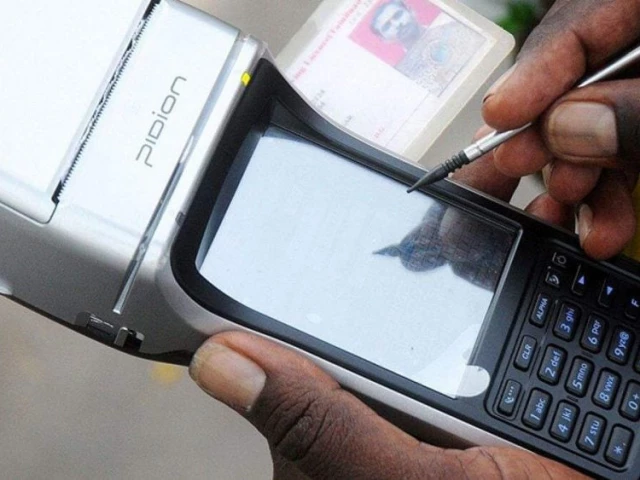
Despite the introduction of e-challans and the imposition of heavy fines in Karachi, there has only been some improvement, while serious traffic violations have not been effectively controlled.
The Traffic Police believed that imposing heavy fines would resolve the issue, but this has not been the case. On their recommendation, the Sindh government increased fines last year. These included a fine of Rs25,000 for motorcycles and Rs30,000 for cars for violating one-way traffic rules. Similarly, a Rs25,000 fine was set for motorcycle wheelies, and driving without a license resulted in fines of Rs25,000 for motorcyclists and Rs30,000 for car drivers. The same penalties were applied for underage driving. However, despite these measures, serious violations continue across the city.
After approval from the provincial assembly, the Sindh Transport Department significantly increased fines on October 1 last year. By the end of October, the e-challan system was introduced, under which within one month, e-tickets were sent to the home addresses of 100,000 people for various violations.
According to official statistics, on October 28, 2025, police issued 1,525 e-challans for offenses such as not wearing seat belts, riding motorcycles without helmets, running red lights, and using mobile phones while driving. However, these did not include the serious violations with heavier penalties, such as driving without a license, underage driving, or wrong-way driving—meaning many offenders largely escaped enforcement.
Citizens say that while the introduction of e-challans and the activation of traffic signals have brought some improvement, serious violations persist. Hafeez-ur-Rehman Qureshi, who travels daily by motorcycle between Saddar and Korangi, told The Express Tribune that wrong-way riding is common on almost every road. “Even on major roads like Shahrah-e-Faisal, people ride in the wrong direction, often seen near the Gora Qabristan heading toward Korangi Road,” shared Hafeez.
Traffic Police state that Karachi’s traffic system has been dysfunctional for a long time and will take time to improve. They also noted that the e-challan system is new and has faced implementation issues. For example, thousands of e-tickets could not reach the actual owners.
In a recent briefing by DIG Traffic Syed Pir Muhammad Shah to the IG Sindh, it was revealed that over 19,000 e-challans could not be delivered because the vehicles had been sold but not transferred to the new owners. Additionally, more than 2,000 vehicles had incorrect number plates.
According to DIG Traffic Syed Pir Muhammad Shah, this is why a campaign has been launched against such vehicles. A Karachi police spokesperson said that during this campaign, action was taken against 134 vehicles for missing number plates and against 185 individuals for concealing their plates within just two days.
Police are hopeful that the Sindh government’s announcement of a Rs2,000 monthly fuel subsidy for motorcyclists—introduced in light of global conditions—has encouraged people to transfer vehicle ownership. A briefing to the Chief Minister of Sindh stated that within just two days of the announcement, 1,500 motorcycles were transferred to current owners.
Zahid Farooq, an urban planning expert associated with the Urban Resource Centre, believed that increasing fines or issuing challans alone was not a solution. “Public awareness is equally important, and the government and Traffic Police should focus on educating citizens. While fines are issued for overspeeding, speed limit signs are scarce, so emphasis should not be solely on penalties but also on awareness of traffic rules,” said Farooq.















This material may not be published, broadcast, rewritten, redistributed or derived from. Unless otherwise stated, all content is copyrighted © 2026 The Express Tribune.









COMMENTS
Comments are moderated and generally will be posted if they are on-topic and not abusive.
For more information, please see our Comments FAQ