Brand reliability fetches demanded price
Updated 1 hour ago

Islamabad finds itself positioned between much-needed infusion of regional liquidity and looming global energy crisis
The conclusion of the 2026 Spring Meetings of the International Monetary Fund (IMF) and the World Bank Group marks a definitive turning point for Pakistan, shifting the national narrative from the immediate, breathless precipice of default to a more complex and demanding era of disciplined recovery.
While the corridors of international finance in Washington are currently alive with discussions of macroeconomic stabilisation and prudent debt management, the reality for Pakistan remains a delicate and high-stakes balancing act. Today, Pakistan finds itself positioned between a much-needed infusion of regional liquidity and a looming global energy crisis that threatens to disrupt the fragile stabilisation achieved over the past fiscal year.
The most immediate relief for Pakistan's external buffers has come through a masterclass in strategic diplomacy. The State Bank of Pakistan recently confirmed the receipt of $3 billion from the Saudi Fund for Development. This vital support, paired with an anticipated one-point $2 billion IMF disbursement following the staff-level agreement, provides the essential breathing room required to settle immediate reimbursements.
While this cycle of rollovers and deposits has effectively averted a balance of payments crisis and grounded the rupee in a volatile market, it serves as a persistent reminder that the current stability is largely anchored in "borrowed time." The reliance on "friendly country" deposits acts as a temporary stabiliser, but it does not yet constitute a permanent cure for the structural rot in trade and fiscal balances.
This sense of relief is significantly tempered by the IMF's latest World Economic Outlook, which offers a sobering reality check by projecting Pakistan's growth for the current fiscal year at approximately 3.5%. This projection is a visible downgrade from more optimistic targets of over 4% discussed late last year. The primary culprit for this slowing momentum is a "multifaceted shock" to the Middle East and Central Asian economic corridor.
Ongoing regional conflicts and persistent disruptions in the Strait of Hormuz have sent energy prices climbing, forcing a revision of Pakistan's inflation projections back towards the 8% mark. For a manufacturing sector already struggling under the weight of high electricity and gas tariffs, this version of stability feels increasingly like industrial stagnation. The discrepancy between a soaring Pakistan Stock Exchange, which has seen returns exceeding 50% in dollar terms since 2025, and the cooling of factory floors highlights a dangerous decoupling of financial markets from the real economy.
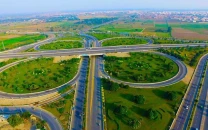
As we look towards the medium-term horizon of 2027 and 2028, the discussions in Washington have made it clear that survival must now give way to industrial "embeddedness." One of the most significant shifts highlighted recently is the transition of the China-Pakistan Economic Corridor (CPEC) into its second phase. The Board of Investment recently announced a dramatic surge in approved Special Economic Zones (SEZs), increasing from seven to 44.
This pivot from infrastructure and power, the hallmarks of CPEC Phase-I, to industrial clusters represents a monumental opportunity. However, the World Bank's recent focus on "Industrial Policy for Development" serves as a warning: without attracting genuine "anchor firms" and fostering business-to-business cooperation, these 44 zones risk becoming mere real estate ventures rather than the export engines Pakistan desperately needs to close its $23 billion trade deficit.
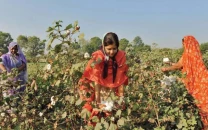
The challenge of trade is perhaps most visible in the agricultural sector, a domain where Pakistan's potential and its pitfalls are in constant competition. In early 2026, Pakistan's exports remained frustratingly flat, largely due to a decline in high-value food shipments, including rice. This occurs at a time when the Integrated Food Security Phase Classification (IPC) estimates that nearly seven million Pakistanis face acute food insecurity.
The dilemma is stark: does the state prioritise the export of grain and produce to shore up foreign exchange reserves, or does it focus on domestic price stability to protect a vulnerable population from the "hunger gap" of the lean season? While a 17% increase in the import of agricultural machinery suggests that mechanisation is finally taking root, the productivity gains must manifest quickly enough to satisfy both the international creditor and the domestic consumer.
Furthermore, the "Stability vs Growth" paradox is being tested by the State Bank's cautious monetary policy. While headline inflation has dipped from the astronomical highs of previous years, core inflation remains sticky at around 7.6%. This has led the Monetary Policy Committee to maintain a stance that many in the industrial sector view as prohibitive. The high cost of borrowing, combined with the rationalisation of energy tariffs – a key condition of the IMF programme – has created a "pincer effect" on small and medium enterprises (SMEs). For the owner of a textile mill in Faisalabad or a light-engineering firm in Gujranwala, the "macroeconomic stabilisation" celebrated in Washington feels remarkably like a slow-motion contraction.
Pakistan's medium-term stability is also inextricably linked to its ability to modernise its digital and physical infrastructure. As the Ministry of Finance pitches mineral and energy development to global investors, the underlying requirement is a workforce that can compete in a tech-led global economy. The human capital deficit, characterised by one of the lowest education expenditures in the region at 0.8% of GDP, remains the ultimate silent alarm.
Without drastic reinvestment in the skillsets required for Industry 4.0 – such as smart manufacturing and Big Data – the new Special Economic Zones will struggle to find the labour necessary to move Pakistan up the value chain from basic textiles to high-value engineering goods.
Pakistan's economic stability over the next two years will no longer be defined by the successful negotiation of the next loan tranche or the grace of a friendly rollover. Instead, it will be determined by whether the government can use the current $4 billion liquidity window to insulate the domestic industry from the next inevitable global shock.
Stability has been bought at a high price, both in fiscal terms and in the social cost borne by the general public. The task now is to ensure that this stability is not an end in itself, but a foundation.
To move from the fragility of 2026 to the prosperity of 2030, Pakistan must convert its strategic geography and its newfound industrial zones into a reality that transcends the balance sheets of Washington. We have bought ourselves time; the challenge now is to determine if we have the collective resolve to finally build a country that no longer needs to buy its future one rollover at a time.
THE WRITER IS AN INTERNATIONAL ECONOMIST





This material may not be published, broadcast, rewritten, redistributed or derived from. Unless otherwise stated, all content is copyrighted © 2026 The Express Tribune.








COMMENTS
Comments are moderated and generally will be posted if they are on-topic and not abusive.
For more information, please see our Comments FAQ