BLA’s nexus with Al-Qaeda, TTP fuelling terrorism and women exploitation in Balochistan
Updated 5 hours ago

Pakistan was confident as it had done a lot of spadework through backchannels
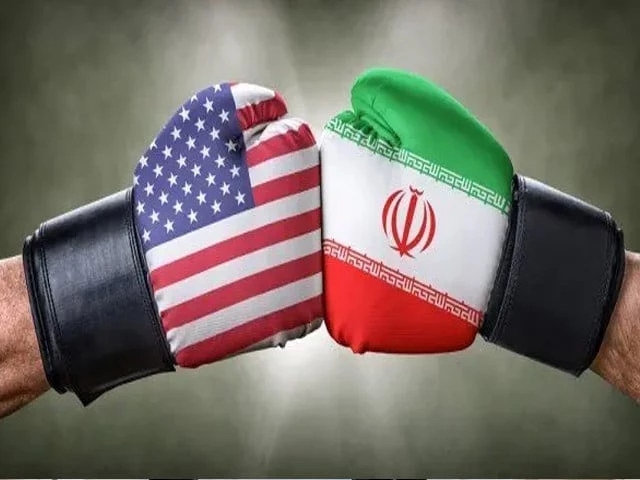
No signs of the next round of talks between Iran and the United States, as of now. Yet, security details remain intact in Islamabad.
This suggests that the door to a diplomatic breakthrough, however narrow, has not entirely closed, even as uncertainty continues to hang over the next phase of negotiations.
"There is no positive move but no negative move either," said a source, referring to the security details on the ground amid the radio silence as far as the next round of talks are concerned.
If all went as per plan, the US and Iranian negotiators would have been in a huddle on Wednesday, seeking to thrash out a potential deal.
Pakistan was confident as it had done a lot of spadework through backchannels since the first round ended without a breakthrough.
Where did things go wrong?
Until Tuesday afternoon, the plan was already finalized. Steve Witkoff and Jared Kushner were set to fly first from Miami. Then, Vice President JD Vance's plane was to take off from Washington.
The press corps accompanying Vance was instructed to be ready for departure around 9:00 am Washington time (6:00 pm PST).
Not that the plan was final, but multiple sources said security assets and details put on the ground in Islamabad were typical of accompanying the US President's movement.
That meant the US was ready if Trump decided to fly in.
But then things began to fray. The US side, which shared some new proposals via Pakistan with Iran, wanted a clear response from Tehran before Vance left for Islamabad.
The US wanted the second round to show some headway, if not reach a final settlement.
Initially, Iran was inclined to give consent. That was the reason Pakistan had put in place all the security arrangements. The US advance teams had landed.
But as the stage was set for talks, Iran, first through state media, and then officially, announced they would not take part in talks, accusing the US of violating the terms of the ceasefire.
The Iranian precondition for a US naval blockade was not the only sticking point.
There has been intense backchannel diplomacy going on to break the deadlock. Some overt moves too.
Some notable and public developments include Wednesday's meeting of the Iranian Ambassador with the PM and today's interaction between the acting US envoy and the interior minister.
What has emerged so far is that it is not just certain sticking points that are eluding the resumption of talks, but a broader divergent approach.
The US simply wants a quick fix. Trump is keen to seal the deal, sign it, and that's it.
Iran, meanwhile, is not inclined to make a deal in haste. It wants incremental progress, a step-by-step approach.
Pakistan, as a lead mediator, does not want the ongoing diplomatic process to be open-ended. It wishes to take the process to its logical conclusion.
The Tehran visit of the field marshal, who was to spend a day but stayed there for three days, was precisely meant for the same.
The proposals and new ideas Trump has spoken about, and the wait for Iran's unified response, point towards the desire for an ultimate deal.
While Iran is reluctant to join the talks, it is believed to be still weighing the option.
Some within Iranian ranks tend to believe that a deal in its current form will be a hard sell domestically.
But then, deep down, there is also a realisation that Iran needs a breather. It may have withstood Israeli and US might, but the damage to the economy and infrastructure is immense.
Far from the public rhetoric, the news of the extension of the ceasefire was welcomed by common Iranians. They understand the pain and suffering of this war.
The extension in the ceasefire is a relief, and at least there won't be an immediate escalation.
Messages have still been exchanged. Efforts are on to salvage the last-minute deal.
The problem, however, is the slow communication channels between the Iran Supreme Leader and the negotiating team.
The other key aspect of this war is that, unlike past conflicts, this war cannot end in a stalemate. One side has to prevail over the other.
Suppose the war ends in a lingering stalemate. Iran continues to exercise control over the Strait of Hormuz while the US maintains a naval blockade. This situation is not tenable, as it will drown the global economy without either side firing a single shot.
What this means is that, in the end, this deadlock has to end either through diplomacy or through war. Both sides, however, want to avoid the path of hostilities.
The stalemate in the Strait of Hormuz may be dangerous but more of a tactical move by both sides than a full-blown escalation.
Hence, it is not over until it is over.










This material may not be published, broadcast, rewritten, redistributed or derived from. Unless otherwise stated, all content is copyrighted © 2026 The Express Tribune.






COMMENTS
Comments are moderated and generally will be posted if they are on-topic and not abusive.
For more information, please see our Comments FAQ