Philippine president, Rubio discuss ‘peace, security’ in South China Sea
Updated 59 minutes ago

Fired former UK official says he felt political pressure to approve Mandelson as US ambassador
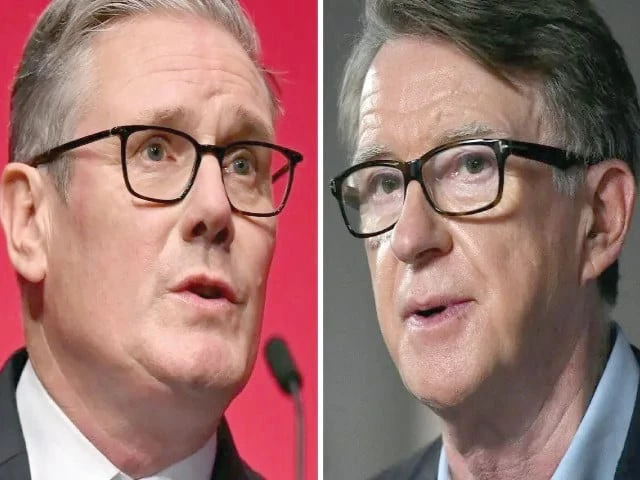
Downing Street on Tuesday denied a claim from a former official that it had applied pressure on civil servants to approve the appointment of Peter Mandelson as UK envoy to Washington and seemed to dismiss security concerns.
UK Prime Minister Keir Starmer remained mired in a scandal over his decision to appoint Mandelson as Britain's envoy to the United States before sacking him last year over links to the late convicted sex offender Jeffrey Epstein.
Olly Robbins, the most senior foreign ministry official until he was fired last week over the scandal, told MPs on Tuesday that Starmer's office had a "dismissive attitude" towards the security vetting for its US envoy pick.
There was a "very strong expectation coming from Number 10 (Downing Street) that he (Mandelson) needed to be in post and in America as quickly as humanly possible", Robbins told a watchdog parliamentary committee.
"My office, the foreign secretary's office, were under constant pressure, there was an atmosphere of constant chasing."
A Downing Street spokesman denied this, saying there was "clearly a difference between asking for updates on an appointment process", and being dismissive about vetting.
Senior minister Darren Jones told an emergency debate in parliament on Tuesday that "no such pressure was applied beyond asking for the process to be completed as quickly as possible".
On Monday, Starmer told parliament he was "wrong" to appoint Mandelson but accused officials of deliberately hiding information that the Labour politician had been denied security clearance.
The Foreign Office subsequently green-lit Mandelson - who had long been known to have close ties to Epstein - despite the government now confirming independent vetting officials had recommended security clearance be denied.
That revelation, first reported by The Guardian last Thursday, has prompted fresh calls for Starmer to resign, after he previously insisted all "due process" had been followed.
During the emergency debate on Tuesday, the head of the Conservative rightwing opposition party Kemi Badenoch urged Labour MPs to hold a vote of no confidence in Starmer.
The beleaguered British leader has blamed officials for deliberately keeping him in the dark about the security clearance issue, and on Monday denied misleading parliament with his previous statements on the scandal.
In his much-anticipated testimony, Robbins provided a more nuanced assessment, insisting he formally approved Mandelson after vetting officials - housed in another government department - concluded he was a "borderline" case.
"I was briefed that they were leaning towards recommending that clearance be denied but that the Foreign Office security department assessed that the risks could be managed and/or mitigated," Robbins told MPs.
"I was also told that the risks did not relate to Mandelson's relationship with Jeffrey Epstein," he added.
UK media has reported that the concerns surrounded the links of Mandelson's now-shuttered lobbying firm to Chinese companies.
Mandelson, now 72, was named to the coveted top diplomatic post in December 2024, just weeks before US President Donald Trump was inaugurated the following month, and took up the job in February 2025.
Asked about the possibility of denying Mandelson security clearance, Robbins conceded that would have been a "difficult problem I would have been landing the foreign secretary with and the prime minister with".









This material may not be published, broadcast, rewritten, redistributed or derived from. Unless otherwise stated, all content is copyrighted © 2026 The Express Tribune.






COMMENTS
Comments are moderated and generally will be posted if they are on-topic and not abusive.
For more information, please see our Comments FAQ