Nawaz Sharif gets clearance to visit Gilgit-Baltistan tomorrow for election campaign after NOC
Updated 1 hour ago

Security concerns disrupt courts; lawyers question closures
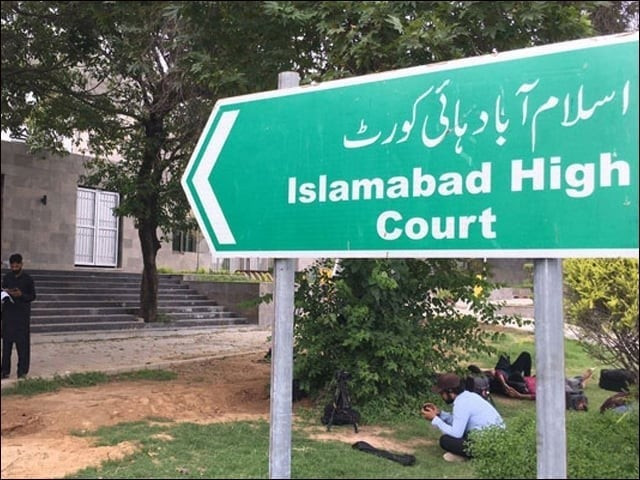
Judicial work at key courts in the federal capital faced disruption on Monday and into Tuesday amid security-related restrictions as the Federal Constitutional Court (FCC) and Islamabad High Court (IHC) suspended proceedings.
However, the Supreme Court continued functioning and highlighted its ability to conduct hearings through digital means.
According to a notification, the decision to suspend proceedings at the FCC was taken in light of the closure of Islamabad's Red Zone, which was expected to create significant difficulties for lawyers, litigants and court staff in accessing court premises.
Both the FCC and IHC also suspended judicial work on Monday. However, the SC said it had "successfully" conducted proceedings at its principal seat in Islamabad.
Following the statement, both the FCC and IHC initially announced they would resume judicial work on Tuesday (today), but later reversed the decision, stating that courts would remain closed for judicial work.
"In exercise of powers conferred under Rule 5 of Order II of the Supreme Court Rules 2025, the Hon'ble Chief Justice has directed that all scheduled hearings for the day be suspended. Consequently, the cause list of the Court shall stand cancelled."
Despite the suspension of judicial proceedings, all officers and staff have been instructed to continue their duties remotely and are advised not to leave their stations.
Additionally, all four branch registries of the court will remain open to ensure the continuity of judicial and administrative functions.
"This measure reflects the Court's commitment to maintaining operational continuity while prioritizing safety and accessibility concerns arising from the prevailing situation," the notification stated.
However, the suspension drew criticism from sections of the legal fraternity, with lawyers questioning the decision to halt judicial work.
They argued that superior courts should not create the impression that proceedings could be stopped for any reason.
Lawyer Hafiz Ahsaan Ahmad Khokhar said, with due respect, that while security considerations are important, they cannot be treated as a valid or sole ground for closing the country's highest constitutional courts, including the FCC and the IHC, or for disrupting judicial work.
He emphasised that access to justice is a fundamental right protected under Articles 4 and 10A of the Constitution, and any restriction on litigants or lawyers must be strictly justified, proportionate and unavoidable.
He said routine or recurring security concerns cannot override constitutional guarantees, stressing that the primary responsibility lies with law enforcement agencies to ensure effective and facilitative security arrangements so that courts remain accessible.
He added that the focus must be on enabling safe and uninterrupted access rather than limiting entry or suspending proceedings, as continuity of judicial functioning is a constitutional imperative.
Highlighting the institutional importance of Constitution Avenue, he noted that key constitutional forums are located along this corridor, making it essential for the state to develop a structured and permanent security protocol.
Given that security concerns are ongoing, he said a coordinated mechanism must be established to ensure courts remain open, secure and functional at all times.
Khokhar further observed that where appearances are affected due to genuine and unavoidable security impediments, courts may grant adjournments in the interest of justice.
However, dismissal of cases solely on the basis of non-appearance in such circumstances would be inconsistent with the principles of fair trial and due process, and could prejudice litigants.
He proposed that registrars of the courts convene a joint consultative forum with the district administration, police and relevant security agencies to devise a coordinated and lasting solution.
Such engagement, he said, would help prevent recurring disruptions and ensure uninterrupted functioning and access.
In view of the heavy pendency of cases, he also urged extending court working hours until 4pm, resuming regular hearings on Fridays, and taking up urgent matters on Saturdays where necessary.
Filing timings should also be extended to facilitate litigants, he added, stressing that austerity measures must not hinder the dispensation of justice.
Earlier, the SC said it had continued proceedings at its principal seat.
The statement noted that "in a remarkable demonstration of institutional resilience and technological advancement, the Supreme Court successfully conducted court proceedings today from the Principal Seat at Islamabad, while Justice Ayesha Malik joined the bench from the Lahore Registry through a secure video link".
"This arrangement was necessitated by an emergent situation affecting the composition of the bench at the Lahore Registry. In ordinary circumstances, such an eventuality would have led to the delisting of all scheduled cases, causing inconvenience to litigants and learned counsel."
"However, owing to the Supreme Court's continued investment in digitization and integration of modern technology, the Court was able to proceed seamlessly with the scheduled hearings without disruption. Importantly, the proceedings were not merely formal in nature. The Bench effectively heard and disposed of 20 out of 28 fixed cases, demonstrating a strong commitment to substantive adjudication and timely dispensation of justice."
"These proceedings underscore the judiciary's unwavering commitment to ensuring uninterrupted access to justice, even in unforeseen circumstances. They also reflect the growing efficacy of ongoing reforms aimed at leveraging technology to enhance judicial efficiency, transparency, and responsiveness," it further stated.
"The Supreme Court of Pakistan remains committed to further strengthening such digital capabilities to better serve the ends of justice and to reinforce public confidence in the judicial process."
Chief Justice Yahya Afridi appreciated the role of the bar, as well as the swift coordination and professionalism of court staff and IT teams, whose efforts enabled the real-time transition to this mode of hearing.
The development, the statement said, marks a significant milestone in the evolution of Pakistan's judicial system towards a more adaptive and technology-driven framework.














This material may not be published, broadcast, rewritten, redistributed or derived from. Unless otherwise stated, all content is copyrighted © 2026 The Express Tribune.





COMMENTS
Comments are moderated and generally will be posted if they are on-topic and not abusive.
For more information, please see our Comments FAQ