Brand reliability fetches demanded price
Updated 8 hours ago

Industry leaders say integrating tech into development planning vital for sustainable growth
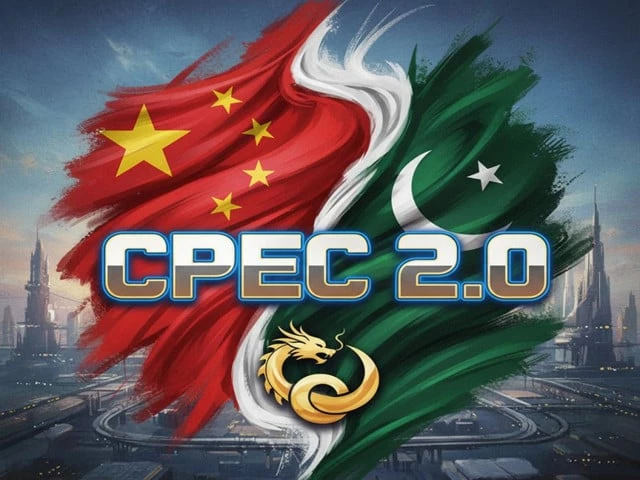
The ambition of Pakistan's government to build a knowledge-driven digital economy received a significant endorsement from the business community this week as the Pakistan-China Joint Chamber of Commerce and Industry (PCJCCI) highlighted the combined power of CPEC 2.0 and the government's proposed $1 billion artificial intelligence (AI) fund in reshaping the country's economic future.
With Pakistan's youth, roughly 63% of the population, sitting at the heart of this transformation, industry leaders believe the timing could not be more critical. The country currently ranks among the world's youngest nations by median age, a demographic dividend that, if properly channelled, could accelerate growth across sectors.
"The AI fund represents a timely and strategic initiative that can strengthen governance frameworks, promote innovation and unlock vast opportunities for Pakistan's youth," said Nazir Hussain, President PCJCCI. "Integrating advanced technologies into national development planning is essential for achieving sustainable and inclusive economic growth."
The fund, if operationalised, will support a sweeping technological overhaul. PCJCCI office-bearers outlined that the programme envisioned the introduction of AI education in federally administered schools, 1,000 fully funded PhD scholarships by 2030 and the training of one million non-IT professionals in AI-related skills – a move designed to future-proof Pakistan's traditional workforce.
They described the initiative as laying the groundwork for a comprehensive nationwide technological ecosystem, noting that upskilling non-IT workers would significantly enhance productivity, improve livelihoods and enable traditional sectors to adapt to modern technological demands.
The stakes are high. According to the International Monetary Fund (IMF), digital economies can grow two to three times faster than traditional ones in developing markets. Pakistan, which currently contributes less than 1% to global AI research output, has considerable room to scale up, provided the investment is matched with institutional capacity.
A Lahore-based technology policy analyst said Pakistan's real advantage lay not just in its young population but also in its rapidly expanding mobile internet base, which crossed 200 million users in early 2026. "AI adoption in Pakistan will only deliver results if we build local datasets, train local talent and solve local problems, not simply import solutions designed for other markets," the analyst said.
PCJCCI also drew a clear line between the AI initiative and the broader CPEC 2.0 framework, pointing to its alignment with the government's "Uraan Pakistan" programme, which targets export growth, affordable energy, operational efficiency and environmental sustainability.
The chamber argued that the convergence of these policy tracks could meaningfully improve Pakistan's economic resilience and competitiveness in global markets.
China, already a world leader in AI investment with expectations of $125 billion injection into the sector in 2026, emerges as a natural partner for technology transfer, joint research and infrastructure development under the China-Pakistan Economic Corridor (CPEC) umbrella, a dimension PCJCCI said it intended to actively facilitate through public-private partnerships for sustainable economic development.









This material may not be published, broadcast, rewritten, redistributed or derived from. Unless otherwise stated, all content is copyrighted © 2026 The Express Tribune.













COMMENTS
Comments are moderated and generally will be posted if they are on-topic and not abusive.
For more information, please see our Comments FAQ