Selling pressure grips PSX as stocks swing amid regional uncertainty
Updated 1 hour ago

For years, Pakistan has relied on friendly countries for financing, but recent developments suggest shift in behaviour
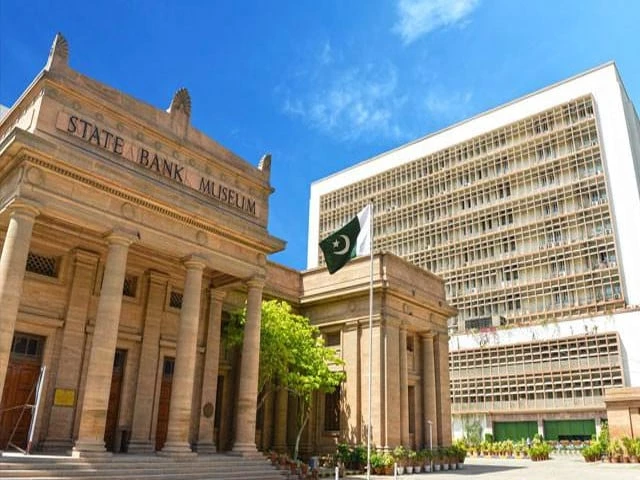
Pakistan's economic managers often point to rising foreign exchange reserves as a sign of stabilisation. On paper, the narrative appears reassuring: reserves have recovered from crisis lows, inflation remains within range, and the country continues to meet its external obligations.
Yet this is a stability measured more in optics than in underlying strength. The recent decision to repay billions to the United Arab Emirates, coupled with looming debt maturities, delayed multilateral disbursements, and the economic aftershocks of conflict in the Middle East, reveals a deeper truth: Pakistan's external sector remains structurally vulnerable, and its apparent stability is increasingly being tested.
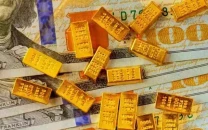
Pakistan's foreign exchange reserves, currently hovering around $15 billion, represent a modest recovery from the near-default conditions of 2023. But this level provides 2 to 2.5 months of import cover, below the internationally accepted safety threshold of three months.
More importantly, these reserves are not entirely organic. They are built on a combination of IMF disbursements, bilateral deposits, and administrative controls on imports and currency movement. In other words, they reflect managed stability, not underlying strength. Because when external conditions tighten, managed stability tends to unravel faster than it is built.
For years, Pakistan has relied on friendly countries, particularly in the Gulf and China, not just for financing, but for rolling over existing deposits parked with the State Bank. This mechanism has functioned as a quiet but essential pillar of external stability.
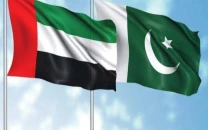
However, recent developments suggest a shift in creditor behaviour. The reported repayment of billions to the UAE – funds that were previously rolled over annually – signals the erosion of assumed rollover comfort. Even if part of the repayment is restructured into investment, the immediate implication is clear: what was once treated as stable support is now becoming an active liability. This transition – from rollover to repayment – fundamentally alters the external financing equation.
War, oil, and external shock
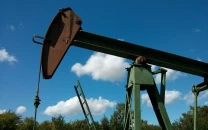
The ongoing conflict in the Middle East has added a new layer of pressure. Rising global oil prices are expected to increase Pakistan's import bill significantly, with energy costs driving both inflation and external imbalances. For a country that imports a large portion of its energy needs, this is not a marginal shock; it is systemic.
At the same time, geopolitical uncertainty carries secondary risks. Remittance flows, investor sentiment, and regional financial stability are all indirectly exposed to prolonged volatility. More critically, global capital is being reallocated along geopolitical and risk lines. In an environment of elevated interest rates and strategic competition, capital is flowing toward economies perceived as stable, predictable, and policy-consistent. For countries like Pakistan, this translates into a higher risk premium, reduced access to commercial borrowing, and a growing dependence on multilateral and bilateral channels.
IMF: stabiliser, not a solution
In this environment, the role of the IMF remains central. The programme has provided a stabilising anchor – unlocking multilateral flows, restoring policy discipline, and helping rebuild reserves.
But stabilisation should not be mistaken for resolution. The IMF addresses liquidity issues. Pakistan's challenge is one of structural solvency. Recent commitments – tight monetary policy, reduced currency controls, and fiscal discipline – are necessary, but they come with trade-offs: slower growth, persistent inflation, and exposure to exchange rate volatility. The push toward a more market-determined exchange rate, while positive in principle, could amplify short-term pressures in a shallow and sensitive currency market.
A system built on compression
Pakistan's current external stability is sustained not by expansion, but by compression. Imports have been restricted. Currency markets have been managed. Interest rates remain tight. Growth has been moderated. These measures have bought time but they have not resolved the underlying imbalance between what the country earns and what it spends in foreign exchange.
Exports remain narrow and insufficient. Remittances, though critical, are neither fully controllable nor immune to external shocks. This creates a structural gap that continues to be filled through borrowing, rollovers, and multilateral support. Compression cannot be a growth model.
From crisis management to strategy
The real challenge for Pakistan is not meeting the next repayment or securing the next tranche. It is breaking the cycle of external vulnerability. This requires a shift from short-term crisis management to long-term strategy.
Export expansion must move beyond incremental gains toward higher-value sectors supported by consistent policy. External financing must transition from debt to investment, with transparency and credibility at its core. Policy consistency must replace episodic adjustments that undermine investor confidence. And institutional coordination must improve because delayed decisions and execution failures now carry macroeconomic consequences.
Conclusion
Pakistan is not in immediate crisis but nor is it in durable stability. Its reserves provide breathing space, not resilience. Its external position is manageable, but not secure. In a world of geopolitical shocks, volatile energy markets, and increasingly selective capital flows, the margin for error is narrowing.
Encouragingly, recent ceasefire developments in the region may offer a narrow window of stability, easing immediate external pressures and restoring a degree of investor confidence. If sustained, such geopolitical de-escalation could create space for countries like Pakistan to stabilise and recalibrate.
But windows of relief are not the substitutes for reform. The question is no longer whether Pakistan can meet its next obligation. The question is whether it can build an economic system that no longer depends on constantly preparing for the next one.
The writer is a PhD; former executive director general, Board of Investment, PM Office; public policy & corporate law expert




This material may not be published, broadcast, rewritten, redistributed or derived from. Unless otherwise stated, all content is copyrighted © 2026 The Express Tribune.






COMMENTS
Comments are moderated and generally will be posted if they are on-topic and not abusive.
For more information, please see our Comments FAQ