US Congress quietly moving to integrate American and Israeli military forces: report
Updated 27 minutes ago

US Central Command says 10 vessels are turned around, no ships break through since start of blockade
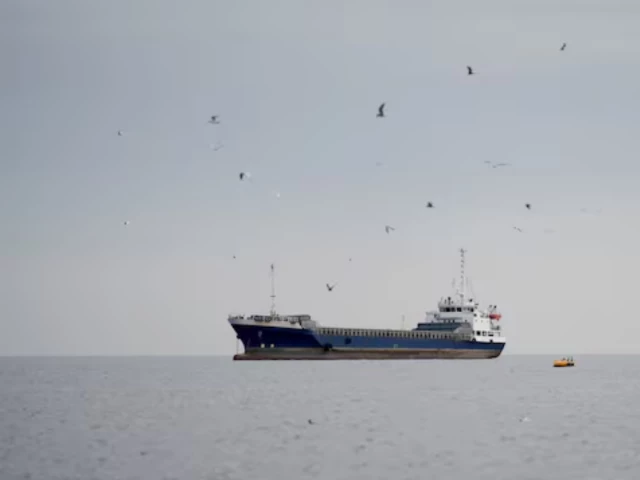
A second US-sanctioned supertanker has entered the Gulf via the Strait of Hormuz, shipping data showed, despite a US blockade on vessels visiting Iranian ports.
US President Donald Trump announced the blockade on Sunday after weekend peace talks in Islamabad between the US and Iran failed to reach a deal.
The US Central Command said on X that 10 vessels have been turned around and no ships have broken through since the start of the blockade on Monday.
Still, Iran's Fars News Agency said on Wednesday that an Iranian supertanker subject to US sanctions crossed the strait towards Iran's Imam Khomeini port despite the blockade. Fars did not identify the tanker or give further details of its voyage.
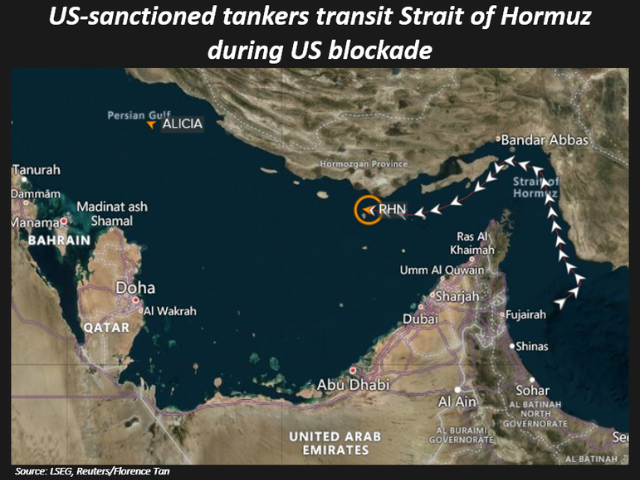
The empty Very Large Crude Carrier (VLCC) RHN entered the Gulf on Wednesday, data from LSEG and Kpler showed. It was not immediately clear where the VLCC, which is capable of carrying 2 million barrels of oil, is heading.
The tanker's entry into the Gulf comes a day after the US-sanctioned VLCC Alicia passed through the Strait of Hormuz. Alicia is heading to Iraq, Kpler data showed.
Both tankers have records of carrying Iranian oil in the past few years, according to Kpler data.
Vessels that have been forced to turn back include the US-sanctioned tanker Rich Starry, which returned to the Gulf on Wednesday, a day after exiting.
Read: What does a US naval blockade of Iran mean for oil flows?
The US has warned it could add secondary sanctions on buyers of Iranian oil in an apparent effort to gain leverage ahead of more negotiations, just weeks after Washington loosened the enforcement of some Iranian energy sanctions.
Iran could consider allowing ships to sail freely through the Omani side of the Strait of Hormuz without risk of attack as part of proposals it has offered in negotiations with the U.S., providing a deal is clinched to prevent renewed conflict, a source briefed by Tehran said.
The US blockade is expected to reduce Iran's crude exports, although the OPEC producer could sustain its current production at 3.5 million barrels per day (bpd) for weeks by storing oil in onshore tanks, analysts say.
Iran exported 1.84 million bpd of crude in March and has shipped 1.71 million bpd thus far in April, compared with an average of 1.68 million bpd in 2025, according to Kpler data.










This material may not be published, broadcast, rewritten, redistributed or derived from. Unless otherwise stated, all content is copyrighted © 2026 The Express Tribune.






COMMENTS
Comments are moderated and generally will be posted if they are on-topic and not abusive.
For more information, please see our Comments FAQ