KSE-100 index gains over 900 points amid geopolitical tensions, profit-taking
Updated 6 hours ago

Continuation of war will plunge world into recession, trigger hyperinflation

Since the dawn of the 21st century, the global economy has faced crisis after crisis. First, the 2008 financial crisis jolted the world economy, and then came Covid-19. The world had not fully recovered from Covid-19 and President Donald Trump's trade war, which shook the foundations of the global economy. The trade war started wider economic rearrangements, and every country is looking for reliable partners.
The Russia-Ukraine war further weakened the global economy. Europe, dependent on Russian energy, faces a looming recession due to rising energy prices. Unemployment, debt and inflation are persistent irritants for Europe. Global debt is skyrocketing and has exceeded the world's ability to pay. The latest data show it is $348 billion, well above global GDP.
On the social development front, the world is still struggling to eradicate poverty, food insecurity, and lack of access to safe drinking water, energy and education. Hundreds of millions suffer from these problems worldwide. Unfortunately, successive economic crises have worsened development indicators.
While the world was still struggling to absorb these shocks, the US and Israel attacked Iran. Israel also began committing genocide in Lebanon. The attack on Iran was dubbed a suicide attack on the global economy. It has jolted an already fragile economy and the dream of reviving it. The OECD (Organisation for Economic Co-operation and Development) has predicted global GDP will contract by around 2.9% in 2026. The continuation of war would bring stagflation to the EU, and the EU may lose up to 1% of GDP growth, further complicating the situation.
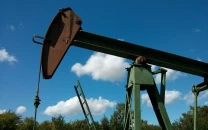
The Gulf region has experienced the worst impacts of the war, including on the economic front. Oil production has fallen from 21 million barrels to 13 million barrels. The Gulf countries and Iraq are losing almost $1.1 billion in energy exports, not to mention fertilisers, helium and other exports.
The equity market is also contracting, and the UAE has been hit hardest, with its equity market dropping more than 15%. The situation could become even more complicated if the war continues into April, as Goldman Sachs predicted Qatar's and Kuwait's GDPs will contract by 14%, the UAE's by 5%, and Saudi Arabia's by 3%.
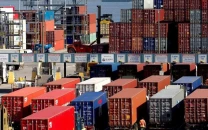
The blockade of the Strait of Hormuz has further complicated the situation, as 25% of oil, 20% of LNG and 30% of fertiliser trade pass through it. In addition to GDP contraction and losses from the closure of the Strait of Hormuz, the cost of destruction has yet to be calculated. The US and Israel have attacked Iran's productive resources, such as petrochemical installations, bridges, schools, hospitals and factories. In retaliation, Iran has also attacked oil and gas installations and other resources of Gulf countries. Initial estimates suggest the cost of infrastructure destruction is around $200 billion, which may have increased. This does not include the human cost - people who lost their lives or have been displaced.
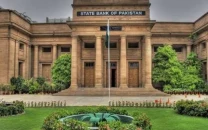
The facts clearly indicate that the global economy cannot withstand the shock of an Iran-US war. The continuation of war will not only topple the economy but also pose a serious threat to humanity. It would plunge the world into recession, trigger hyperinflation and cause poverty to rise. Despite the grave situation, no one was willing to take the lead in talking to the warring parties. Against this backdrop, Pakistan emerged as a voice for peace and began engaging with the warring parties. Pakistan took the lead in calling for peace when it was needed most.
Pakistan deployed a multipronged strategy to advocate for peace. First, Pakistan assured all parties, including the US, Iran, Saudi Arabia, Turkey and other Gulf states, that it is neutral in this war. Pakistan has no other objective than to restore peace. Second, Pakistan used its social capital to persuade all parties to come to the table. Third, Pakistan garnered support from major powers such as China to facilitate the peace process. These factors helped Pakistan broker the ceasefire.
Now, imagine a scenario where the war is still ongoing, and the US has dropped a dirty bomb on Iran. Some economists believe that would deliver a $3 trillion shock to the global economy, and a human tragedy would be beyond imagination. Moreover, the war would expand. Regional countries would fall one by one. Trillion-dollar economies would disappear. The world would lose 25% of oil, 20% of LNG, 30% of fertilisers and many essential products. It would be the perfect recipe for a global economic meltdown, triggering turmoil, human crises worldwide and World War-III.
However, it was not an easy task. Pakistan exhibited the highest levels of wisdom, patience and courage to steer the process. After President Trump's threat to eliminate Iranian civilisation, the whole world was on its toes. But Pakistan did not lose hope.
Just a few hours before the ceasefire, Israel began attacking civilian infrastructure and launched a major assault on petroleum and chemical installations. Iran attacked Saudi Arabia's petrochemical city, which contributes around 7% to Saudi GDP. That was the moment I believed destruction had been unleashed. Everyone was convinced Saudi Arabia would retaliate, the war would expand across the region, and the global economy would topple. It put Pakistan at a crossroads, and it was the most difficult moment for Pakistan.
But Pakistan showed courage, exercised wisdom again, and convinced Saudi Arabia to exercise restraint. Pakistan also convinced Iran to avoid such incidents in the future. These last-minute engagements yielded the result, and Pakistan pulled off a miracle: the ceasefire between the US and Iran.
The global community is convinced that Pakistan saved the world from economic recession and the worst humanitarian crisis. The whole world is appreciating Pakistan and showing strong support for the Pakistan-led peace process. This is evident in the stream of calls the prime minister is receiving. Let us hope and pray for the success of the peace process. In conclusion, Pakistan once again proved to the world that it is a peace-loving country. Pakistanis know the art of diplomacy better and deploy it when no one thinks it can work.
THE WRITER IS A POLITICAL ECONOMIST AND VISITING RESEARCH FELLOW AT HEBEI UNIVERSITY, CHINA






This material may not be published, broadcast, rewritten, redistributed or derived from. Unless otherwise stated, all content is copyrighted © 2026 The Express Tribune.












COMMENTS
Comments are moderated and generally will be posted if they are on-topic and not abusive.
For more information, please see our Comments FAQ