‘NAPA Repertory Festival’ concludes with musical finale
Updated 6 hours ago

Reports say filmmakers paid $50,000 for the song for Sanjay Dutt's entry scene
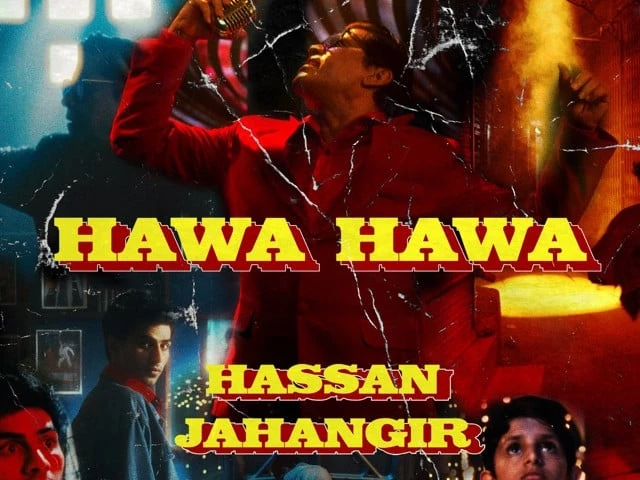
Pakistani pop icon Hassan Jahangir's classic song Hawa Hawa has once again been featured in Bollywood, this time in the upcoming film Dhurandhar.
According to reports, the filmmakers paid around $50,000 to officially acquire the rights to use the song for actor Sanjay Dutt's entry sequence. Jahangir confirmed to The Express Tribune that proper permission was taken this time.
In a candid and nostalgic conversation, Pakistani pop icon Hassan Jahangir opened up about his timeless hit Hawa Hawa, calling it not just a song but a "legacy" that has transcended generations and borders.
Released in the late 1980s, Hawa Hawa quickly became a cultural phenomenon. But its journey wasn't instant success.
Jahangir recalled how his debut initially failed to impress audiences.
"My first song was a super flop. People made fun of me 'What kind of song is this?'" he said.
Yet he remained confident.
"I told them, when this song hits, it will hit the whole world."
And it did.
Launched around Eid, the song gained momentum within weeks. By the time of Eidul Azha, Jahangir says it was being played "all over the world." Over the decades, Hawa Hawa has been featured, remade, or inspired versions in more than 17 films, particularly in Indian cinema, making it one of the most reused South Asian pop tracks in history.
The iconic song has been reused and adapted in several films over the decades. It first inspired tracks in 1989 Bollywood films Billoo Badshah and Aag Ka Gola, followed by a similar influence in Insaaf Apne Lahoo Se. Years later, its impact was seen again in Chaalis Chauraasi, before getting an official remake in Mubarakan. Beyond films, the song has also appeared in numerous stage performances, commercials, and DJ remixes.
One of the most memorable moments in his career came during a performance in Gawaliar, India, near the shrine of the legendary classical musician Taansen.
Sharing the stage with renowned Indian artists like Kalyanji Anandji and Udit Narayan, Jahangir was stunned to see himself described as the "Taansen of this era" on a welcome board.
"I laughed at myself," he admitted. "I am nothing compared to the greats. But their love and respect meant everything."
Over the years, critics have often claimed that Hawa Hawa by Jahangir was inspired by or copied from the Iranian folk tune "Havar Havar." However, Jahangir has consistently defended its originality, explaining that his family has deep cultural roots in Isfahan, Iran, as his grandmother belonged to that city
"My late grandmother used to sing this melody to me as a lullaby," he explained. "It is rooted in folk tradition, something passed down through generations."
He emphasized that while the melody may have existed in different forms, the version the world knows today carries his distinct identity.
"If copying alone made songs successful, then everyone would be a global hit," he remarked. "This is my style you can see my face in my music."
Reflecting on changing times, Jahangir acknowledged that earlier decades lacked strict copyright enforcement, allowing songs to be freely reused across industries.
"Today, if someone uploads your song, it gets flagged immediately," he said. "Back then, many songs mine and others' were used without formal permissions."
However, he expressed gratitude toward Indian filmmakers for now seeking his consent when using Hawa Hawa, calling it a sign of mutual respect.
Despite political tensions between Pakistan and India, Jahangir stressed that artists belong to a shared cultural family.
"We love our countries, but artists are connected through love and friendship," he said. "This bond should grow."
Far from slowing down, Hassan Jahangir revealed he is currently working on multiple new projects, many in collaboration with younger artists.
"The work I am doing now I may never have done this much music in my life before," he shared.
From a song once mocked to a track that defined decades, Hawa Hawa stands as a rare musical phenomenon one that continues to echo across generations, languages, and borders.










This material may not be published, broadcast, rewritten, redistributed or derived from. Unless otherwise stated, all content is copyrighted © 2026 The Express Tribune.











COMMENTS
Comments are moderated and generally will be posted if they are on-topic and not abusive.
For more information, please see our Comments FAQ