Education without character cannot build a nation
Updated 21 hours ago

Dollar underpins how the United States finances its deficits, projects power, and controls access to capital

Great powers rarely fall because they lack strength. They falter when they misunderstand the structures that sustain it. Decisions made in moments of confidence can carry consequences far beyond their intent.
In today's world, those structures are financial.
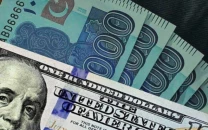
The dominance of the US dollar is not just a feature of global trade. It underpins how the United States finances its deficits, projects power, and controls access to capital.
Periods of tension do not create this system. They expose it.
To understand how this mechanism took shape, one must look to energy markets.
In 1974, the United States reached a strategic arrangement with Saudi Arabia, OPEC's leading oil producer. The United States and its Gulf partners priced oil exports exclusively in US dollars. Oil exporters then reinvested surplus revenues into dollar-denominated assets, particularly US Treasuries.
As other OPEC members adopted the same arrangement, global demand for the dollar became structurally embedded. Oil, the world's most critical commodity, was now effectively priced in dollars. The petrodollar framework was not just an economic arrangement. It anchored the dollar at the centre of global trade.
When the United States spends beyond its revenues, it does not face the same constraints as other economies. It issues debt through the US Treasury, raising funds from global markets.
Countries and institutions that accumulate dollars through trade, particularly energy exporters, reinvest those earnings into US Treasury securities. These are safe, liquid assets, but they also serve another function. They finance American deficits.
This arrangement has allowed the United States to sustain not only domestic spending, but also large-scale military engagements, including the wars in Iraq and Afghanistan, largely through borrowing.
What appears to be a financial cycle is, in reality, a system of reinforcement. The same structure that generates global demand for the dollar also enables the United States to fund its power projection.
Crucially, this framework is not just economic. It is enforceable.
The United States has repeatedly demonstrated its ability to restrict access to sovereign wealth through the global financial system. Following the 1979 revolution in Iran, the United States froze Iranian assets, with tens of billions remaining inaccessible for decades. More recently, after the war in Ukraine, nearly $300 billion of Russia's central bank reserves held abroad were immobilised by the United States and its allies.
These actions reveal a critical reality. Control over the financial system allows control not just over transactions, but over the accessibility of national wealth itself.
This leverage stems from the central role of the dollar in global finance. A significant share of sovereign reserves is held in dollar-denominated assets, often within US banks or institutions that make others dependent on access to its financial infrastructure. Because most dollar transactions pass through American banks or clearing channels, the United States can monitor and, when necessary, block them.
Through sanctions and regulatory authority, it can restrict transactions and render assets effectively unusable, turning financial access into a tool of state power.
This structure is now coming under pressure.
Recent signals from Iran suggest efforts to extend confrontation beyond the battlefield and into the financial domain. Indications that oil trade could be settled in alternative currencies through critical routes such as the Strait of Hormuz point to efforts to bypass the dollar in one of the world's most vital energy corridors.
At the same time, Iran's Speaker of Parliament, Mohammad Bagher Ghalibaf, has warned that "financial entities that finance the U.S. military budget are legitimate targets" and that "U.S. Treasury bonds are soaked in Iranian blood. Purchase them, and you purchase a strike on your HQ and assets." Whether this rhetoric translates into tangible financial disruption remains uncertain, but it signals an intent to challenge the structures that underpin US power.
Yet despite these pressures, the system remains deeply entrenched.
China, for instance, has emerged as a manufacturing powerhouse, reporting a record trade surplus of over $1 trillion. To sustain this scale, it continues to rely on the dollar-based system for its energy imports, even as it incrementally reduces exposure through investments in gold and alternative energy. Despite accounting for a significant share of global manufacturing, only a small fraction of global trade is settled in yuan. The dollar's dominance, for now, remains intact.
This is not fundamentally a conflict over oil, nor is it simply about regional power. It is a contest over the architecture that drives demand for the dollar, finances US deficits, and enables control over global financial flows.
Rising pressures now challenge the framework's durability.
If alternative currencies, new settlement mechanisms or reduced reliance on US financial assets begin to take hold, the implications will extend far beyond trade. They will shape how wars are financed, how alliances are structured, and how power itself is exercised.
The petrodollar is not collapsing. But for perhaps the first time in decades, it is being openly tested.
The course of events may yet shift, or they may unfold to their unintended ends. But when systems themselves are challenged, even power cannot guarantee control.









This material may not be published, broadcast, rewritten, redistributed or derived from. Unless otherwise stated, all content is copyrighted © 2026 The Express Tribune.





COMMENTS
Comments are moderated and generally will be posted if they are on-topic and not abusive.
For more information, please see our Comments FAQ