Security forces kill 23 terrorists in K-P IBOs
Updated 8 hours ago

Lawmakers protest travel curbs as House okays reforms on overseas properties, cashless economy
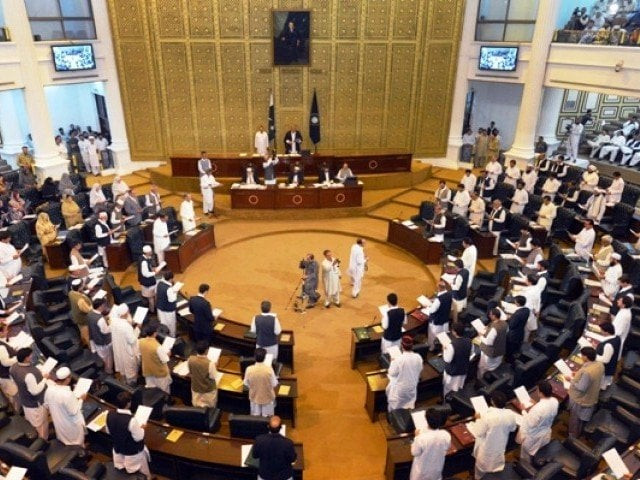
The Khyber-Pakhtunkhwa Assembly on Monday witnessed a busy legislative day as lawmakers raised serious concerns over the inclusion of elected representatives in the Exit Control List (ECL) and unanimously passed three major bills aimed at protecting overseas Pakistanis' properties, promoting a digital payments system and strengthening safeguards against harassment.
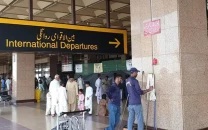
Two privilege motions were moved in the House alleging that provincial lawmakers were being barred from international travel without any clear justification. ANP MPA Nisar Baz told the Assembly that on 2 March he was stopped at Islamabad Airport while proceeding for Umrah. Despite a clear passport and valid visa, immigration officials informed him that his name was on the ECL but gave no specific reason. He said the action had not only violated his personal rights but also breached the privileges of the entire House.
Provincial Minister for Housing Dr Amjad supported the motion and disclosed that his own name had been on the ECL since September last year. He said the High Court had ordered its removal, yet the federal authorities had failed to comply. Both lawmakers demanded that the federal government and relevant agencies be summoned before the Privileges Committee to explain the criteria being used against elected representatives. The House expressed deep concern and referred both motions to the concerned committees. The Panel of Chairmen directed that the matter also be placed before the Inter-Provincial Coordination Committee.
In a major policy push, the government introduced the Khyber-Pakhtunkhwa Establishment of Special Courts for Overseas Pakistanis' Property Bill 2026. Law Minister Aftab Alam, who presented the bill, said special courts would be set up across the province in consultation with the Peshawar High Court to speedily resolve property disputes involving expatriates. All pending property cases involving overseas Pakistanis will be transferred to these new courts.
The same minister also tabled the Khyber-Pakhtunkhwa Digital Payment Act 2026, a key step towards making the province cashless. Under the law, all businesses, shops, educational institutions, clinics and hospitals will be required to install QR codes and accept digital payments.
The third bill, the Khyber-Pakhtunkhwa Protection Against Harassment of Women at the Workplace (Amendment) Bill, significantly expands legal protection. Interns, trainees, freelancers, volunteers, female students, online workers and gig economy staff will now come under the law's umbrella.
Separately, the House unanimously passed a private member's bill moved by MPA Dawood Shah amending the Motor Vehicles Ordinance. Under the energy emergency and a new fuel subsidy scheme, motorcycle and rickshaw owners will receive Rs2,000 each for petrol. As part of the relief package, transfer fees, number-plate fees and smart card fees have been waived for one month. The exemption applies immediately across the province.
All three government bills were referred to the relevant standing committees for detailed scrutiny before final approval. The session highlighted the provincial government's focus on digital transformation, expatriate welfare and women's safety while underlining growing tensions between provincial lawmakers and federal authorities over travel restrictions.



This material may not be published, broadcast, rewritten, redistributed or derived from. Unless otherwise stated, all content is copyrighted © 2026 The Express Tribune.

COMMENTS
Comments are moderated and generally will be posted if they are on-topic and not abusive.
For more information, please see our Comments FAQ