Bilawal inaugurates Shahrah-e-Bhutto
Updated 1 hour ago

Academic community denounces the order as impractical, regressive, and damaging to academic freedom
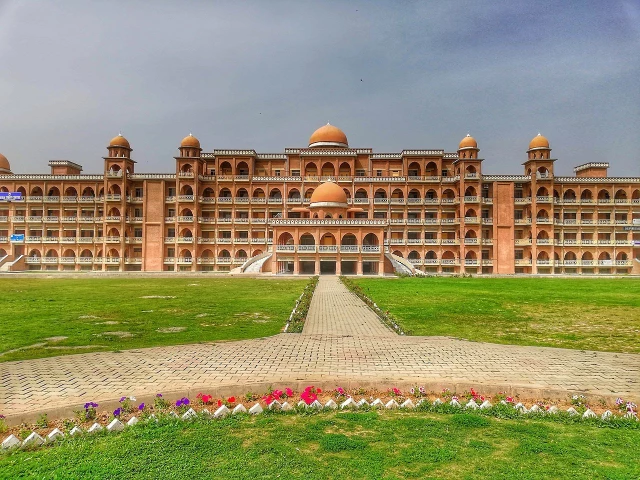
Universities and colleges are supposed to be safe spaces for students—but a recent move by authorities has upended that expectation. The Khyber Pakhtunkhwa (K-P) Higher Education Department has sparked outrage by banning male teachers from holding one-on-one meetings with female students in their offices, a decision that has ignited fierce backlash across campuses.
The Political Science Department at Islamia College Peshawar was the first to enforce the directive. It instantly prompted criticism as it left securing a No Objection Certificate (NOC) from the Higher Education Department (HED) beforehand the only possible way for a meeting, placing bureaucratic barriers between female students and male faculty.
Arooj Khan, a student at the University of Peshawar, said, “This notification makes no sense. It reflects a troubling mindset within the province’s education authorities.”
She added, “It illustrates how our educational institutions, and particularly the HED, still think in terms of restrictions rather than trust and professionalism. Teachers are like parents to us. How can you impose such limitations in a university environment?”
Khan, who is currently pursuing her PhD, questioned how research students would function under such a policy. “If I cannot sit with my supervisor to discuss my research, how am I supposed to complete my thesis? Research requires continuous dialogue, feedback, and close academic engagement. Will I now need official permission every time I want to discuss my work?” she asked.
She shared, “It is unclear who in the department drafted such a notification without considering ground realities.” Khizar Khan, a student at the University of Agriculture Peshawar, described the move as “extremely foolish” and symptomatic of a deeper societal problem. “We are studying in co-educational institutions. If parents have concerns, they can enrol their daughters in women-only universities. Why impose blanket restrictions on everyone?”
Questioning the logic behind the directive, he added: “If this is meant to prevent harassment, cases have also occurred in women’s universities. Will we segregate everything? This is not a practical solution. It should be withdrawn immediately.”
Faculty members also voiced strong reservations. Dr Muhammad Uzair, Assistant Professor at the University of Peshawar and former president of the Peshawar University Teachers Association, termed the notification “deeply flawed and ambiguous”.
“If the argument is that this will reduce harassment cases, then by that logic, should we shut down motorways because accidents happen there?” he remarked.
Dr Uzair argued that harassment must be addressed through proper mechanisms, transparent complaint systems, and enforcement of existing laws, not through blanket bans that undermine academic interaction. He called for the immediate withdrawal of the notification.
Advocate Mehvish Mohib Kakhel stated, “The move violates fundamental rights,” questioning how a student could be denied access to a teacher for academic guidance.
She noted, “If universities or the HED aim to curb harassment cases on campuses, surveillance measures such as installing CCTV cameras in universities and departments should be considered”. She hoped the notification would be challenged in court.
Read More: Universities in K-P: from crisis to collapse?
On the other hand, Dr Amirullah Khan, Associate Professor and Chairman of the Political Science Department at Islamia College Peshawar, confirmed that his department was the first to implement the HED directive, but clarified that this did not amount to an endorsement.
“We implemented it because the directive came from the HED. Personally, I am not in favour of it,” he said.
Dr Khan observed that political and administrative tensions within universities were being passed on to teachers and students.
Pointing to broader changes in governance, he said, “Previously, universities were under the governor’s oversight. However, after legislation passed by the ruling party in the provincial assembly, the Chief Minister of Khyber Pakhtunkhwa now serves as the chancellor.”
He criticised silence from other university administrations, alleging, “Some vice chancellors have remained quiet, possibly because they receive substantial salaries and benefits and do not want to risk their positions by speaking out.”
Despite repeated attempts to contact the vice chancellor of Islamia College Peshawar, and relevant HED officials, no response was received.







This material may not be published, broadcast, rewritten, redistributed or derived from. Unless otherwise stated, all content is copyrighted © 2026 The Express Tribune.





COMMENTS (1)
Comments are moderated and generally will be posted if they are on-topic and not abusive.
For more information, please see our Comments FAQ