Russell Andrews reveals ALS diagnosis as fiancée speaks on caregiving in CNN interview
Updated 2 hours ago

Artemis II astronauts are nearing a record-breaking moon flyby as recurring toilet issues disrupt the journey
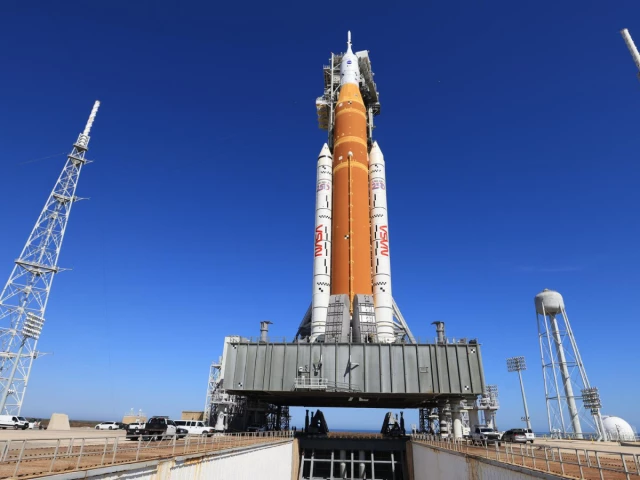
NASA’s Artemis II astronauts are closing in on a historic lunar flyby, but not without an unusual setback—the spacecraft’s toilet is once again malfunctioning.
Now more than halfway to the Moon, the crew—Reid Wiseman, Victor Glover, Christina Koch, and Jeremy Hansen—are preparing to loop around the Moon and capture images of its far side. The mission marks the first time humans have traveled this far since Apollo 17.
However, the Orion spacecraft’s toilet has been unreliable since launch, forcing astronauts to rely on backup urine collection bags. Engineers suspect ice buildup may be blocking the system, preventing proper flushing. While the toilet remains usable for solid waste, crew members have also reported an unpleasant odor.
🚨#BREAKING: Crews on the Artemis II mission are reporting that the onboard toilet is broken again with a frozen vent believed to be the cause of the latest malfunction. pic.twitter.com/UOkJQ1Ot4Y
— R A W S A L E R T S (@rawsalerts) April 4, 2026
The issue has also sparked a wave of memes online, with social media users joking about the “space toilet saga” even as the mission makes history.
In solidarity with the Artemis II crew and their damaged toilet, I will not be pooping during the next 10 days.
— scrumble_eggs 🇵🇸 (@scrumble_eggs) April 2, 2026
How the toilet REALLY got fixed on Artemis II: pic.twitter.com/7zpyDGuEte
— D.L. Campanile (@DLCampanile) April 6, 2026
Breaking: Artemis II crew successfully fixed the toilet — mission accomplished 🚽👍 pic.twitter.com/lXRJ4IE70o
— DD 🦅 🇺🇸 (@SWCEAGLE) April 2, 2026
This mission to the moon is full of sh*t. https://t.co/yQLG7jWKWM
— Masked Smiley Face (@BlooKangaroo) April 2, 2026
I can't wait for the Netflix documentary about the crew on the Artemis II mission having a broken toilet that smells terrible. https://t.co/aYzmQ6Tnlb pic.twitter.com/QX2FlInm3Y
— Stevie Joe (@Steviejoebrown) April 4, 2026
Despite the setback, mission officials say the astronauts are managing the situation as trained, noting that such challenges are not uncommon in spaceflight.
The mission is still on track to set a new distance record, traveling over 252,000 miles from Earth, surpassing Apollo 13, before looping behind the Moon and heading back.
The nearly 10-day mission, set to conclude with a Pacific Ocean splashdown on April 10, is a key step toward NASA’s long-term goal of returning humans to the lunar surface and establishing a sustainable presence















This material may not be published, broadcast, rewritten, redistributed or derived from. Unless otherwise stated, all content is copyrighted © 2026 The Express Tribune.






COMMENTS
Comments are moderated and generally will be posted if they are on-topic and not abusive.
For more information, please see our Comments FAQ