Gold prices rise in local, global markets
Updated 5 hours ago

500,000 units, 40% tariffs, supply chain gaps weaken demand, competitiveness
Pakistan has long advocated a shift towards private investment over public spending, in line with International Monetary Fund (IMF)-backed reforms since 1988. However, the country remains caught in a persistent cycle, as the private sector continues to demand key prerequisites, including security, a simplified regulatory framework and a lower cost of doing business, conditions that Pakistan has struggled to provide.
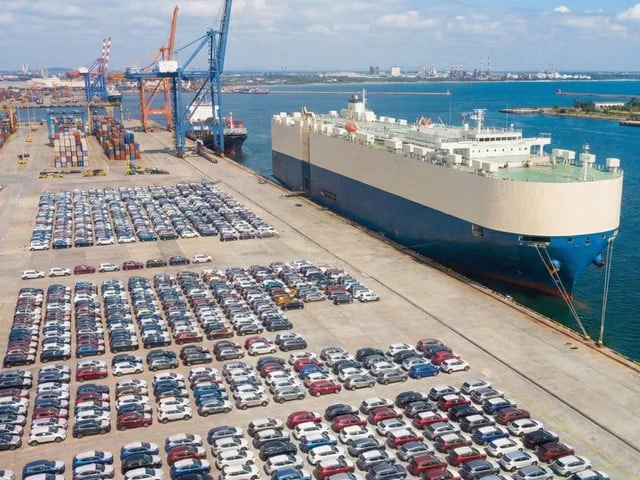
Despite this, in a rare development, the automobile sector is showing signs of capacity expansion, with installed capacity nearing 500,000 units, almost double the size of domestic demand. While this creates an opportunity to tap export markets, industry stakeholders warn that deep-rooted structural weaknesses continue to undermine competitiveness, raising concerns about the sustainability of this growth.
Commenting on the current market scenario in a conversation with The Express Tribune, Toyota Indus Motor Chief Executive Officer Ali Asghar Jamali said, "We have the will and the capacity to manufacture vehicles that meet the standards of export markets, but achieving this requires a policy environment that encourages the development of raw material industries."
Trade barriers remain the biggest constraint on export prospects, as many potential destinations impose tariffs ranging from 10% to nearly 40%, putting Pakistani vehicles at a price disadvantage from the outset. Meanwhile, regional competitors such as China, India and Thailand benefit from inclusive trade blocs and free trade arrangements that significantly reduce export costs.
Pakistan's automotive sector is entering a phase of structural imbalance, where installed production capacity is expanding faster than demand, exposing underlying inefficiencies. The country's auto manufacturing capacity has approached 500,000 units annually, driven by new entrants and expansion by existing assemblers. However, domestic demand is expected to remain in the range of 250,000 to 300,000 units, leaving a large portion of capacity underutilised and forcing manufacturers to increasingly look towards export markets for growth.
Recent data from the Pakistan Automotive Manufacturers Association (PAMA) indicates a short-term recovery in the sector, as passenger car sales rose 51% year-on-year in February 2026 to 13,388 units, reflecting a rebound in consumer demand after a prolonged slowdown caused by high interest rates and import curbs. Similarly, SUVs, jeeps and light commercial vehicles posted strong annual gains, with production increasing 24% and sales rising 36%. However, a month-on-month decline due to seasonal factors highlights the fragile nature of the recovery and suggests that demand remains uneven.
Industry leaders caution that the rebound is temporary and does not resolve deeper structural challenges. While Pakistan has the capability to assemble vehicles that meet international standards, it lacks the industrial ecosystem needed to support sustainable, export-oriented growth. A major constraint is the limited development of upstream industries, which forces manufacturers to rely heavily on imported raw materials, Jamali said.
The continued closure of Pakistan Steel Mills (PSM) has significantly weakened the domestic supply chain, increasing dependence on imported steel, plastics and rubber. This reliance exposes manufacturers to global price volatility and supply disruptions, while also raising production costs. Freight charges alone add 10-12% to raw material costs, with container shipping from China ranging between $2,000 and $3,300, pointed out Abdul Rehman Aizaz, former chairman of the Pakistan Association of Automotive Parts & Accessories Manufacturers (PAAPAM).
"Even when we are allowed to import the raw material and intermediary goods at zero rate, additional costs, including L/C charges, a 2% Federal Excise Duty, and other levies, further increase the financial burden, pushing total costs higher by at least 5%," he said.
Consequently, locally produced or processed inputs remain 15-18% more expensive than in competing markets such as China, India, Vietnam and Thailand.
"We could not even establish a naphtha cracker for petrochemical production, a basic requirement for the vast majority of industries," he said.
This further undermines competitiveness, as domestic suppliers often charge above international rates, eroding any cost advantage.
Logistical inefficiencies also pose a significant challenge. Pakistan's supply chain is frequently disrupted by road blockages, protests and strikes. A recent 20-day truckers' strike disrupted connectivity between Karachi and upcountry markets, halting the movement of goods. For an industry reliant on just-in-time production, such disruptions can bring assembly lines to a standstill, undermining reliability for both domestic operations and potential exports.
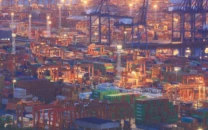
Port inefficiencies add to the problem, with delays in container handling often extending for weeks, particularly during peak periods. This unpredictability discourages international buyers, who require consistent and timely delivery schedules.
In addition to operational challenges, Pakistan faces a perception issue in global markets. Concerns over political and economic stability make foreign buyers hesitant, limiting opportunities for export expansion. Unlike textiles, which benefit from established relationships and diaspora demand, the automotive sector must compete purely on price, quality and reliability, Aizaz said.











This material may not be published, broadcast, rewritten, redistributed or derived from. Unless otherwise stated, all content is copyrighted © 2026 The Express Tribune.






COMMENTS
Comments are moderated and generally will be posted if they are on-topic and not abusive.
For more information, please see our Comments FAQ