Let's begin with Somaliland
Updated 31 minutes ago

For many students, faculty, the digital experience is a fragmented mess of lagging audio and dropped connections
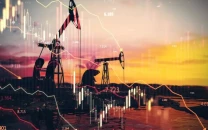
As the global energy crisis forces the Government of Pakistan to trade lecture halls for laptop screens, a stark reality is emerging: one cannot build a "Knowledge Economy" on a foundation of flickering screens and unstable signals. While the move to online teaching was intended as a masterstroke to curb national oil consumption amidst soaring wartime prices, the transition has pulled back the curtain on a series of systemic failures that threaten to derail the academic future of a generation.
Building upon the lessons of the COVID-19 experience of online teaching, the foremost immediate hurdle is the technical void. In the seats of higher learning, the "essentials" are not just books and pens, but a stable internet with a functional bandwidth. For many students and faculty, the digital experience is a fragmented mess of lagging audio and dropped connections. When the government mandates a digital shift without ensuring a robust electromagnetic infrastructure, it effectively silences those in peripheral economies where digital connectivity and particularly high-speed connectivity, remains a myth.
And beyond the wires and waves lies a deeper sociological crisis: the cultural collision of discipline versus distraction. The transition from the campus to the drawing room has triggered a collapse of academic sanctity. In a culture where ill-discipline often prevails, the lack of a physical, supervised environment has led to a "pleasure in killing time". The classroom is used to be a sanctuary of focus; now, it is a battleground against the late-night socialisation, culture of smartphones and the lure of digital escapism.
For female students, the shift is particularly taxing. The virtual classroom does not exist in a vacuum; it exists in a household where "priority changes" the moment a screen is turned off. Traditional house chores often take precedence over virtual lectures, forcing female scholars to juggle domestic expectations with academic rigour - a burden their male counterparts often escape.
Further, in a society where the physical world is already partitioned by rigid hierarchies and traditional silences, the university campus has long served as the final frontier of expression. For many, particularly young women, the lecture hall was the only "agreed space" where their presence was mandatory, and their voices were, at least in theory, equal. However, as we retreat into the virtual mirage to save on fuel and oil, we are inadvertently snatching away the few crumbs of agency these students had left.
In the traditional classroom, the "personal is professional". Our educators are not just dispensers of information; they are masters of the personalised setting. They thrive on the subtle cues that no webcam can capture - the hesitant half-raise of a hand, the contemplative nod of a student in the back row, or the collective surge of energy when a difficult concept finally clicks.
The campus offered a physical boundary - a temporary escape from the relentless demands of domesticity. The campus was a space where they could be scholars first. By moving teaching online, we have dissolved that boundary. In-person education has a soul - it has the laughter in the corridors and the mentorship that happens when a student walks with a teacher after class. These are the moments where real growth happens, where a young person feels "heard" for the first time.
The physical campus offers a flexibility of fun and learn - the spontaneous debate in the corridor, the shared tea after a difficult seminar, and the mentorship that happens in the margins of a syllabus. Online, these moments are sterilised. The experience is too structured, too rigid, and ultimately, too hollow.
A new world order is indeed emerging, but it requires more than just a change in currency or a shift in trade routes. It requires a commitment to the intellectual infrastructure of the nation. Without addressing the digital divide, the cultural distractions and the need for a personalised pedagogy, the virtual university will remain a digital mirage - a temporary shield against an oil crisis that leaves the mind parched. While the government may succeed in saving barrels of oil, it must ask itself: What is the cost of an "uneducated" education?









This material may not be published, broadcast, rewritten, redistributed or derived from. Unless otherwise stated, all content is copyrighted © 2026 The Express Tribune.

COMMENTS (1)
Comments are moderated and generally will be posted if they are on-topic and not abusive.
For more information, please see our Comments FAQ