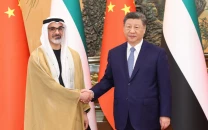
Xi puts forward 4-point Mideast peace proposal
Updated 2 hours ago

'We have heard such reports in the media, but no direct or indirect talks have taken place so far'
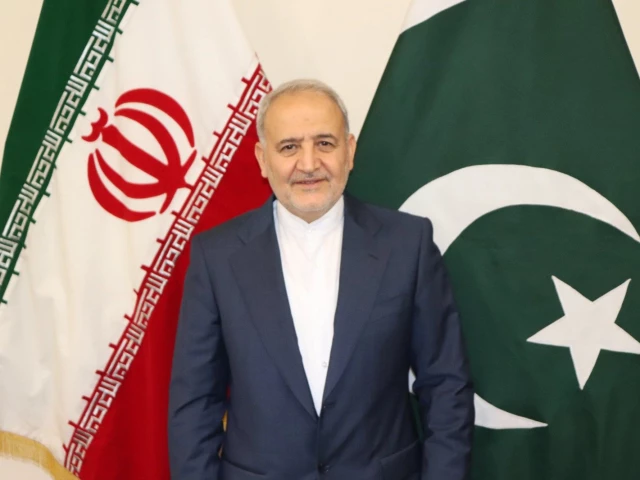
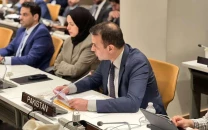
Iran’s ambassador to Pakistan, Reza Amiri Moghadam, said on Wednesday there have been no negotiations between Tehran and Washington, contradicting remarks by US President Donald Trump suggesting progress in efforts to end the conflict.
“We have heard such reports in the media, but according to my information, no direct or indirect talks have taken place so far,” the envoy said, adding it was natural for friendly countries to engage both sides in efforts to halt what he described as “illegitimate aggression.”
Separately, Iran’s military dismissed Washington’s claims of diplomacy. Ebrahim Zolfaqari, spokesperson for the Khatam al-Anbiya Central Headquarters, said the United States was effectively “negotiating with itself,” according to state media.
He also warned that regional stability would remain tied to Iran’s military posture, adding that pre-war economic conditions would not return unless Washington changed course.
Missile strikes widen conflict
Fighting continued to intensify across the region, with Iran launching a fresh wave of missiles and drones early Wednesday targeting Israel and locations hosting US forces in Kuwait, Jordan and Bahrain, the Revolutionary Guards said.
Air raid sirens sounded across central Israel, with AFP footage showing missile trails over the coastal city of Netanya. In Kuwait, a drone strike hit a fuel tank at the international airport, triggering a fire, while Jordan reported falling debris near Amman, and Bahrain activated air defense alerts.
The conflict, which began on February 28 with coordinated US and Israeli strikes on Iran, has since spread across the Middle East, disrupting global energy markets and aviation routes. Gulf countries—long viewed as relatively stable—have come under increasing threat, affecting tourism and air travel across major hubs.
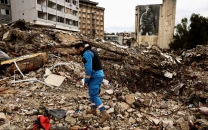
The violence has also expanded into Lebanon, where Israeli forces have intensified operations against Iran-backed Hezbollah. Strikes in Beirut’s southern suburbs and other areas have caused widespread damage, while authorities say more than 1,000 people have been killed and over a million displaced.
'Very big present'
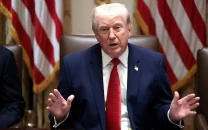
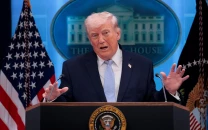
Amid the escalating violence, Trump signalled renewed interest in diplomacy, saying the United States was “in negotiations right now” with Iran. He also claimed Tehran had offered a “very big present” linked to the Strait of Hormuz, which he said indicated Washington was engaging with the “right people,” though he gave no further details.
The strategic waterway, through which roughly a fifth of global oil supplies pass, has been partially disrupted by the conflict, pushing energy prices higher. Iran has warned it could restrict access further in response to continued attacks.
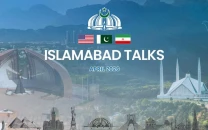
Despite Trump’s remarks, there has been no official confirmation from Tehran of any talks. Media reports have suggested Washington may be exploring backchannel diplomacy, potentially involving intermediaries including Pakistan. However, US preparations for a possible escalation continue, with The Wall Street Journal reporting plans to deploy additional troops to the region.
Strait tensions and global impact
The disruption has already begun to weigh on the global economy, prompting governments to curb energy use and airlines to reroute or cancel flights. However, signs of possible diplomacy, combined with Iran’s limited assurances on shipping, have helped stabilise markets, with oil prices easing in Asian trade.
The broader economic risks were underscored by a warning from Jean-Marie Paugam of the World Trade Organization, who said supply disruptions - particularly in fertilisers - could have lasting consequences for global food production. “If fertiliser supplies are affected, it will impact both output and prices, with effects carrying into future harvests,” he said.






This material may not be published, broadcast, rewritten, redistributed or derived from. Unless otherwise stated, all content is copyrighted © 2026 The Express Tribune.






COMMENTS
Comments are moderated and generally will be posted if they are on-topic and not abusive.
For more information, please see our Comments FAQ