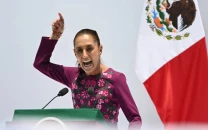
'Mexico is not anyone's pinata,' president sends message to Trump in annual address
Updated 40 minutes ago

Iran FM says country will not agree to Middle East ceasefire, calls strikes on US bases ‘self‑defence’

Two people were killed and 12 injured after a projectile fell on a residential location in Saudi Arabia's Al-Kharj city on Sunday, the Saudi Civil Defence said amid US-Israel-Iran war.
The two people killed were of Indian and Bangladeshi nationalities, it added in a post on X.
Saudi Civil Defense said emergency teams responded on Sunday after the projectile struck a housing site used by a maintenance and cleaning company.
#الدفاع_المدني : سقوط مقذوف عسكري على موقع سكني نتج عنه حالتا وفاة وإصابة (12) مقيمًا بمحافظة الخرج. pic.twitter.com/8836gKxohx
— الدفاع المدني السعودي (@SaudiDCD) March 8, 2026
Al-Kharj lies near Prince Sultan Air Base, a major Saudi air force installation southeast of Riyadh that has been targeted by Iran repeatedly in recent days.
The statement did not specify who launched the projectile.
Iran's Revolutionary Guards said earlier on Sunday that they targeted radar systems in locations including Saudi's Al-Kharj.
US base strikes an ‘act of self‑defence’
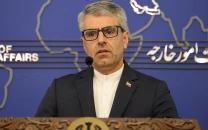
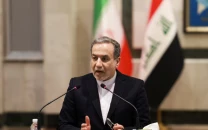
Iran’s Foreign Minister Abbas Araghchi said his country was exercising its right to self‑defence in a war “imposed” by the United States and Israel, and will not agree to a ceasefire in the Middle East, Al Jazeera reported on Sunday, citing NBC News.
In an interview, Aragchi said Iran did not choose the conflict and was acting in self-defence.
“This is not the war of our choice. This is imposed on us by the United States and by Israel,” he said, describing the strikes as “unprovoked, unwarranted and illegal”.
He added that Tehran must “continue fighting for the sake of our people” and would not agree to a ceasefire.
Accusing the US and Israel of targeting civilians, including students and hospitals, Araghchi said previous ceasefires — including the one ending last year’s 12-day conflict — had already been violated.
“There needs to be a permanent end to the war,” he said. “Unless we get to that, I think we need to continue fighting for the sake of our people and our security.”
On Russian involvement, Araghchi acknowledged a longstanding “cooperation between Iran and Russia,” without confirming reports that Moscow is providing intelligence on US military positions. Four sources told NBC News that Russia has shared information that could help Iran locate American forces.
US Ambassador to the United Nations Mike Waltz commented on the reports, stating that while Russia and Iran maintain a “symbiotic relationship,” any assistance has not significantly hindered US operations, which he said have decimated Iranian military capabilities.
Araghchi also addressed regional attacks, saying Iran had not intentionally targeted neighbouring Gulf countries but had struck American bases and installations within their territories. He added that Iranian President Masoud Pezeshkian had apologised to regional populations for “inconveniences” caused by these retaliatory operations.
Regarding US claims about Iran’s missile capabilities, Araghchi refuted assertions that Tehran posed a direct threat to the United States, saying Iran has intentionally limited its missiles to a range below 2,000 kilometres.
Iranians, not Trump, will choose next supreme leader: Araghchi
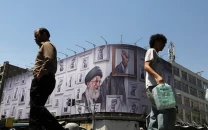
Araghchi confirmed that Iran’s Assembly of Experts has chosen a new supreme leader following the death of Ayatollah Ali Khamenei, but offered no details on the successor. He emphasised that Iran will not allow outside interference in selecting its new leader.
“Iranians, not Trump, will elect their new leader,” Araghchi told NBC, after US President Donald Trump said he should have a role in picking Khamenei’s successor.
“We allow nobody to interfere in our domestic affairs. This is up to the Iranian people to elect their new leader,” he said. Araghchi also demanded that Trump “should apologise to people of the region and the Iranian people for the killings and destruction they have done against us.”
Earlier, Trump said Iran’s next supreme leader “is not going to last long” if Tehran does not first obtain his approval.
“He’s going to have to get approval from us,” Trump told ABC News. “If he doesn’t get approval from us, he’s not going to last long.”
The Iranian clerical body responsible for choosing the successor was reported to have voted and is expected to announce a name soon.
Trump has also demanded “unconditional surrender” from Iran, but Waltz described US goals as ensuring a government that no longer threatens Americans, allies, or global energy security.
IRGC warns of retaliation
Meanwhile, a spokesperson for the Islamic Revolutionary Guard Corps (IRGC) said it would retaliate if alleged US‑Israel attacks on energy infrastructure continue, Al Jazeera reported.
In a statement carried by Iranian state media, the spokesperson accused the US and Israel of targeting civilians and fuel and energy facilities, adding that the IRGC “have refrained from any similar action”.
The spokesperson warned Gulf countries to tell the US and Israel to stop, or else “similar actions will be taken in the region”.
“If you can tolerate oil at more than $200 per barrel, continue this game,” the statement concluded.
Iran says it could fight US and Israel for six months as regional conflict widens
Iran's Revolutionary Guards said Sunday that the country's forces could fight an intense war for six months against the United States and Israel, which said it struck Tehran's commanders at a seaside hotel in the heart of Beirut.
As the conflict spilled into its second week, the regional repercussions spiraled, with Saudi Arabia intercepting a wave of drones headed for targets including the diplomatic quarter in capital Riyadh and Kuwait saying an attack hit fuel tanks at its international airport.
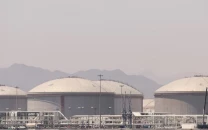
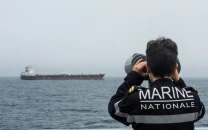
The strike on Kuwait's aviation fuel storage compounded fears over energy supplies with the country's national oil company also announcing a cut in crude production over threats to the Strait of Hormuz, where a fifth of the world's oil and gas transit.
Tehran accused the US and Israel of striking an oil depot in the Iranian capital on Saturday, the first reported assault on the Islamic republic's oil infrastructure as stock markets have slumped and crude prices surged.
🇬🇧 Tehran, the gates of hell had opened. 🇬🇧
— Marx Anthony (@10MarXmen) March 8, 2026
That is how witnesses across the Iranian capital described the night the sky turned orange and flames tore across the skyline after a wave of devastating airstrikes targeted major oil infrastructure.
Videos flooding social media show… pic.twitter.com/47VMCQLdz3
The Israeli military said it struck "a number of fuel storage facilities in Tehran" that were used "to operate military infrastructure".
Israel's military also launched a new wave of strikes "across Tehran" on Sunday, after carrying out a precision strike targeting "key commanders" in the Quds Force, the foreign operations arm of Iran's Revolutionary Guards, at a hotel in an area of central Beirut popular with tourists.
Iran's President Masoud Pezeshkian said his remarks were "misinterpreted by the enemy that seeks to sow division with neighbours", state TV reported on Sunday, after they were viewed as a decision to suspend attacks on Gulf countries while strikes did not stop.
"It has repeatedly been said we are brothers and must have good relations with neighbours. However, we are forced to retaliate to attacks but this does not mean we have a dispute with a (neighbouring) country or want to upset their people," Pezeshkian said.
Israel said it had initiated fresh strikes across Iran today, and a huge fire engulfed a government office block in Kuwait hit by drones, as a war that has brought chaos to the Middle East and roiled global oil markets entered its second week.
The Israeli military said it struck several Iranian fuel storage sites on Saturday, with explosions seen in capital, Tehran, and neighboring city, Karaj.
The Israeli military said in a statement that "the military forces of the Iranian terrorist regime make direct and frequent use of these fuel tanks to operate military infrastructure."
"Through them, the Iranian terrorist regime distributes fuel to various consumers, including military entities in Iran," it read.
"The IDF will continue to operate with determination in order to significantly degrade the regime's capabilities and remove threats to the State of Israel," it adds.
Videos of it are circulating on social media.
Trump has justified the attack by saying Iran posed an imminent threat to the United States, without providing evidence, and was getting too close to being able to build a nuclear weapon.
The US and Israel have discussed sending special forces into Iran to secure its stockpile of highly enriched uranium at a later stage of the war, Axios reported, citing four people with knowledge of the discussions. The White House did not immediately comment on the report.
Iran's president apologised to neighbouring states for its attacks on US facilities in those countries, in an attempt to cool anger across the Gulf, but stirred criticism from hardliners at home.
Despite the Iranian president's apology on Saturday, Iranian attack drones have struck targets in Saudi Arabia and Kuwait, officials in both countries said early Sunday.
In a post on X, the Saudi Defence Ministry said at least 15 drones had been intercepted and destroyed within the kingdom's airspace. It also said the drones had tried to attack the diplomatic quarter in the capital, Riyadh.
المتحدث الرسمي لـ #وزارة_الدفاع: إحباط محاولات استهداف بثلاث مسيّرات بعد إسقاطها في مدينة الرياض. pic.twitter.com/5cOHatBLIF
— وزارة الدفاع (@modgovksa) March 8, 2026
In Kuwait, the Defence Ministry said fuel tanks at the country's international airport had been targeted by Iranian attack drones early on Sunday.
"Kuwaiti Air Defences are currently responding to hostile missile and drone threats," the ministry said on X. It added that "explosions that may be heard are the result of air defence systems intercepting hostile targets."
Kuwait Ministry of Defense says they "are still dealing with a wave of hostile drones that have penetrated the country's airspace...air defense systems and warplanes are still engaging hostile aerial targets" https://t.co/ZQYwz7mp3Q pic.twitter.com/x7UCZDG17Z
— Steve Lookner (@lookner) March 8, 2026
Kuwait said the drone attack had directly targeted "vital infrastructure."
The army later said it had intercepted at least three ballistic missiles that had entered Kuwait's airspace.
In a separate statement, Kuwait said civilian facilities had been damaged by fragments and debris from intercepted drones.
Footage on social media showed a skyscraper in Kuwait City engulfed in flames.
Firefighters have brought the fire at the fuel storage tanks of Kuwait International Airport under control. Crews are still working to contain another fire at the headquarters of the Public Institution for Social Security.
— Basha باشا (@BashaReport) March 8, 2026
Furthermore, U.S. forces also recorded the moment an… pic.twitter.com/DVNnuvYonq
Saudi Arabia has told Tehran that continued Iranian attacks on the kingdom and its energy sector could push Riyadh to respond in kind, four people familiar with the matter told Reuters.
The governments of Saudi Arabia, Kuwait and the United Arab Emirates reported Iranian drone attacks in their countries on Saturday and early Sunday with varying degrees of damage but no reported deaths. Iran's Revolutionary Guards also targeted US forces at a base in Bahrain, Iranian state media said.
Iran's president apologised to neighbouring states for its attacks on US facilities in those countries, in an attempt to cool anger across the Gulf, but stirred criticism from hardliners at home.
"I personally apologise to neighbouring countries that were affected by Iran's actions," Iranian President Masoud Pezeshkian said, urging them not to join US-Israeli attacks on Iran.
He dismissed Trump's demand for the Islamic Republic's unconditional surrender as "a dream," but said its temporary leadership council had agreed to suspend attacks on nearby states unless strikes on Iran originated from their territory.
Read: No way home
Pezeshkian's comments caused a political stir in Iran, prompting his office to reiterate that Iran's military would respond firmly to attacks from US bases. Ali Larijani, Iran's secretary of the Supreme National Security Council, said on state television there was no rift among Iranian officials over its handling of the war.
The US State Department did not immediately respond to a request for comment.
US President Donald Trump said he is not interested in negotiating with Iran and raised the possibility that the Iran war would only end once Tehran no longer has a functioning military or any remaining leadership in power.
Speaking to reporters aboard Air Force One on Saturday, Trump said the air campaign could make negotiations a moot point if all potential leaders of Iran are killed and the Iranian military is destroyed.
"At some point, I don't think there will be anybody left maybe to say 'We surrender,'" Trump said.
⚡️🇺🇸BREAKING:
— Suppressed News. (@SuppressedNws1) March 7, 2026
Reporter: Did the US bomb an elementary school & kill 175 people?
Trump: Based on what I’ve seen, it was done by Iran.
Reporter: Is that true Mr. Hegseth?
Hegseth: We’re investigating.
Trump: It was done by Iran. They are very inaccurate with their munitions.… pic.twitter.com/zNyauJCtGg
Israel and Iran traded numerous attacks on Saturday as the US-Israeli war against Iran entered a second week.
In the United States, the White House halted, for now, a federal security bulletin that would have warned of a heightened threat to the US in light of the Iran conflict, a Trump administration official told Reuters. But a recent US intelligence assessment had warned that Iran and its proxies "probably" pose a threat of targeted attacks on the United States.
In Oslo, the US embassy was hit by an explosion early on Sunday, causing minor damage but no injuries, Norwegian police said. Smoke was seen rising from the area around the embassy compound, eyewitnesses told Norwegian daily Verdens Gang. It was not immediately clear what caused the blast or who was involved.
Huge explosions were heard in parts of Tehran, state media reported, while Israel said it had struck Iranian missile sites and command centres.
Read More: Iranian clerics seek swift naming of new supreme leader
The US-Israeli attacks have killed at least 1,332 Iranian civilians and wounded thousands, according to Iran's UN ambassador, Amir Saeid Iravani.
US forces were likely responsible for an apparent strike on an Iranian girls' school that killed scores of children, US officials have told Reuters. But Trump, without citing evidence, told reporters on Saturday that Iran was responsible.
"We think it was done by Iran because they are very inaccurate, as you know, with their munitions. They have no accuracy whatsoever. It was done by Iran," said Trump. Defence Secretary Pete Hegseth, standing behind Trump aboard Air Force One, said the matter was still under investigation.
Iranian attacks have killed 10 people in Israel. At least six US service members have been killed. Their remains arrived on Saturday at an Air Force base in Delaware.
In Iran, local news agencies, citing an Iranian Oil Ministry source, said its fuel depots were hit by strikes in three areas, including Karaj, west of Tehran.
BREAKING: 🇮🇷 Fires continue to burn at the Shahran oil depot in Tehran after overnight US-Israeli strikes targeted fuel storage facilities. #Iran #Tehran #BreakingNews #IranIsraelWar #USIran #MiddleEast #OilDepot #Airstrikes #Geopolitics pic.twitter.com/Anvwy9ZP9w
— WorldNewsRank (@WNewsRankX) March 8, 2026
Tehran has responded to the US-Israeli war on Iran by hitting Israel and Gulf Arab states hosting US military installations. Israel has launched fresh attacks in Lebanon after the Iran-aligned militia Hezbollah fired across the border.
With the conflict spreading, Israel warned Lebanon of a "very heavy price" if it did not rein in Iran-allied Hezbollah fighters, as it pounded the group's strongholds with airstrikes and mounted a deadly airborne raid in the east.
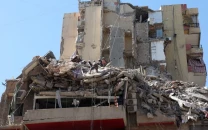
On Saturday morning, more buildings in Beirut's Hezbollah-controlled southern suburbs had been reduced to rubble, dust and tangled wires, Reuters video showed.
The death toll from Israel's attacks on Lebanon since Monday rose to around 300, after at least four people were killed when an Israeli strike hit an apartment in the Ramada hotel building in central Beirut, Lebanon's health ministry said. It was the first strike to hit the heart of the capital since Israel-Hezbollah hostilities resumed last week.
Iran's apparent strategy of maximum chaos has driven up the costs of the conflict by raising energy prices and hurting global business and logistics links.
Kuwait's national oil company began cutting output on Saturday, adding to earlier oil and gas cuts from Iraq and Qatar.
The war has roiled global markets, and oil prices have hit multi-year highs with the Strait of Hormuz effectively shut.
Hardline clerics have called for the swift selection of a new supreme leader, Iranian media reported on Saturday, with meetings occurring as soon as Sunday.





This material may not be published, broadcast, rewritten, redistributed or derived from. Unless otherwise stated, all content is copyrighted © 2026 The Express Tribune.






COMMENTS (1)
Comments are moderated and generally will be posted if they are on-topic and not abusive.
For more information, please see our Comments FAQ