KSE-100 drops 2,000 points as US-Iran deadlock persists
Updated 1 hour ago

Govt informs IMF about delay till year-end as reforms are yet to be implemented
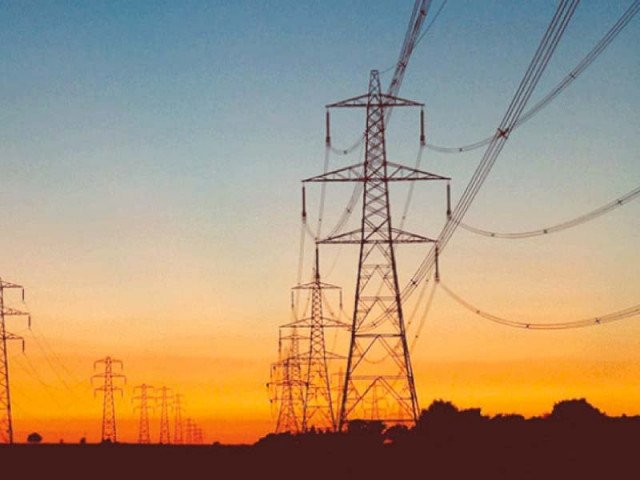
Pakistan has informed the International Monetary Fund (IMF) that the privatisation of three power distribution companies (DISCOs) has been delayed to the fag end of the current year due to non-resolution of some core issues as the bureaucracy lacks the capacity to undertake home-grown reforms.
In a briefing to an IMF mission this week, according to sources, the Privatisation Commission said that it could not ensure the privatisation of Islamabad Electric Supply Company, Faisalabad Electric Supply Company and Gujranwala Electric Power Company by early 2026. Based on the actions identified by the World Bank, the government had earlier agreed with the IMF that it would privatise the three entities at the beginning of 2026. However, it has not yet invited Expressions of Interest from prospective buyers.
The financial adviser hired for these transactions has identified new areas that need to be addressed before the government moves ahead with the sale of these entities, according to officials. They said that the potential buyers also expressed concern over the role of the power-sector regulator in determining investment requirements, recovery ratios and the reduction in losses. The privatisation of the first batch of three DISCOs would now take place around September-October this year, said Muhammad Ali, Adviser to Prime Minister on Privatisation.
The timeline was initially based on the prior conditions recommended by the World Bank but when the Privatisation Commission and the financial adviser looked at the transaction structures, they realised that a lot more things needed to be done, said Muhammad Ali.
He added that the commission was considering moving from the guaranteed rate of return on investment to a performance-based model, which would encourage the private sector to improve efficiency and slash losses.Nepra's recent decision in a K-Electric case has also dashed the government's hopes for attracting serious and big businesses to the privatisation process of DISCOs. It is not for the first time the government has delayed the privatisation of power companies. In the past two years, the only success was the sale of PIA. The capacity gap of economic ministries has also become a major obstacle to efforts to introduce home-grown reforms. Any effort to bring efficiency to the state-owned enterprises is either led by the foreign creditors or the government's desire to get more loans in the name of reforms.
On paper, the country has an impressive economic governance structure: the Ministry of Finance, the Federal Board of Revenue, the State Bank of Pakistan, the Planning Commission, the Power Division and a host of regulatory bodies and line ministries. These institutions collectively employ thousands of officials, command significant public resources and occupy a central position in policymaking. When it comes to designing and implementing serious economic reforms, a striking paradox emerges. Much of the intellectual and technical direction for reforms comes not from these institutions, but from outside, primarily from the IMF, the World Bank, the Asian Development Bank and bilateral partners.
From tax reform to energy pricing, from state-owned enterprise restructuring to debt management, the reform agenda has repeatedly been shaped through the external technical assistance and programme conditions. Multilateral institutions diagnose the problem, outline policy response, define benchmarks and return periodically to evaluate progress.
The external institutions repeatedly identify the problems, design reforms and supervise their implementation but when it comes in the hands of the bureaucracy and the political leadership, there are always gaps, according to people aware of these discussions.
The IMF and the World Bank have long been pushing to reduce circular debt, distribution losses, address delayed tariff adjustments and better target subsidies but the civil servants have not been able to deliver on these goals. Tariff rationalisation, subsidy reform, governance benchmarks for DISCOs and cost-recovery frameworks continue to be pushed largely by the World Bank and the IMF.
For a problem that has existed for years, the domestic system still appears unable to produce and sustain a credible reform path of its own, commented a person who has handled these negotiations from the lenders' side.
For decades, many of Pakistan's SOEs have imposed heavy fiscal costs while delivering poor services. Yet frameworks for triage, restructuring, governance reform and privatisation have depended heavily on multilateral advice and donor-backed initiatives.
Pakistani taxpayers finance the salaries, pensions, vehicles, offices and administrative overheads of the country's economic bureaucracy. At the same time, the state relies on loans and donor-funded technical assistance to help perform the functions these institutions are supposed to carry out themselves. Prolonged dependence also weakens reform ownership. Policies are seen as IMF conditions or donor templates rather than domestically generated solutions. This is the reason that privatisation has become more of an agenda of the IMF programme, rather than a need to reduce annual losses of Rs1 trillion.











This material may not be published, broadcast, rewritten, redistributed or derived from. Unless otherwise stated, all content is copyrighted © 2026 The Express Tribune.



COMMENTS
Comments are moderated and generally will be posted if they are on-topic and not abusive.
For more information, please see our Comments FAQ