Minister springs into action as Asif goes public with LESCO complaint
Updated 11 minutes ago

Says military and political leadership in constant contact with Iran and Gulf countries to de-escalate situation
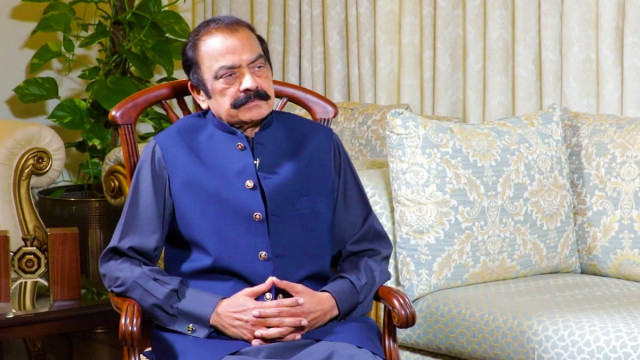
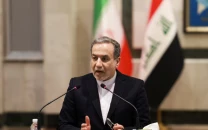
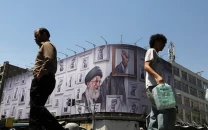
Prime Minister's Adviser on Political Affairs Rana Sanaullah said on Wednesday that Pakistan was acting as a mediator between Saudi Arabia and Iran to defuse tensions, as Tehran targeted US bases in the Gulf region and oil refineries in Saudi Arabia following strikes by the United States and Israel that killed Supreme Leader Ayatollah Khamenei.
The US and Israel launched joint strikes in Iran last week that killed 201 and injured over 700. Iranian state media confirmed that Khamenei died while working in his central leadership compound, alongside family members, including his daughter and grandchildren. Since then, Iran has targeted multiple US bases in surrounding Gulf States, including Dubai, Abu Dhabi, Bahrain, Qatar, Kuwait and Iraq, causing multiple countries to temporarily shut their airspace.
Speaking in an interview on the private news channel programme Geo Pakistan about Pakistan's diplomacy amid the situation, Sanaullah said: “Pakistan is actively mediating between Iran and Gulf countries to prevent the conflict in the region from escalating. In today’s in-camera meeting, the political and military leadership briefed that they have maintained communication with Iran to resolve misunderstandings and prevent attacks on Gulf countries."
He added that Foreign Minister Ishaq Dar also briefed the in-camera session on ongoing discussions with Iran.
"According to Dar, Iran has stated that if Saudi Arabia guarantees its territory will not be used against Iran, it would refrain from carrying out attacks, he said.
Sanaullah said Pakistan's diplomatic efforts were focused on ensuring that the war imposed on Iran ended with an agreement..
Read More: Dar reminds Iran of Pak-Saudi defence pact
“In previous negotiations, our political and military leadership played an active role to reach a settlement on this matter,” Sanaullah added.
He noted that while significant progress had been made in prior agreements, recent US and Israel attacks had no justification, adding that Iran had the full right to respond to any violations of its sovereignty.
“Perhaps the US assumed that after Khamenei’s death, Iran would back down and accept American conditions, but that did not happen. Iran responded strongly, and it seems the conflict could be prolonged,” he said.
Sanaullah said Prime Minister Shehbaz Sharif was in touch with regional leaders to ensure de-escalation.
“Gulf countries have informed the prime minister that US bases were established in these areas long ago, and Pakistan agrees that Iran should not carry out attacks,” he added.
Also Read: US strikes 2,000 targets in Iran as retaliation spreads across Gulf region
Commenting on Operation Ghazab Lil Haq, launched in response to “unprovoked action” from across the Afghan border, Sanaullah said, “Pakistan’s goals, strategic planning and the achievements Pakistan seeks have almost been achieved. Now, they are being fortified.”
He further added that Pakistan’s objective was to prevent its territory from being used for terrorism and to create a buffer zone monitored jointly by friendly nations.
Sanaullah said that Kabul had resisted the creation of such a buffer zone and that terrorist activities continued unabated. He added that this necessitated the elimination of training centres and checkposts along the border, which he said were used to engage Pakistani forces and allow terrorists to infiltrate.
He noted that Pakistan had also engaged in talks with Afghanistan for an agreement, including through friendly countries, but progress was difficult due to India’s influence, saying that India was providing funds and training facilities.
“We don’t want anything from them except one demand — that they step back. If they back off from it, we have no fight with them,” he added, reiterating Pakistan’s position.
Sanaullah also highlighted Pakistan’s long-standing support for Afghan refugees, saying the country has “been providing all sorts of facilities for the past 40 years” and is ready to continue that assistance.
Commenting on the Pakistan Tehreek-e-Insaf's (PTI) absence from the in-camera session, Sanaullah said that he and Tariq Fazal met PTI Chairman Barrister Gohar and Opposition Leader in the National Assembly Mehmood Achakzai yesterday.
“I requested them that this is a national issue. We must set aside our personal politics, sit together and contribute,” he said.
Also Read: National unity, consensus and solidarity emphasised in briefing to parliamentarians
He added that in his meeting with Opposition Leader in Senate Raja Nasir Abbas, the latter was very positive but said the matter would be placed before his party’s political committee.
“PTI’s political committee stated this morning that it would only participate if a meeting with Imran Khan was arranged first,” he said.
He noted that a meeting with Imran was not possible today, but added, “We told them that on a national issue, if you sit with us, the rest of the matters may become easier.”
Sanaullah criticised PTI’s stance, saying its “isolationist attitude will not decide anything.” He added that PTI was unable to understand the gravity of the situation and that “this is the attitude because of which they are in this situation today.”




This material may not be published, broadcast, rewritten, redistributed or derived from. Unless otherwise stated, all content is copyrighted © 2026 The Express Tribune.



COMMENTS (2)
Comments are moderated and generally will be posted if they are on-topic and not abusive.
For more information, please see our Comments FAQ