Aga Khan wraps up Pakistan visit after high-level engagements with political leaders
Updated 1 hour ago

Pakistan mounts 'full diplomatic effort'
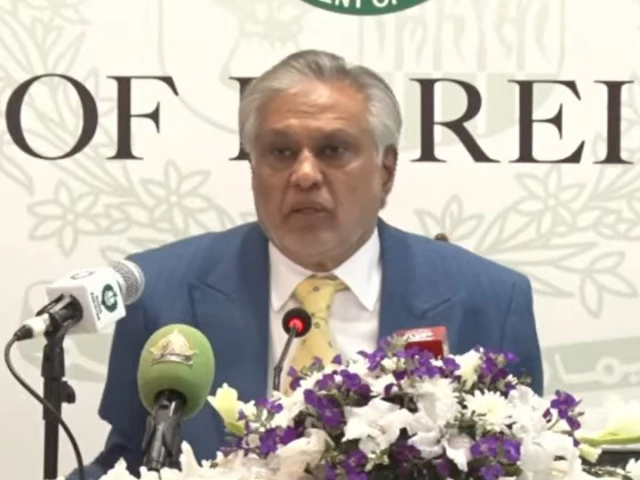
Deputy Prime Minister and Foreign Minister Ishaq Dar on Monday said Pakistan had launched "full diplomatic efforts" to de-escalate tensions in the Middle East following US and Israeli attacks on Iran, warning that the situation had significantly worsened an already fragile regional environment.
Addressing a media briefing in Islamabad, Dar said the recent escalation had "significantly heightened tensions in an already volatile and fragile environment" and stressed that Pakistan was urging all sides to step back.
"We are making full diplomatic efforts and requesting all parties to de-escalate," he said.
He noted that serious developments had unfolded at a time when diplomatic channels were still open and negotiations were underway.
Referring to Prime Minister Shehbaz Sharif's recent visit to Austria, Dar said he had also held discussions with the International Atomic Energy Agency (IAEA), adding that the feedback received was positive.
"Serious developments" had taken place while efforts were underway to reach a peaceful and negotiated solution, he said, questioning what had suddenly triggered such a sweeping escalation.
Dar expressed concern over the assassination of Iran's Supreme Leader Ayatollah Ali Khamenei, saying Pakistan was troubled by violations of international norms and law, particularly the targeting of heads of state and government.
He reiterated that Pakistan's stance had been "clear and persistent" that all countries must abide by the UN Charter, respect sovereignty and territorial integrity, and uphold international humanitarian law.
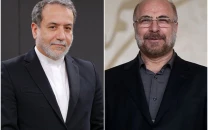
The foreign minister said he had spoken to Iran's Foreign Minister Abbas Aragchi last week, conveying Pakistan's condemnation of the attacks and calling for diplomacy, restraint and dialogue, a message he said was received positively.
However, he acknowledged that the situation on the ground remained volatile.
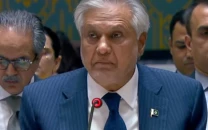
Referring to the emergency meeting of the United Nations Security Council, Dar said Pakistan's permanent representative had reiterated Islamabad's condemnation of the attack on Iran.
He added that he had spoken to several foreign ministers and found no disagreement with the view that dialogue and diplomacy were the only way forward.
Dar said Pakistan stood in full solidarity with brotherly countries and urged maximum restraint.
While acknowledging that Iran's retaliatory strikes were in self-defence, he said Pakistan regretted and condemned attacks affecting Saudi Arabia, Bahrain, Jordan, Kuwait, Qatar, the UAE and Oman. "We can't have double standards," he said, adding that even if Iran had claimed to target US bases, there was "no justification."
He said developments over the past 72 hours were "very, very worrisome," adding that Pakistan's outreach at the leadership level had consistently called for an immediate halt to escalation and urgent resumption of diplomacy. Pakistan, he said, stood ready to support a peaceful and negotiated resolution.
Recalling earlier rounds of US-Iran negotiations, including those held last year and in Geneva and Oman, Dar said Pakistan had encouraged both sides toward a "viable, win-win" solution and had counselled both capitals positively.
He also noted that millions of Pakistanis lived in Gulf countries and regretted the death of a Pakistani national in Iran's strike on Abu Dhabi. Pakistan's missions in the region, he said, were fully engaged with local authorities to assist the diaspora.
Operation Ghazab lil Haq 'in self-defence'
Turning to Afghanistan, Dar said Pakistan sought good relations with all neighbours and had consistently asked Kabul not to allow its soil to be used for terrorism.
"We had only one demand, that please do not allow the Balochistan Liberation Army, the Tehreek-E-Taliban Pakistan, the Majeed Brigade, which have been proscribed by many countries, or provide them facilitation," he said.
He recalled "serious violations" in October 2025 and said Pakistani soldiers had been martyred every week, a situation "certainly not acceptable under any circumstances." After repeated terrorist attacks, he said, Pakistan had no option but to launch Operation Ghazab lil Haq.
"We have the capacity, we have the will, we have the kinetic capability to handle it in a very meaningful way. But we have been exercising extreme restraint," he said.
Dar said talks held with the Afghan Taliban in Qatar and Turkiye after the October clashes yielded no results.
He asserted that Operation Ghazab lil Haq was launched in response to repeated terrorist attacks by Fitna Al Khawarij and Fitna Al Hindustan emanating from Afghan soil, as well as provocative actions by the Afghan Taliban on the night of February 26.
He cited high-profile incidents, including the Islamabad court bombing, coordinated BLA attacks in Balochistan and the February 6 imambargah suicide bombing, claiming Pakistan had conclusive evidence that recent attacks in Bajaur and Bannu were carried out by the TTP at the direction of Afghanistan-based handlers.
Before launching the broader operation, Pakistan carried out intelligence-based targeting of seven terrorist camps on February 21, Dar said. He stressed that Pakistan's actions were "proportionate, minimum and measured," aimed solely at terrorist camps while avoiding civilian casualties.
Describing Afghan Taliban actions across 53 locations in 15 sectors of Khyber Pakhtunkhwa on February 26 as "horrifying" and "totally lunatic," Dar said such provocations were "totally a no-go for Pakistan".
He said initial aerial operations targeted 22 military installations across Kabul, Kandahar, Paktia, Nangarhar, Khost and Paktika, later expanding to 37 locations.
According to Dar, 415 Taliban regime personnel and khwarij were eliminated, 182 posts destroyed, 31 posts captured, and 185 tanks and armoured carriers destroyed.
Diplomatic outreach continues
Separately, Dar met Chinese Ambassador Jiang Zaidong to discuss the evolving regional situation and broader developments, emphasising dialogue, diplomacy and continued consultations.
He also spoke with EU High Representative and Vice President Kaja Kallas. Both sides expressed deep concern over developments in Iran and the wider Middle East.
Dar stressed the need for de-escalation and briefed the EU official on Pakistan-Afghanistan tensions, appreciating the EU's constructive engagement. Both agreed to remain in close contact as the situation evolves.
As the region faces simultaneous flashpoints, Islamabad is positioning itself as both a diplomatic advocate of restraint and a security actor prepared to respond where it deems necessary.




This material may not be published, broadcast, rewritten, redistributed or derived from. Unless otherwise stated, all content is copyrighted © 2026 The Express Tribune.






COMMENTS
Comments are moderated and generally will be posted if they are on-topic and not abusive.
For more information, please see our Comments FAQ