Is SBP hiding its exchange rate assumptions?
Updated 2 hours ago

Study finds high entry barriers, regulatory complexities in automobile industry
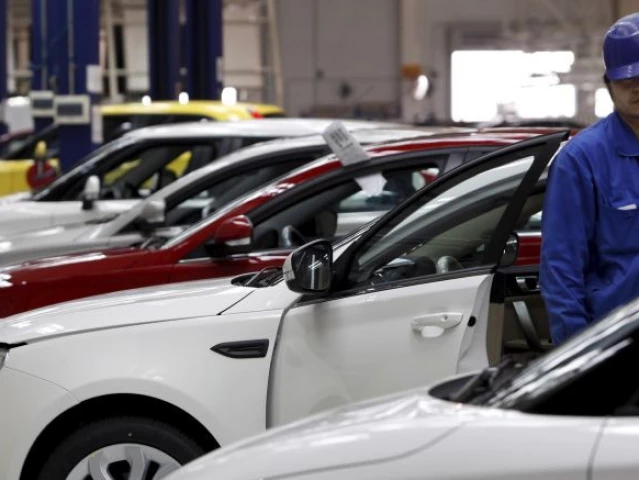
The Competition Commission of Pakistan (CCP) has released a comprehensive report, "The Road to Fair Competition – A Study of Pakistan's Automobile Industry," highlighting structural and regulatory challenges in the sector and recommending wide-ranging reforms, including a long-term policy roadmap, improved vehicle financing and removal of regulatory distortions to foster competition and efficiency.
The automobile industry remains a cornerstone of Pakistan's economy, contributing around 2.8% to GDP and employing more than 215,000 people directly. As a key segment of large-scale manufacturing, it plays an important role in industrial growth, technology transfer and domestic value addition, particularly in the passenger car segment, including emerging electric vehicles.
The CCP study finds that despite successive policy interventions, the passenger car market remains concentrated in several engine categories due to high entry barriers, capital-intensive requirements and regulatory complexities. While past protectionist policies helped establish domestic manufacturing, prolonged tariff protections and localisation measures have not consistently translated into competitive outcomes or export-led growth.
The report also highlights fragmentation in the regulatory framework, with overlapping institutional mandates and policy inconsistencies affecting investment and industry development. Although previous auto policies aimed to increase localisation, attract new entrants and promote exports, structural rigidities, policy reversals and weak implementation limited their effectiveness. To address affordability constraints and stimulate demand, the CCP has recommended expanding access to auto financing by reviewing restrictive financing limits and introducing targeted, subsidised schemes for first-time buyers in coordination with financial regulators.
The study emphasises the need for a predictable and coordinated transition to electric vehicles, noting that inadequate charging infrastructure, limited domestic production capacity and reliance on fossil fuel-based electricity remain key barriers. It stresses that sustained policy consistency and infrastructure investment will be critical to attract long-term private investment in the EV ecosystem.
The report observes the absence of a comprehensive vehicle scrap and phase-out policy and recommends the introduction of a structured disposal scheme to address environmental concerns, improve road safety and stimulate demand through the gradual removal of obsolete and high-emission vehicles.













This material may not be published, broadcast, rewritten, redistributed or derived from. Unless otherwise stated, all content is copyrighted © 2026 The Express Tribune.







COMMENTS
Comments are moderated and generally will be posted if they are on-topic and not abusive.
For more information, please see our Comments FAQ