SC redefines digital justice benchmarks
Updated 4 hours ago

New reforms aim to enhance transparency and security
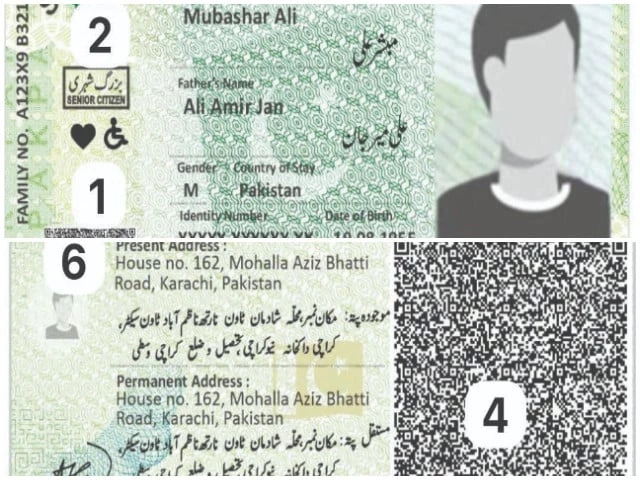
The government has approved major reforms to the national identity documentation framework, introducing QR-based verification, stronger anti-fraud measures and enhanced biometric standards as part of a broader digital governance strategy.
The reforms were notified by the National Database and Registration Authority (NADRA), amending the National Identity Card Rules 2002 and Pakistan Origin Card Rules 2002. The changes were officially published in the Gazette of Pakistan on Tuesday.
The new regulatory framework formally introduces Quick Response (QR) codes as a recognised security and verification feature in national identity cards. Officials described the QR code as a secure machine-readable two-dimensional barcode capable of encoding identity information and providing reliable verification data when scanned at authorised service points.
The government has also authorised the use of QR codes or other emerging technological features as potential alternatives to microchip-based authentication systems. The move is expected to allow NADRA greater flexibility in adopting evolving digital verification technologies without requiring frequent amendments to operational rules.
Under the revised system, Pakistan aims to introduce uniform identity cards, replacing the existing dual structure of cards issued with and without microchips. Authorities believe the standardisation will improve service delivery, strengthen digital authentication and reduce administrative complexity across public and regulated sectors.
The QR-enabled identity system is expected to strengthen Pakistan's digital identity infrastructure through the National Data Exchange Layer. The mechanism will allow instant verification at service delivery points while backend systems confirm identity status through secure digital communication channels.
Officials said the reforms would enhance transparency, speed and reliability in identity verification processes. The initiative is also expected to reduce manual intervention, minimise impersonation risks and improve operational efficiency in government and financial institutions.
The updated rules have further strengthened card suspension protocols. Once an identity card is suspended, all associated verification, authentication and service access mechanisms will automatically be considered inactive, ensuring that the document cannot be used for digital or institutional authentication.
Biometric identification standards have also been expanded with the formal inclusion of fingerprint and iris recognition technologies. Authorities described the move as an effort to establish a modern multimodal biometric framework capable of improving accuracy and security. The government has also introduced special lifelong smart identity cards for citizens aged 60 years and above. These cards will carry a senior citizen marker and will be valid for life, eliminating the need for periodic renewal and providing greater convenience to elderly residents.















This material may not be published, broadcast, rewritten, redistributed or derived from. Unless otherwise stated, all content is copyrighted © 2026 The Express Tribune.








COMMENTS (2)
Comments are moderated and generally will be posted if they are on-topic and not abusive.
For more information, please see our Comments FAQ