Gold prices continue to slide in local, global markets
Updated 8 hours ago

Suggest linking growers with global buyers, point to fragmented organic farming
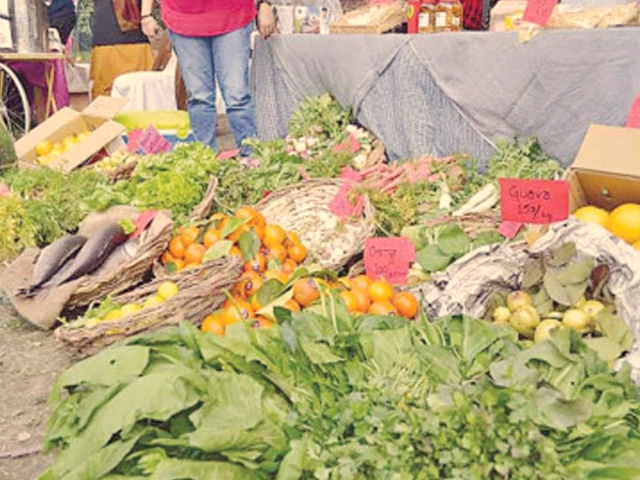
As international demand for chemical-free and traceable food continues to expand, policymakers and exporters are revisiting the potential of the organic sector to secure a stronger foothold in global markets.
The worldwide organic food market is expected to reach $300 billion in 2026 and projected to grow even steadily in the coming years. Industry observers believe the opportunity is real, but only if structural gaps are addressed.
Najam Mazari, the head of an institute researching organic food and products, has proposed a comprehensive framework to strengthen organic exports and link small farmers with international buyers. He said that the sector can increase export earnings while also supporting rural communities, provided that a coordinated strategy is adopted.
According to Mazari, one of the core challenges is the fragmented nature of organic farming. "Most organic growers operate on small landholdings, which makes individual certification both costly and complicated," he said. "If farmers from the same region form clusters and apply for certification collectively, the burden can be reduced. It will also improve quality control, traceability and the ability to secure larger export contracts."
He further suggested that dedicated organic zones should be established on the pattern of industrial export processing zones. "We need specialised facilities for storage, cold chain management, chemical-free processing, laboratory testing and modern packaging," Mazari said. "Without proper infrastructure, it is difficult to meet the strict requirements of markets in Europe and North America."
He also stressed the importance of government facilitation. "Certification costs, lab testing and participation in international exhibitions are major hurdles for small and medium-scale exporters," he said. "Support in the form of fee subsidy, easier financing and policy continuity can make a meaningful difference." He added that branding and joint participation in global trade fairs are essential to build recognition for organic products abroad.
While Mazari presents a forward-looking roadmap, the ground realities paint a more complex picture. Pakistan continues to face recurring food security concerns, particularly related to staple crops such as wheat and sugar.
Despite producing surplus wheat and sugar in several seasons, authorities have repeatedly turned to imports to stabilise domestic supply and prices. Storage limitations, weak procurement management and inter-provincial coordination gaps have often undermined the handling of traditional crops.
Nisar Ahmed, a small-scale progressive farmer from southern Punjab, said the organic push must be seen within this broader context. "We have to be realistic, when the conventional food system is struggling with storage shortages and supply chain inefficiencies, shifting immediate focus to a highly specialised organic infrastructure will not be easy."
He pointed out that wheat procurement remains uneven across provinces, with inadequate warehousing capacity leading to post-harvest losses. "If we cannot properly store our staple crops in all regions, creating separate, high-standard facilities for organic products will require exceptional administrative capacity."
He also highlighted farmer readiness as a critical factor. "Organic farming is research-driven and protocol-based. It demands strict compliance, documentation and long-term commitment," he said, adding "a large segment of our farming community faces challenges such as low literacy, limited technical training and rising input costs. Many farmers are hesitant to adopt practices that appear risky or complex."
According to him, transitioning to organic cultivation is not simply a matter of incentives. "It requires sustained extension services, farmer education and credible certification bodies. Without building capacity at the grassroots level, policy announcements alone will not deliver results," he added.
However, Ahmed did not dismiss the sector's potential. "Organic exports can certainly become an additional revenue stream," he said. "But they should complement, not distract from, efforts to strengthen food security. First, we must stabilise and modernise the traditional agriculture system. Once that foundation is solid, scaling up organic production will be more sustainable."
"Frequent shifts in import and export decisions create uncertainty for farmers and traders alike. A stable, long-term strategy is needed for both staple crops and high-value organic products," Ahmed added.












This material may not be published, broadcast, rewritten, redistributed or derived from. Unless otherwise stated, all content is copyrighted © 2026 The Express Tribune.






COMMENTS
Comments are moderated and generally will be posted if they are on-topic and not abusive.
For more information, please see our Comments FAQ