Market resilient despite shocks
Updated 4 hours ago

Rising threshold highlights widening poverty even as faith finance could ease inequality
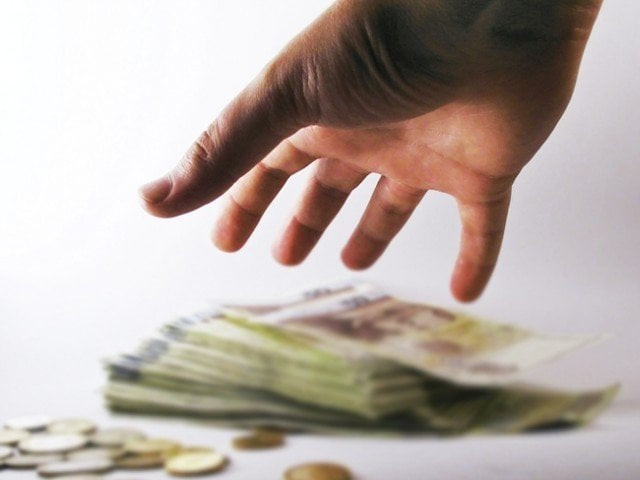
The government has raised the Zakat Nisab, the minimum savings threshold above which Zakat is deducted from bank accounts or donated voluntarily, to Rs503,529 for the Zakat year 1446-47 AH, reflecting a sharp rise in precious metal prices and underscoring deeper economic pressures on households already grappling with inflation and currency depreciation.
Under a notification issued by the Ministry of Poverty Alleviation and Social Safety, no Zakat will be deducted from savings, profit-and-loss sharing or similar accounts with balances below the revised Nisab level.
The change carries multiple implications. "There are now more people who qualify to receive Zakat, but fewer who are willing to donate it," said Ahmed Ali Siddiqui, Secretary of the Shariah Supervisory Board at Meezan Bank, while speaking to The Express Tribune.
On one hand, hundreds of thousands of people from lower-income backgrounds will breathe a sigh of relief as they are no longer compelled to pay Zakat, he added. On the other hand, the number of Zakat donors will decline, meaning many needy individuals may not receive the financial assistance they rely on from their peers.
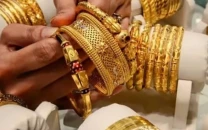
Economists say the higher threshold has significant macro-social implications. It signals a sharp rise in the US dollar's value against the Pakistani rupee alongside increases in gold and silver prices, a trend linked to global uncertainty and domestic currency weakness. Over the past year, precious metals have rallied strongly as investors sought safe-haven assets, lifting the Nisab from roughly Rs150,000-200,000 a few years ago to above Rs500,000 now. Gold, which stood at around Rs280,000 two years ago, has risen to Rs536,562 after gaining Rs3,000 on Monday. Silver prices have climbed to Rs9,094 per tola after an increase of Rs146 on Monday, compared with about Rs6,400 per tola two years ago. Although the rupee has remained relatively stable in this period, settling at 279.55 with a marginal gain of Re0.01 against the greenback on Monday, it is still far weaker than mid-2021 levels of around 150152 to the dollar.
Siddiqui said the currency's decline has had a "double impact", eroding purchasing power while simultaneously raising the rupee value of Nisab benchmarks tied to metals priced in dollars. He estimates Pakistan's annual Zakat potential at around Rs2.9 trillion, or nearly 4% of GDP, far exceeding current official collections.
However, the higher Nisab may further reduce government Zakat receipts, as the state system primarily deducts Zakat from bank deposits above the threshold. With fewer qualifying accounts, automatic deductions could decline, widening the gap between theoretical and actual collections. The revision will also exempt a segment of lower-middle-income savers from mandatory Zakat deductions, effectively shielding modest bank balances during a period of elevated living costs. "The increase in Nisab means some people who previously paid Zakat are now outside the paying bracket, allowing them to retain savings and sustain purchasing power," said Sana Tawfiq, Head of Research at Arif Habib Limited.
From an economic standpoint, the Nisab jump also serves as a proxy for asset-price inflation, especially in gold and silver, rather than consumer prices alone, said Adnan Agar, Director at Interactive Commodities. While headline inflation has eased to single digits, the surge in safe-haven assets reflects persistent uncertainty and wealth-protection behaviour among investors.
The widening gap between asset values and household incomes points to rising wealth inequality, as those holding precious metals or sizeable financial assets record nominal gains while wage earners struggle with living costs. The higher Nisab effectively acknowledges this divergence by redefining who qualifies as "wealthy" enough to pay Zakat.
Siddiqui argued that if mobilised effectively, Zakat could help offset poverty pressures intensified by inflation and economic slowdown. Pakistan's Zakat potential, he said, is theoretically sufficient to provide meaningful cash transfers to tens of millions of low-income citizens, complementing programmes such as the Benazir Income Support Programme. Yet, persistent trust deficits in the official Zakat system, including concerns over governance and transparency, mean that most donations continue to flow through private charities rather than state channels.
The upward revision in the Nisab directly reflects rising gold and silver prices, which in turn mirror broader inflationary pressures and currency depreciation. For ordinary households, this means reduced real purchasing power — even when nominal savings remain unchanged, said Irfan Ahmed, BankIslami’s Head of Shariah Compliance.
A particularly concerning trend is that some individuals who were Zakat payers in previous years now find themselves eligible to receive Zakat, he added. This points to a clear erosion of middle-income financial stability and warrants serious attention from policymakers and economists. While macroeconomic indicators may suggest improvement at the aggregate level, the lived experience of many households presents a far more challenging reality.
The latest Nisab revision thus encapsulates Pakistan's broader economic reality: a depreciating currency, elevated asset prices, strained household savings and growing vulnerability, all reshaping the country's faith-based redistribution mechanism.









This material may not be published, broadcast, rewritten, redistributed or derived from. Unless otherwise stated, all content is copyrighted © 2026 The Express Tribune.




COMMENTS (4)
Comments are moderated and generally will be posted if they are on-topic and not abusive.
For more information, please see our Comments FAQ