FinMin says Pakistan regaining macroeconomic stability, investor confidence
Updated 9 hours ago

Business leaders question IMF's 3.2% growth projection despite easing inflation
Growing stress on key economic indicators has intensified doubts about achieving the official growth target for the current fiscal year, as exports, investment and agriculture continue to struggle despite some improvement in macroeconomic conditions.
While inflation has shown a notable decline and external accounts appear relatively stable for now, the real economy is yet to show signs of a broad-based recovery.
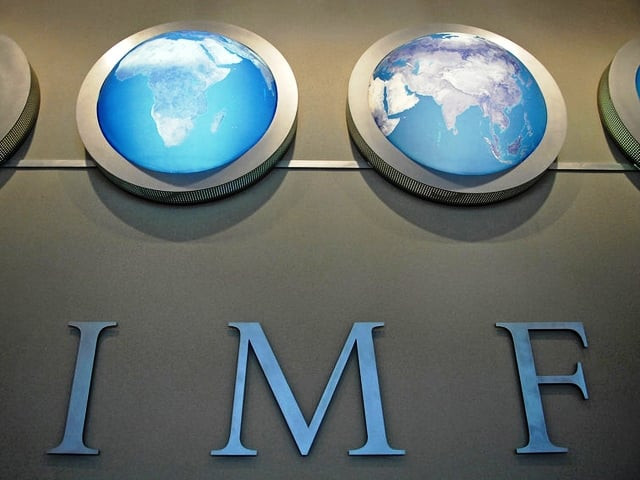
These concerns have been raised by business leaders, who believe that the 3.2% growth projection set by the International Monetary Fund (IMF) may be difficult to achieve under prevailing conditions.
Former executive committee member of the Lahore Chamber of Commerce and Industry (LCCI), Mudassar Masood Chaudhry, said that both exports and investment remain under continuous pressure, directly affecting overall economic performance. He said a realistic assessment of ground realities suggested the economy could fall short of the targeted growth rate.
According to Chaudhry, even in a relatively stable macroeconomic environment, growth is likely to remain between 2.5% and 3% at best, provided there is no major internal or external shock. He explained that weak export performance, declining investment levels and stagnation in the agriculture sector were the main reasons behind the subdued outlook. Export-linked industries, which are critical for foreign exchange earnings and employment, are facing sustained pressure due to high input costs, weak global demand and structural inefficiencies.
Investment trends have also remained alarming. Chaudhry pointed out that overall investment is hovering close to a 50-year low, reflecting poor investor confidence and limited appetite for long-term commitments. He added that despite repeated claims of revival, there are no visible signs of a significant turnaround in the agriculture sector, which traditionally plays a vital role in supporting growth, food security and rural employment.
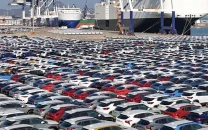
Official figures further underline these challenges. In the first half of FY26, foreign direct investment declined sharply by 43% to $808 million, compared to $1.425 billion recorded during the same period last year. The steep fall in FDI highlights persistent concerns among foreign investors regarding policy continuity, profitability and economic stability. At the same time, exports during the period dropped by 8.7% to $15.18 billion, reflecting weak performance across several key sectors.
In contrast, imports increased by 11.28% to $34.4 billion, adding pressure on the trade balance. The situation worsened in December, when exports fell by 20.41% on a year-on-year basis. This sharp decline pushed the trade deficit to $19.20 billion, raising fresh concerns about the sustainability of external accounts in the coming months if export growth does not pick up.
Mian Bilal Hanif, another agri-based businessman, said that stability on paper does not automatically translate into confidence for businesses. "Factories are struggling with high energy costs, unpredictable taxes and weak demand both locally and internationally. Without serious reforms to reduce the cost of doing business and encourage investment, growth will remain limited regardless of what projections say," he said. He added that many industrial units are operating below capacity, delaying expansion plans and focusing only on survival.
Despite the grim assessment, business leaders believe the situation is not beyond repair. Chaudhry said certain positive developments could still help support economic activity. A significant reduction in inflation has eased pressure on consumers and businesses, while relative stability in external accounts has reduced immediate balance-of-payments risks. He also noted that the gradual easing of financial conditions could improve liquidity and encourage borrowing for productive activities.
However, analysts argue that these gains must be supported by consistent and growth-oriented policies. Without targeted measures to boost exports, attract both local and foreign investment, and revive agriculture, the economy may struggle to gain meaningful momentum. Structural reforms, policy predictability and relief for productive sectors are seen as essential to translating macroeconomic stability into sustainable growth.







This material may not be published, broadcast, rewritten, redistributed or derived from. Unless otherwise stated, all content is copyrighted © 2026 The Express Tribune.



COMMENTS
Comments are moderated and generally will be posted if they are on-topic and not abusive.
For more information, please see our Comments FAQ