Turkiye calls Netanyahu 'Hitler of our times'
Updated 6 hours ago

Announces inflation outlook will stay between 5-7%; industry says stance disconnected from economic realities
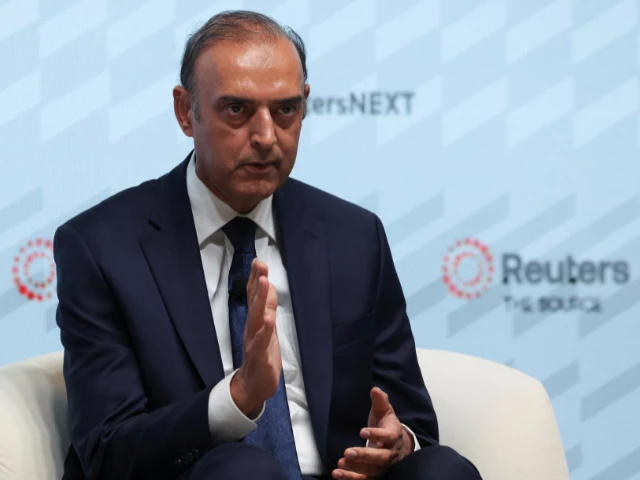
State Bank of Pakistan (SBP) Governor Jameel Ahmad announced on Monday that the monetary policy would be maintained at the current level of 10.5% for the next one and a half months.
Addressing a press conference in Karachi, Ahmad also announced a reduction in the rate for banks to deposit cash by 1%, setting it at 5%.
The Monetary Policy Committee has decided to keep the policy rate unchanged at 10.5 percent in its meeting held on January 26, 2026.
— SBP (@StateBank_Pak) January 26, 2026
For details: https://t.co/IyaTFO6mbh#SBPMonetaryPolicy pic.twitter.com/bWLBgkRliZ
He added that the inflation outlook was going to stay between 5-7% going into 2027, explaining that inflation expectations were easing and confidence among consumers and businesses was improving, adding that the decision to maintain the policy rate aimed to support economic stability and sustained growth.
https://www.facebook.com/StateBankPakistan/videos/1637721217680611
The SBP governor said recent high-frequency indicators, including large-scale manufacturing data, suggested economic activity was expanding faster than anticipated. He said economic growth was projected to range between 3.75-4.75% in the current fiscal year.
He noted that while imports had increased, widening the trade deficit, the current account deficit remained manageable. Ahmad said the current account deficit stood at $244 million in December 2025 and totalled $1.2 billion in the first half of the current fiscal year, supported by higher remittances and ICT exports.
The accompanying press release of the SBP's Monetary Policy Committee (MPC) noted: "The outlooks for inflation and the current account are broadly unchanged from its previous assessment, while the outlook for economic growth has improved significantly. Based on this, the committee deemed it prudent to hold the policy rate unchanged at the current level to ensure price stability and support sustainable economic growth."
The MPC said that headline inflation eased to 5.6% in December from 6.1% in November, amidst a moderation in food prices, notwithstanding the sharp uptick in wheat and allied product prices. Meanwhile, energy inflation increased, mainly due to the fading of the favourable base effect in electricity tariffs.
The governor further said that foreign exchange reserves stood at $16.1b and were expected to exceed $18b by June. He said the bank also reported a significant rise in private sector credit, with net borrowing increasing by Rs578b, reflecting improved business confidence.
Regarding fiscal performance, the governor said: “FBR revenue in December rose by 7.3% but fell short of the target, creating a shortfall of Rs329b.”
Regarding global conditions, Ahmad said the International Monetary Fund had slightly improved its global growth forecast for 2026, but trade uncertainties and commodity price fluctuations remained risks.
Noting other key developments since its last meeting, the MPC said real GDP growth was provisionally reported at 3.7% for the first quarter of the current fiscal year, mainly led by the industry and agriculture sectors. "Second, both consumer and business confidence improved, whereas inflation expectations of these stakeholders eased," it added.
In view of these developments, the MPC assessed the "real policy rate to be adequately positive to stabilise inflation within the target range of 5-7% over the medium term".
However, it pointed out that the outlook was subject to risks emanating from volatility in global commodity and domestic wheat prices, unanticipated adjustments in administrative energy prices and a sharper-than-assumed pickup in domestic demand.
The MPC also emphasised the need for "coordinated and prudent monetary and fiscal policy mix — as well as productivity-enhancing structural reforms — to increase exports and achieve high growth on a sustainable basis".
The decision to hold the policy rate comes against expectations that the bank might bring it back into single-digit territory.
Market sentiment had pointed to a strong expectation of easing. Arif Habib Limited 's pre-Monetary Policy Statement survey had showed that 43.5% of participants expected a 75 basis points cut, 39.1% anticipated a 50bps reduction and only 17.4% expected no change, indicating a broad consensus in favour of a rate cut.
The case for easing was underpinned by improving high-frequency and macroeconomic indicators, according to Shankar Talreja, Director of Research at Topline Securities. A Topline Economy Alert dated January 20, 2026, showed Pakistan's economic momentum strengthening in December 2025, driven by improved performance across key real-economy sectors.
Reactions
The business and industrial community reacted sharply to the decision to maintain the policy rate at 10.5%, terming it a major setback to industrial revival, export competitiveness, and economic recovery.
Leading trade bodies and industry associations expressed profound disappointment, arguing that the status quo reflected an overly cautious monetary stance disconnected from prevailing economic realities.
Atif Ikram Sheikh, president of the Federation of Pakistan Chambers of Commerce and Industry (FPCCI), described the decision as “counterproductive and strictly disappointing", stating that the business community had categorically demanded a substantive cut of 350bps to bring the policy rate down to 7%. He said such a reduction was essential to provide immediate relief to industry and stimulate economic activity.
Sheikh argued that the SBP’s caution was baffling, particularly when core inflation had stabilised around 5% for several months.
"Industry is battling an existential crisis due to exorbitant energy tariffs and high borrowing costs. We needed shock therapy to kickstart the economy, but instead we received a status quo that does not move the needle on the cost of doing business," he said.
He warned that the high cost of capital remained the primary driver of industrial closures and the erosion of Pakistan’s export competitiveness, adding that export growth and industrial expansion targets for the fiscal year would remain unattainable without aggressive monetary easing.
The FPCCI demanded an immediate review of the monetary stance, alignment of interest rates with single-digit inflation, a clear roadmap to bring the policy rate down to 7% and the declaration of an “industrial emergency” to prevent further shutdowns of manufacturing units.
FPCCI Senior Vice President and Businessmen Panel Progressive Chairman Saquib Fayyaz Magoon echoed these concerns, highlighting the unsustainably high real interest rate in Pakistan compared to regional competitors. He said that with inflation around 5.6%, the policy rate should ideally fall between 7.6-9.6% under standard global benchmarks.
“Keeping rates in double digits penalises the private sector, restricts SME financing, and undermines export competitiveness,” he added.
Commercial and sectoral bodies also rejected the decision. Pakistan Chemicals and Dyes Merchants Association Chairman Salim Valimuhammad said a single-digit policy rate was essential to revive economic activity, warning that high borrowing costs were putting immense pressure on commercial enterprises and delaying recovery.
Korangi Association of Trade and Industry President Muhammad Ikram Rajput said the decision was contrary to economic indicators, noting declining exports and rising imports. He stressed that affordable financing was critical for industrial survival and that high interest rates were rendering new investments and expansions unviable, particularly for SMEs.
SITE Association of Industry President Ahmed Azeem Alvi termed the move detrimental to growth and exports, arguing that even a modest cut of 1-1.5% could have supported exporters and allowed the economy to test the positive impact of lower borrowing costs.
From the financial sector perspective, JS Global Research Head Waqas Ghani Kukaswadia noted that the MPC cited sticky core inflation, a wide trade deficit and better-than-expected domestic growth as reasons for maintaining the rate. He added that the reduction in the Cash Reserve Requirement to 5% could support private sector credit growth and improve banks’ liquidity, while the unchanged policy rate helps protect bank margins.










This material may not be published, broadcast, rewritten, redistributed or derived from. Unless otherwise stated, all content is copyrighted © 2026 The Express Tribune.





COMMENTS
Comments are moderated and generally will be posted if they are on-topic and not abusive.
For more information, please see our Comments FAQ