US stock futures fall after rally as Mideast tensions flare
Updated 1 hour ago

Cooling inflation, stronger growth indicators fuel expectations of up to 75bps cut
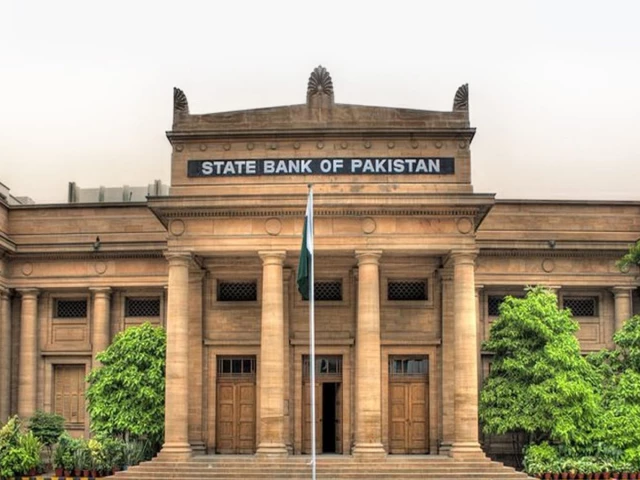
After nearly four years of double-digit interest rates, Pakistan appears poised for a symbolic and economically significant shift, with expectations building that the State Bank of Pakistan (SBP) may bring the policy rate back into single-digit territory at the upcoming Monetary Policy Statement (MPS).
"Nearly four years after rates last dipped below 10% in March 2022, the idea of a single-digit policy rate is moving from a historical reference into the present debate," said Sana Tawfik.
"We believe the SBP is likely to deliver a 75bps cut in the upcoming MPS (Jan 26th), potentially taking the policy rate to 9.75%, signalling a long-awaited return to single-digit territory," noted an Arif Habib Limited (AHL) report.
. If realised, this would mark the first sub-10% policy rate since March 2022 and signal a shift from crisis-era monetary tightening toward a more normalised stance.
According to AHL, such a move would reflect growing confidence in macroeconomic stabilisation and a gradual shift toward supporting growth, while maintaining caution against renewed inflationary and external account risks.
Market sentiment points to a strong expectation of easing. AHL's pre-MPS survey shows that 43.5% of participants expect a 75bps cut, 39.1% anticipate a 50bps reduction, and only 17.4% expect no change, indicating a broad consensus in favour of a rate cut.
The case for easing is underpinned by improving high-frequency and macroeconomic indicators, according to Shankar Talreja, Director of Research at Topline Securities. A Topline Economy Alert dated January 20, 2026, showed Pakistan's economic momentum strengthening in December 2025, driven by improved performance across key real-economy sectors.
Cement dispatches remained healthy at 4.3 million tonnes, supported by infrastructure development and sustained private sector construction activity. Urea offtake reached an all-time monthly high of 1.4 million tonnes, reflecting improved farm economics and stronger agricultural demand.
Former FPCCI vice president Shabbir Mansha Churra has urged the SBP to implement a meaningful interest rate cut to support industry and break what he described as a recurring "boom-bust cycle". He argued that lower rates for industry and exports would stimulate production, increase electricity consumption to help reduce circular debt, and ease the government's heavy debt-servicing burden. While acknowledging concerns over sticky core inflation, he said persistently high rates were causing financial stress and constraining growth.
The auto sector also showed resilience, with passenger car and motorcycle sales rising 35% year-on-year to 13,300 units and 158,200 units, respectively, supported by new model launches and improved supply conditions. Power generation increased by 8.8% year-on-year to 8,487 GWh, indicating stronger industrial and commercial activity. These indicators suggest a broad-based recovery rather than a narrow, policy-driven rebound.
On the macro front, economic activity remained resilient. Remittance inflows reached $3.6 billion in December, up 17% year-on-year, providing support to the external account, while large-scale manufacturing recorded growth of 10% year-on-year. Reflecting easing inflationary pressures and improving monetary conditions, the six-month T-bill yield declined to 10.41%, reinforcing expectations of an easing cycle.
Inflation trends continue to strengthen the policy case for a rate cut. Headline inflation has settled within the SBP's 57% medium-term target range, while first-half FY26 average inflation stood at around 5.1%, down sharply from 7.3% a year earlier. Core inflation has also eased, creating what AHL analysts describe as sufficient policy space for easing without destabilising price dynamics.
The broader macroeconomic environment has also become more supportive. The exchange rate remains broadly stable, international commodity prices, particularly oil, have softened, and domestic demand indicators are improving, reducing imported inflation risks.
However, risks remain. Base effects could temporarily push year-on-year inflation higher later in the fiscal year, while seasonal pressures linked to Ramadan and Eid in the second half of FY26 may affect monthly readings. Geopolitical uncertainty also persists. Despite this, analysts view these pressures as transitory. AHL projects inflation to average around 8% in the second half of FY26, bringing the full-year average to about 6.7%, within the SBP's comfort zone.
External pressures have partially resurfaced, with a December current account deficit of about $244 million, taking the first-half FY26 balance to a deficit of roughly $1.17 billion. Despite this, the position remains manageable, supported by SBP reserves of around $16.1 billion, secured rollovers, timely debt servicing and strong remittances.
Lower rates could also ease fiscal pressures, as domestic debt servicing remains a heavy burden. Markup payments stood at about Rs1.37 trillion in 1QFY26 alone, underscoring the fiscal incentive for a gradual reduction in interest rates.











This material may not be published, broadcast, rewritten, redistributed or derived from. Unless otherwise stated, all content is copyrighted © 2026 The Express Tribune.



COMMENTS (1)
Comments are moderated and generally will be posted if they are on-topic and not abusive.
For more information, please see our Comments FAQ