Govt weighs spot LNG as Iran war hits supply, ramps up domestic oil and gas
Updated 2 hours ago

Experts say green investment could help local industry meet EU carbon rules and expand food exports
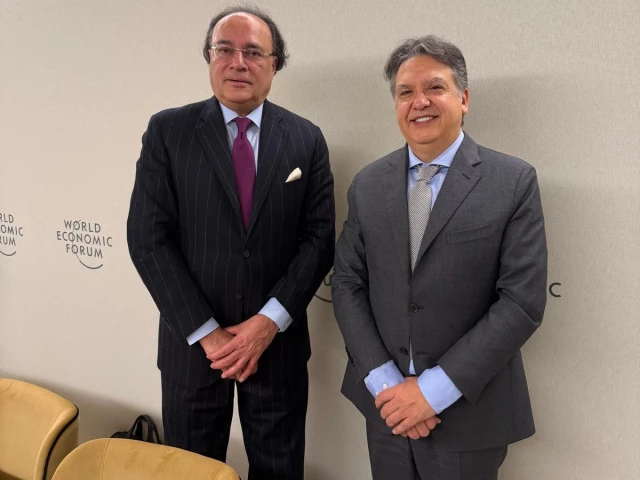
When Nestle announced a $60 million investment in Pakistan at the World Economic Forum in Davos on Thursday, it was not just another corporate commitment. The Swiss food giant's decision to make Pakistan a regional manufacturing hub for exports signals a quiet transformation underway in the country's industrial landscape, driven by global environmental standards that could reshape Pakistan's export potential.
The announcement, made by Remy Ejel, Nestle's Executive Vice President for Asia, Oceania and Africa, during a business roundtable chaired by Finance Minister Senator Muhammad Aurangzeb, comes as part of the company's global green investment strategy. Combined with $40 million already spent over the past three years on machinery upgrades, clean energy systems and sustainability initiatives, the company's total commitment to Pakistan now stands at $100 million over five years.
Ejel noted that Pakistan's demographic profile, growing nutrition needs and underdeveloped value-added food segments present opportunities similar to those that drove Nestle's success in Southeast Asia.
The company, which operates in over 180 countries with revenues of $114.25 billion, sees substantial growth potential in Pakistan over the coming years.
Dr Abid Qaiyum Suleri, executive director of the Sustainable Development Policy Institute, views this as the beginning of a necessary evolution for Pakistani industry. He explained that Pakistani companies are preparing for the European Union's Carbon Border Adjustment Mechanism. Although the food sector is not currently covered, it is expected to be included in coming years, allowing Pakistani products to enter European markets without compliance barriers.
"It is a good omen for our country, no matter the pattern in which it arrives," Suleri said. "Local companies will follow what multinationals are doing because without adopting such technologies, it becomes very difficult to sell products in western countries." He envisaged a snowball effect in which investments by global firms trigger automation, innovation and improvements across Pakistan's dairy and food sectors.
The investment focuses on advanced automation, renewable energy adoption, improved packaging and digitalised supply chains. The company currently exports ready-to-drink juices, dairy ice cream, tea whitener and other dairy products from Pakistan to 26 countries, with annual exports stuck at around $22 million. The new facilities will strengthen this portfolio while potentially opening new markets in America and Europe.
Dr Yousaf Zafar, former chairman of the Pakistan Agriculture Research Council, also welcomed foreign investment but stressed the need for strategic direction. "There is a dire need for the country's leadership to guide these investments in the right direction," he said. He cited cheese as an example, noting that Pakistan imports the dairy product despite limited local consumption. "Our people generally are not fond of cheese. The government should encourage companies to produce it for limited local needs and then export to other countries, but without exploiting our farmers in the process. This will add export revenues while also eliminating import figures," he added.
A corporate official familiar with the developments, speaking on condition of anonymity, expressed cautious optimism. The company plans to strengthen its American and European market presence and may increase investments further, the official said, but added that success depends on economic stability. "What happens if the economy remains in crisis and companies continue operating in such a complex environment with regulatory hurdles? The government needs to focus seriously on ease of doing business so other companies feel encouraged to follow this trend," he said.
Finance Minister Aurangzeb, however, welcomed Nestle's commitment as validation of Pakistan's economic reforms and described it as a vote of confidence in the country's direction. He emphasised the government's focus on policy consistency and supporting long-term private investment through mechanisms such as the Tax Policy Office established within the finance division.





This material may not be published, broadcast, rewritten, redistributed or derived from. Unless otherwise stated, all content is copyrighted © 2026 The Express Tribune.






COMMENTS
Comments are moderated and generally will be posted if they are on-topic and not abusive.
For more information, please see our Comments FAQ