Saudi Arabia turns to drones to shield pilgrims from extreme heat
Updated 1 hour ago

Carrez said they have been working "seven days a week" since the tragedy.
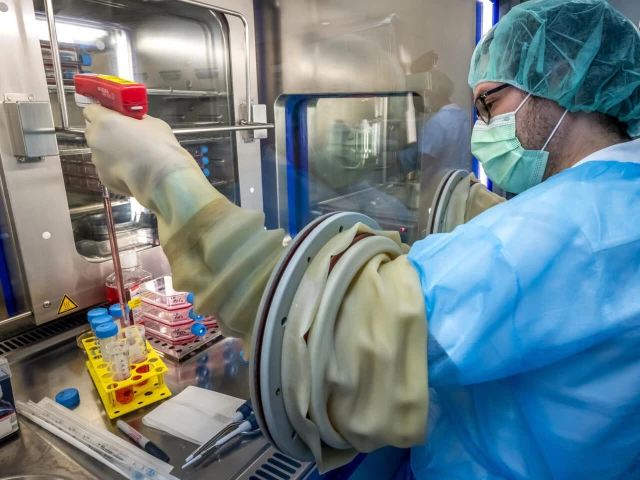
The Cell Production Centre at Lausanne University Hospital is working flat out trying to grow new skin for badly-burned survivors of Switzerland's New Year bar fire tragedy.
The centre, with its skin production facility, is the only one of its size in Europe.
"There is a lot of emotion," said Laurent Carrez, the pharmacist technical manager at the centre in Epalinges, on the outskirts of Lausanne in western Switzerland.
But he added: "For now, we're focused on action."
"The priority is to help these patients as much as possible," whether they are in hospitals in Switzerland or abroad, he told AFP.
The January 1 disaster at Le Constellation bar in the Swiss ski resort of Crans-Montana killed 40 people, mostly teenagers, and injured 116 others.
At the weekend, 80 were still in hospitals and specialist burns units in Switzerland and abroad.
Carrez said they have been working "seven days a week" since the tragedy.
To date, the centre has received 15 requests to grow skin for victims of the Crans-Montana fire — whereas normally it might receive 20 requests in a whole year.
The centre — which the hospital says is the only one capable of producing such large amounts of skin tissue while complying with Swiss and European regulations — works with healthy pieces of skin taken from the burn victims themselves, to avoid the risk of skin being rejected.
"From 10 square centimetres of healthy skin, we are able to produce between one and three batches of 2,600 square centimetres," which "roughly represents the surface area of a back", said Carrez.
He pointed out that this tissue, created through cell reproduction, does not have hair or sweat glands.
The centre has "a very important role" to play because "when 50 to 60 percent of the body surface area is burned, "we have to grow skin in laboratories because we cannot do it simply by using the remaining healthy skin", explained Olivier Pantet, a severe burns specialist at the hospital.





This material may not be published, broadcast, rewritten, redistributed or derived from. Unless otherwise stated, all content is copyrighted © 2026 The Express Tribune.






COMMENTS
Comments are moderated and generally will be posted if they are on-topic and not abusive.
For more information, please see our Comments FAQ