CCTV of boy falling into manhole surfaces
Updated 19 hours ago

As icy winds sweep Karachi, the homeless battle hunger, addiction and cold, clinging to survival beneath bridges
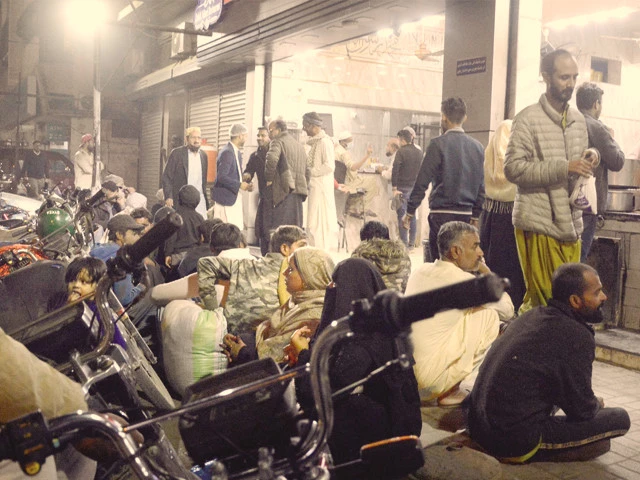
Karachi shivers under a relentless wave of cold winds drifting down from Quetta. Night-time temperatures have plunged to single digits, turning winter into an unforgiving trial. While some curl up under cozy blankets, snacking on warm peanuts and sharing quiet laughter, others cling to survival-huddled under cardboard sheets, old sacks, and the fragile warmth of makeshift fires on the pavement, every gust of wind a reminder of life's harsh inequalities.
Across the city, footpaths, bridges and open spaces have become makeshift homes. Cardboard serves as bedding, plastic or tattered blankets as covers. With nowhere else to go, women and men huddle together against the cold, hoping to make it through the night.
The cost of these freezing nights is already visible. In the first 12 days of January alone, at least eight bodies were recovered from different parts of the city. According to welfare workers, most of the deceased were believed to be drug-dependent and may have succumbed to a combination of substance abuse and exposure to the cold.
A feature by The Express Tribune documents the harsh realities faced by Karachi's homeless during this winter.
Chhipa Foundation spokesperson Chaudhry Shahid Hussain said the cold spell has made life difficult especially for people living on the streets. "A large number of homeless individuals, many of them addicted to drugs, can be seen on pavements and under bridges day and night," he said, calling the growing number of young people trapped in addiction which is a matter of serious concern.
He confirmed that in recent days, eight bodies were found across the city, mostly during night hours. "They appeared to be drug-dependent individuals. Many do not have quilts, blankets or proper bedding. To cope with the cold, they often consume excessive drugs and then lie down on pavements or under bridges. In severe cold, even intoxication does not protect them. The combination of cold and overdose may prove fatal," he explained.
Imran-ul-Haq, an in-charge at a rescue organisation, described how Karachi's streets transform after dark. "A roof-no matter how small-is a blessing in this weather," he said. "For the poor and middle class, a mattress and a quilt at home mean protection because there is a class in this city with no shelter at all. Their homes are pavements."
By day, footpaths and marketplaces belong to pedestrians and traders. By night, they turn into temporary shelters for the homeless. "They call these places their 'footpath homes'," he said. "Cardboard is their bed, sacks or discarded banners their blankets. They wait for someone-anyone-to come with a quilt or a mattress to help them survive the night."
Volunteer Azeem Ahmed noted that while people with homes are sleeping warmly under quilts and blankets, the real hardship is faced by pavement dwellers. "Some philanthropists still donate quilts and warm clothes, but inflation has hit everyone. This year, donations have noticeably declined," he said.
Under a flyover in Liaquatabad No 10, Chacha Saleem quietly shared his story. Once a carpenter, he has three sons and two daughters, all married and settled. "I felt like a burden," he said. "So I left home. This bridge is my shelter now. The charity food stall is my kitchen. The other homeless people here are my family."
Outside Civil Hospital, Rani Bibi spends her nights on the pavement. "I have no one in this world," she said. "I beg during the day and sleep here at night with other women. This place is not safe. There are no toilets. We use the hospital when we can." She worries most about the elderly, women and children shivering through the night. "I don't even have a mattress-just cardboard. Someone gave me a warm shawl. That's my quilt. We only have each other. All we ask for is a blanket."
At Teen Hatti, John Masih, another pavement dweller, said addiction cost him his home. "I collect garbage during the day, sell it, and spend the money on drugs. Sometimes I beg for food outside hotels. To fight the cold, we often increase the dose. At night, we burn old paper or wood to stay warm. Every homeless person has a story," he said.











This material may not be published, broadcast, rewritten, redistributed or derived from. Unless otherwise stated, all content is copyrighted © 2026 The Express Tribune.





COMMENTS
Comments are moderated and generally will be posted if they are on-topic and not abusive.
For more information, please see our Comments FAQ