PM Shehbaz reaffirms commitment to eradicate polio as cases drop sharply in 2026
Updated 2 hours ago

Shift in Islamabad's governance as ordinance abolishes Metropolitan Corporation system, makes fresh electoral process
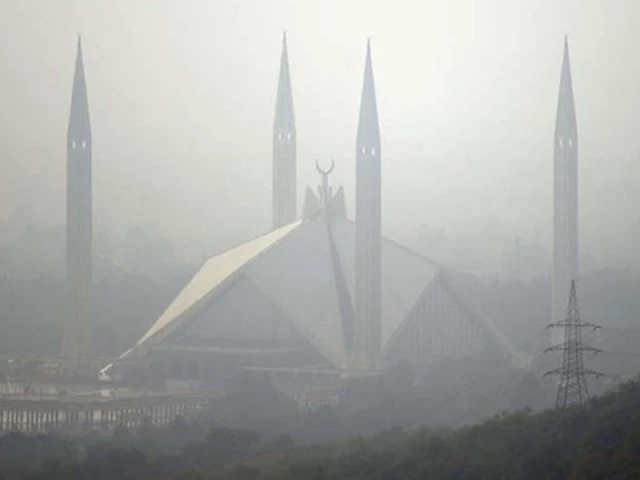
President Asif Ali Zardari has issued an ordinance amending the Islamabad Capital Territory Local Government Act, reshaping the federal capital’s local government structure and forcing another reset of the city’s delayed municipal election process.
The Islamabad Capital Territory Local Government (Amendment) Ordinance, 2026, was promulgated on January 9 and published the next day, according to the gazette notification.
The ordinance replaces the “Metropolitan Corporation” model with “Town Corporation” structures across the law. It requires Islamabad to be divided into three Town Corporations, each aligned “as far as practicable” with the territorial limits of a National Assembly constituency.
Each Town Corporation will contain as many union councils as the federal government notifies, with Union Councils to be delimited based on population equality and administrative convenience, using the latest official census.
The government may alter town corporation or union council boundaries after inviting public objections and suggestions, but it cannot make changes after the announcement of an election schedule in the relevant area.
The ordinance also contains a transition clause stating that the pre-existing Metropolitan Corporation will continue to function until the government constitutes and notifies town corporations.
Under the amended law, “local government” is defined as a union council or a town corporation, and explicitly includes an administrator appointed by the government.
Each town corporation will consist of a mayor and two deputy mayors, plus the chairmen of all union councils in that town corporation as general members, along with reserved representation: four women, one peasant/worker, one trader/businessman, one youth member, and one non-Muslim member.
Where a local government is not functional, the government may appoint an administrator to exercise powers and perform functions until an elected local government assumes office.
At the union council level, general members are to be elected by secret ballot. The entire union council will be treated as a multi-member ward for this purpose.
A voter will cast one vote for a general member candidate, and the nine candidates with the highest votes will be elected as general members.
Returned candidates may join a political party within 30 days of publication/notification of the results.
Reserved seats in union councils will be filled indirectly by “show of hands” by general members, and the union council chairman and vice-chairman will also be elected jointly by a show of hands from among members.
At the town corporation level, a union council chairman becomes a general member of the relevant town corporation. Town corporation members then elect reserved-seat members by a show of hands, and elect a mayor and two deputy mayors as joint candidates; only a town corporation member may contest for mayor or deputy mayor.
The Election Commission of Pakistan will delimit and notify union councils, and the law references this being done under the Election Act 2017 framework.
The ordinance empowers a local government, or, where it is absent, an administrator, to levy taxes, fees, rates, rent, tolls and other charges listed in the law’s Fourth Schedule.
However, tax proposals must be vetted by the government first, and where an administrator initiates a tax proposal, it must be laid before the National Assembly within 15 days after vetting. The National Assembly may disapprove within 60 days; otherwise, it is deemed approved.
The amended law also states that the government may issue directions to the local government or administrator, and those directions are binding.
By altering the legal structure underpinning Islamabad’s local bodies, the ordinance has effectively triggered another postponement of local elections, according to the details you provided.
4,270 candidates submitted nomination papers for 1,125 wards, with a Rs2,000 fee per candidate totalling Rs8.54m. The fee is non-refundable, and candidates say the ordinance has left their submissions void while the collected fees remain unrecovered.








This material may not be published, broadcast, rewritten, redistributed or derived from. Unless otherwise stated, all content is copyrighted © 2026 The Express Tribune.





COMMENTS (2)
Comments are moderated and generally will be posted if they are on-topic and not abusive.
For more information, please see our Comments FAQ