CM Afridi approaches IHC for meeting with Imran ahead of K-P budget
Updated 2 hours ago

Sharjeel Memon says decisions taken in view of Middle East crisis due to US-Israel war against Iran
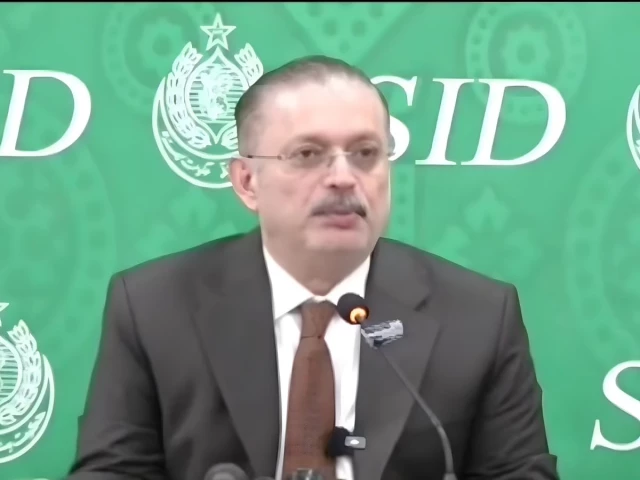
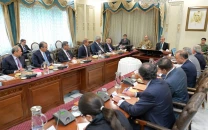
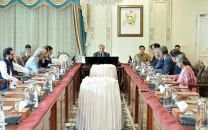
The Sindh government has announced that schools across the province will remain closed from March 16 to 31, while government employees will work from home on Fridays. The decisions were taken in view of the Middle East crisis due to the US-Israel war against Iran
"Schools will have spring holidays from March 16 to 31, while colleges and universities will conduct online classes. No exams will be postponed," Sindh Information Minister Sharjeel Inam Memon said during a media briefing after a Sindh cabinet meeting on Tuesday. Government offices will continue regular operations from Monday to Thursday, with Fridays designated for remote work as part of the temporary arrangement, he added.
The cabinet also approved the Student Attendance Monitoring and Redress System (SAMRS) policy, which will use a mobile app and digital dashboard to track student attendance and enrollment. "In what I believe is a first for Pakistan, the cabinet has approved a policy to monitor student attendance and establish a redressal system," Memon said.
In addition to these, the cabinet announced several austerity measures, including the suspension of all government-funded refreshments in public offices for the next two months, particularly during Ramazan. Employees may use water or other items at their own expense if they wish, he said.
Also Read: Iran says oil blockade will continue until attacks end, Trump threatens to hit harder
Memon further stated that the country is facing economic and administrative challenges, and collective efforts are required to address them. “Given the economic and administrative challenges facing the country, it is important that everyone contributes collectively to overcome them,” the minister said.
The cabinet also approved the Sindh Agriculture Women Workers Rules, aimed at improving protections for women in the agricultural sector. Under the new rules, women agricultural workers will receive equal wages and maternity benefits, with legal protections against harassment and discrimination.
The government further approved the issuance of Benazir Women Agricultural Workers Cards and the establishment of a Rs500 million endowment fund to support women agricultural workers’ welfare.
Memon stressed that empowering women and ensuring their protection is a core government responsibility, noting that measures of this scale had not previously been implemented for women in the agricultural sector.
The cabinet also approved additional funding for Hasan Suleman Memorial Hospital in Malir. The modern 312-bed facility, located on the National Highway, is expected to provide citizens with high-quality healthcare services.
Financial projections and savings
The province has imposed a 50 per cent cut in fuel allowances for government vehicles, projected to save approximately Rs960 million. Additionally, a 20 per cent reduction in non-essential government expenditures in the final quarter is expected to save an estimated Rs12 billion.
Bans on spending and purchases
The cabinet placed a complete ban on the purchase of new government vehicles, except for essential operational vehicles such as ambulances. It also prohibited the acquisition of new equipment, non-essential foreign tours, and state-funded refreshments in government offices for the next two months.
VIP security reforms
The home minister has been directed to immediately withdraw police security from unauthorised individuals, including former caretaker ministers who had retained their security details for over two years. State security will now be strictly limited to individuals with genuine, verified threats, the cabinet noted.
Market and food security measures
To prevent market shortages before the next crop harvest, the government ordered the immediate release of available wheat stocks to traders and mill owners.
Memon concluded the briefing by expressing support for the Pakistan Armed Forces, Air Force, and national institutions currently countering terrorism linked to the Taliban in Afghanistan. He stated that the Sindh government and the Pakistan Peoples Party stand united with the federal government and state institutions during these challenging times.
A day earlier, Prime Minister Shehbaz Sharif also announced a four-day work week and work-from-home policy as part of wide-ranging austerity measures in light of the fuel crunch caused by the prevailing Middle East crisis following attacks by the United States and Israel on Iran.
Addressing the nation, the prime minister announced a number of measures as part of an overall austerity plan to manage the current situation. He said a meeting was held today in which both federal and provincial governments participated and several important decisions were made.
Read more: PM Shehbaz announces 4-day work week, work from home as part of wide-ranging austerity measures
The prime minister said that for the next two months, fuel allocated to government vehicles would be reduced by 50%, except for ambulances. Further, 60% of vehicles used by government departments would be taken off the roads.
The prime minister said that members of the cabinet, including ministers, advisers and special assistants, would not draw salaries for two months while the salaries of members of parliament would be reduced by 25%. "Expenditures of all government departments, apart from salaries, will be reduced by 20%," he further said.
PM Shehbaz said that senior government officials in Grade 20 and above, earning more than Rs300,000 per month, would have two days’ salary deducted, which would be used to provide relief to the public.
He said the government has also imposed a complete ban on the purchase of vehicles, furniture, air conditioners and other equipment by government departments as part of cost-cutting measures.
In addition, the prime minister announced a complete ban on foreign visits by federal and provincial ministers, advisers, special assistants and other government officials, except for trips deemed "essential for national interest". He added that the restriction would also apply to provincial governors.
Also read: Iran says missile attacks to continue, US talks 'not on agenda'
The premier said the government would prioritise teleconferencing and online meetings to reduce official expenditures. “Official dinners and Iftar parties funded by the government have also been banned,” he said, adding that seminars and conferences would now be held at government facilities instead of hotels to further curb spending.
To conserve fuel and energy, PM Shehbaz said the government would implement work-from-home arrangements across the public and private sectors for 50% of employees, except for essential services.
The prime minister further said that offices would operate only four days a week, with an additional weekly holiday introduced to save fuel. This policy would not apply to banks. He added that the industry and agriculture sectors would not be subject to work-from-home arrangements or the additional weekly holiday.
The prime minister also announced that all schools would be given two weeks of holidays from the end of the current week, while all higher education institutions would immediately shift to online classes.









This material may not be published, broadcast, rewritten, redistributed or derived from. Unless otherwise stated, all content is copyrighted © 2026 The Express Tribune.





COMMENTS (3)
Comments are moderated and generally will be posted if they are on-topic and not abusive.
For more information, please see our Comments FAQ