IMF loads $7 billion package with 11 new conditions for govt
Updated 2 hours ago

Under new policy, govt may also withdraw duty concessions, suspend import licences
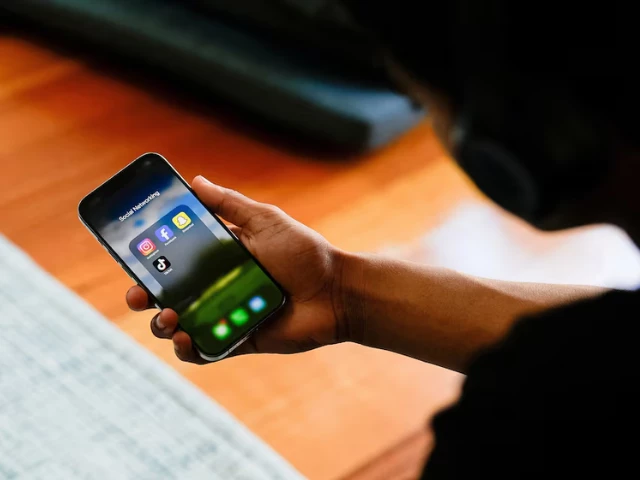
The government has decided to impose penalties on mobile and electronics device manufacturing companies over failure to achieve specified localisation levels in the stipulated time period under the proposed new policy.
As part of the Mobile and Electronics Device Manufacturing Policy 2026-33, the government will withdraw concessions like all exempted or concessionary duties. It will also start applying normal tariff rates and the companies will face import licensing restrictions.
Monetary penalties shall be imposed in the form of a surcharge equivalent to 1% of the total annual import value, in addition to any other financial liabilities prescribed in the prevailing laws and regulations. The government has targeted a rebate of Rs103 billion on the export of mobile phones by allowing a fixed and non-discretionary 8% research and development allowance. This allowance has been calculated on the basis of verifiable free-on-board value of mobile devices exported by Pakistan.
The policy proposes a ban on manufacturing 2G handsets in the country. The Pakistan Telecommunication Authority will restrict the activation of type-allocation code associated with the manufacturing of 2G handsets. The regulator will also restrict the registration of five-year-old mobile phones. Additionally, the government is set to impose a ban on the import of used mobile phones in order to encourage local manufacturing. A meeting on the Mobile and Electronics Device Manufacturing Policy was chaired by Special Assistant to Prime Minister Haroon Akhtar Khan on Monday to review progress and highlight the policy objectives and implementation framework.
Addressing the meeting, Haroon Akhtar stated that the primary objective of the policy was to create employment opportunities at the local level and to strengthen Pakistan's industrial base. He emphasised that phased localisation would be adopted to encourage foreign investment in high-tech manufacturing and ensure sustainable industrial growth. Under the policy, special emphasis will be placed on the local manufacturing of key components, including motherboards, PCBs, electronic parts and display components. The special assistant reiterated that Prime Minister Shehbaz Sharif's vision was to transform Pakistan into an export base for global brands, enabling the country to integrate into global value chains.
Representatives of mobile manufacturers informed the meeting that leading global brands such as Samsung, Xiaomi, Oppo, Vivo, Nokia and others were expected to invest in Pakistan under the new policy framework. It was highlighted that growth in the mobile industry would have a positive spillover effect on other electronic industries, fostering broader industrial development.
The PM aide stated that the new policy would introduce an export-oriented, globally competitive industrial framework, aligned with international standards. He noted that strict compliance mechanisms would be enforced, and incentives would be withdrawn and penalties imposed in cases of violations.









This material may not be published, broadcast, rewritten, redistributed or derived from. Unless otherwise stated, all content is copyrighted © 2026 The Express Tribune.






COMMENTS (1)
Comments are moderated and generally will be posted if they are on-topic and not abusive.
For more information, please see our Comments FAQ