Nationwide heatwave warning issued
Updated 1 hour ago

CM says facility will improve state of healthcare in upper Sindh
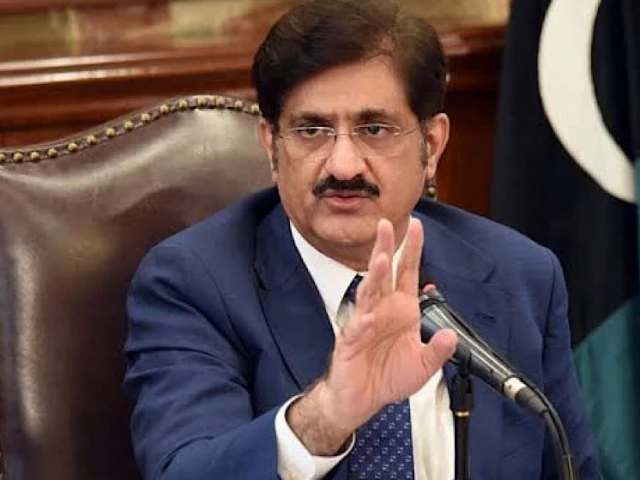
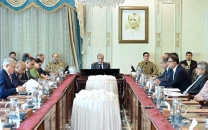
Chief Minister Syed Murad Ali Shah on Friday approved the design, scope, and financial framework for the construction of a 600-bed hospital in Larkana, terming it a landmark initiative for healthcare in upper Sindh.
Chairing a high-level meeting, the chief minister directed the Planning and Development and Health departments to ensure transparency, strict quality control, and timely completion of the project.
The hospital is expected to be completed within two years, with groundbreaking scheduled for March 2026. The first tower will be finished within a year, followed by the second tower the next year.
Provincial Health Minister Dr. Azra Fazal Pechuho, Chief Secretary Asif Haider Shah, P&D Chairman Najam Shah, Finance Secretary Fayaz Jatoi, CM's Secretary Rahim Shaikh, Health Secretary Rehan Baloch, Dr. Saeed Qureshi, and Project Director Kashif Khokhar attended the meeting, while the Larkana commissioner joined via video link.
CM Murad said the project was initiated on the directives of PPP Chairman Bilawal Bhutto Zardari, whose vision is to provide modern healthcare facilities to the people of upper Sindh.
Officials briefed the meeting that the hospital will be a six-storey building with a basement, constructed in two phases. It will house a total of 596 beds, functioning as a state-of-the-art 600-bed facility.
In the first phase, a tower with 288 nursing care beds, 92 emergency beds, and 48 intensive care beds will be built. The second phase will add 144 nursing care beds and 24 ICU beds, bringing the total capacity to 432 nursing care beds, 92 emergency beds, and enhanced ICU facilities.
The hospital will feature modern emergency services, outpatient departments, radiology, dialysis, laboratories, a blood bank, endoscopy, day surgery units, eight operation theatres, pre- and post-operative wards, recovery areas, and specialized medical and surgical ICUs. Rehabilitation services, administrative offices, and waiting areas for attendants are also part of the design.
The basement will house support facilities including a kitchen, staff dining hall, central sterilization unit, laundry, mortuary, medical gas plant, waste management system, storage areas, and loading docks.
The ground floor will include emergency triage, radiology, medical and surgical OPDs, pharmacy, dialysis unit, observation wards for men and women, rehabilitation services, and administration.











This material may not be published, broadcast, rewritten, redistributed or derived from. Unless otherwise stated, all content is copyrighted © 2026 The Express Tribune.





COMMENTS
Comments are moderated and generally will be posted if they are on-topic and not abusive.
For more information, please see our Comments FAQ