Brand reliability fetches demanded price
Updated 8 hours ago

Economists question protection-heavy auto regime as prices keep soaring despite local assembly, import restrictions
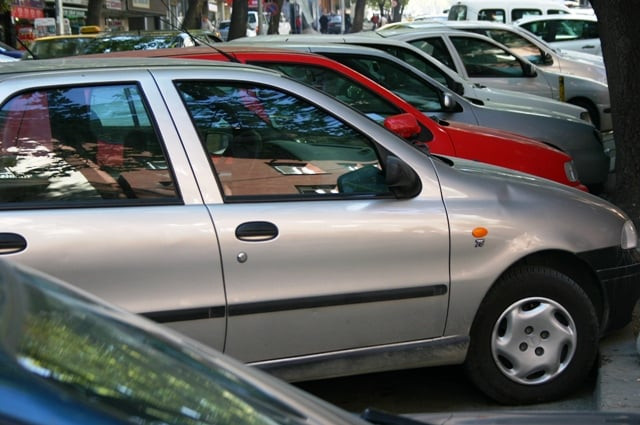
For Pakistan's middle-income households, car ownership has increasingly become unattainable, not merely because of inflation and currency depreciation, but due to a policy framework that has failed to balance consumer welfare, industrial development and macroeconomic stability.
As vehicle prices continue to rise while incomes stagnate, debate has resurfaced over whether Pakistan should cautiously liberalise vehicle imports to revive competition and affordability, or persist with a protection-heavy regime that risks shrinking the market without delivering genuine industrial strength. Trade economist Aadil Nakhoda argues that the popular narrative linking vehicle imports directly to Pakistan's persistent current account deficit (CAD) oversimplifies a far more complex macroeconomic reality. "Historically, Pakistan's current account deficit has been driven primarily by fuel imports, which rise as economic growth accelerates," he notes, adding that automobiles play a far smaller and more nuanced role in external imbalances than is often assumed.
According to Nakhoda, the distinction between imported completely built units (CBUs) and locally assembled vehicles is frequently misunderstood in policy discussions. While domestic assembly is presented as a foreign exchange-saving alternative, Pakistan's auto industry remains heavily dependent on imported completely knocked down (CKD) and semi-knocked down (SKD) kits. "The key question," he explains, "is how competitive the pricing of CKDs and SKDs really is compared to CBUs." Without a transparent, import-stage comparison of costs, it is difficult to conclude that localisation meaningfully reduces pressure on foreign exchange reserves.
He further points out that different pricing mechanisms apply to CBUs, particularly in auction-based markets, making simple comparisons misleading. "Localisation itself may not be alleviating these concerns if price differences in imported parts and accessories are being masked through the process," Nakhoda says, noting that a locally produced car still embodies a substantial proportion of imported inputs. As a result, the trade-off between protecting local assembly and allowing imports is unlikely to be a straightforward one-to-one exchange.
The domestic auto industry maintains that liberalising imports, particularly of used vehicles, undermines capacity utilisation and deters fresh investment under the Auto Development Policy. Nakhoda challenges this view through an industrial policy lens, arguing that protection is justified only if it delivers long-term competitiveness. "Infant industry protection is only successful if the infant eventually becomes an adult," he says. "If the industry persistently asks for protection and fails to graduate, then the policy clearly needs rethinking."
From the market side, HM Shahzad, Chairman of the All Pakistan Motor Dealers Association (APMDA), supported calibrated import liberalisation, arguing that excessive duties have priced the middle class out of car ownership and hurt employment linked to vehicle trading, parts and maintenance.
Nakhoda attributes much of the sector's underperformance to weak and inconsistent policymaking shaped by competing interest groups. Frequent changes in tariffs, incentives and import rules, he notes, create uncertainty that discourages long-term, productivity-enhancing investment. More importantly, he questions the nature of investment taking place behind tariff walls. "Research and development and human capital development are essential for a sustainable auto industry," he argues, adding that policymakers must assess how much investment has gone into these areas rather than into assembly operations designed to maximise short-term returns.
Despite the entry of several new original equipment manufacturers (OEMs), including Korean and Chinese brands, vehicle prices have not declined meaningfully and localisation remains limited. Nakhoda says this raises doubts about the effectiveness of the current tariff and regulatory framework. Competition, he explains, is fragmented by brand perceptions, with weak substitution limiting the price-disciplining effect of new entrants and allowing high prices to persist.
He also points to shortcomings in the deletion and localisation regime. Lax requirements, Nakhoda argues, have reduced incentives for manufacturers to invest in deeper localisation. "If producers with lower deletion levels are able to remain competitive against those with higher deletion," he asks, "then the effectiveness of the deletion programme itself in delivering cheaper cars becomes questionable." In his view, protection and localisation targets alone cannot deliver affordability without genuine competition.
On import liberalisation, Nakhoda accepts that easing restrictions, particularly on used vehicles, could lead to a short-term rise in imports. However, he sees this as a necessary adjustment to restore competitive pressure. Citing Southeast Asian economies, he notes that open markets have attracted foreign investment while strengthening domestic industries through efficiency gains and reform-driven growth.









This material may not be published, broadcast, rewritten, redistributed or derived from. Unless otherwise stated, all content is copyrighted © 2026 The Express Tribune.













COMMENTS (10)
Comments are moderated and generally will be posted if they are on-topic and not abusive.
For more information, please see our Comments FAQ