FinMin expects continuous progress under GSP+
Updated 15 minutes ago

Asks Pakistan to develop road map to bring efficiency, cut losses in gas sector
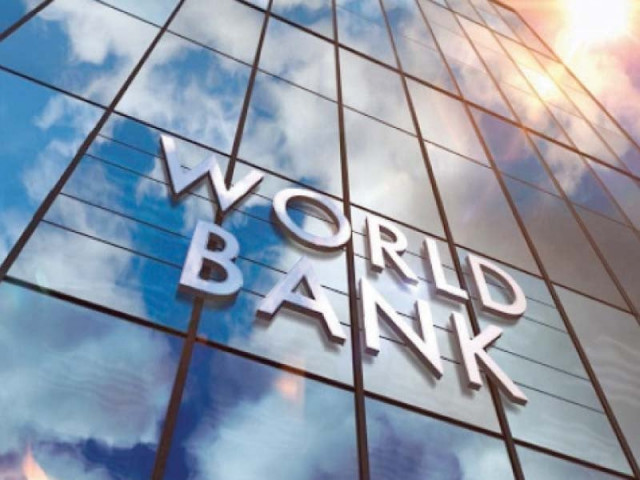
The World Bank is pushing Pakistan to develop a road map for gas-sector reforms to unbundle the public utilities aimed at bringing efficiency, controlling losses and curtailing circular debt.
The bank also wants the government to unbundle the distribution and transmission network of gas utilities and set up more firms by splitting the existing two companies.
At present, two public gas utilities – Sui Northern Gas Pipelines Limited (SNGPL) and Sui Southern Gas Company (SSGC) – are catering to needs of consumers across the country. Owing to a wide network, they have not been able to curb losses, resulting in the accumulation of circular debt, which has now reached Rs2.6 trillion.
The planned new measures in the gas sector will help to reduce the debt. Earlier, the power sector faced a circular debt of Rs2.6 trillion for years that impacted the performance of energy chain.
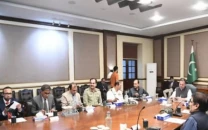
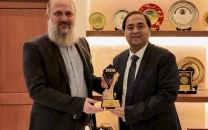
World Bank Country Director for Pakistan Bolormaa Amgaabazar, during a meeting with Petroleum Minister Ali Pervaiz Malik on Thursday, noted that the bank was already working closely with the ministry to develop a comprehensive road map for gas-sector reforms, including measures aimed at improving the performance and efficiency as well as unbundling of Sui companies.
The government plans the restructuring of gas utilities through amendments to the existing pricing formula based on a guaranteed asset-based return and through price revision every quarter. The unbundling of utilities has been on the government's agenda for over a decade, but it has not been able to execute the plan so far.
Efforts to split the gas utilities started in 2010 to bring efficiency and improve their performance. Thus far, no tangible outcome has emerged because of inconsistent policies in the wake of change in governments.
The government had tasked the Oil and Gas Regulatory Authority (Ogra) with undertaking a study to amend the gas pricing formula. In this regard, the regulator has hired the services of a consultant, which is scheduled to complete its report by the end of December.
In the meeting with the World Bank country director, Ali Pervaiz Malik discussed ongoing and future reforms in Pakistan's energy sector, with a particular focus on gas-sector sustainability.
Amgaabazar appreciated the Petroleum Division for successfully resolving the longstanding liquefied natural gas (LNG) surplus issue. She noted that addressing the LNG challenge was not an easy task and commended the minister for taking a keen interest in ensuring the sustainability of the gas sector.
She reaffirmed the World Bank's continued support to the Petroleum Division for advancing gas-sector reforms and expressed willingness to collaborate in implementing reforms in the liquefied petroleum gas (LPG) sector and the capacity building of Ogra.
The petroleum minister emphasised that input from international partners such as the World Bank was highly valuable in shaping effective and sustainable policy reforms. He reiterated the government's strong commitment to ensuring long-term sustainability of the gas sector through structural and institutional reforms.
The minister appreciated the World Bank's analytical reports and work, describing them as deep, strategic and forward-looking rather than mere tactical diagnostics.
He highlighted that improving the Air Quality Index (AQI) was a key priority of the government, adding that efforts were underway to enhance fuel standards, which would ultimately require the upgrading of Pakistan's refineries.
Both sides reaffirmed their commitment to continued collaboration to prop up Pakistan's energy sector and meet sustainable development goals.







This material may not be published, broadcast, rewritten, redistributed or derived from. Unless otherwise stated, all content is copyrighted © 2026 The Express Tribune.




COMMENTS
Comments are moderated and generally will be posted if they are on-topic and not abusive.
For more information, please see our Comments FAQ