Cinematic sovereignty and the cognitive production of the enemy
Updated Apr 07, 2026

Charts a stable economic course as it prepares for the next growth phase
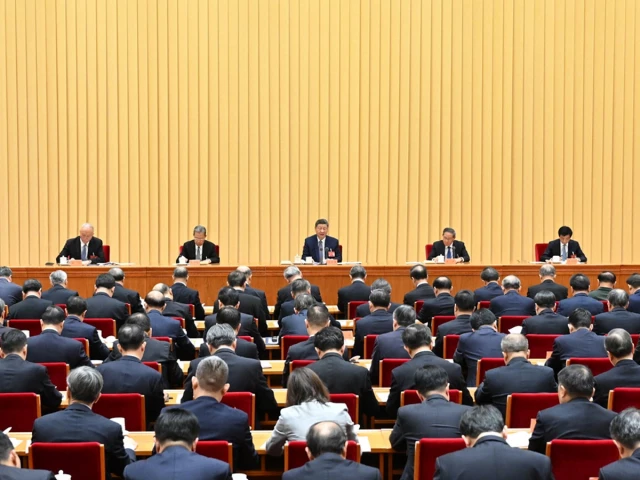
China’s year-end Central Economic Work Conference (CEWC) has laid out a calm, coherent and forward-looking economic roadmap for 2026, underscoring policy continuity and institutional confidence at a moment of global volatility.
Meeting in Beijing, China’s top leadership said the country is entering the first year of the 15th Five-Year Plan with a deliberate focus on stabilising growth, upgrading the economic structure and strengthening long-term resilience, rather than managing an emergency.
Against a backdrop of global uncertainty and geopolitical friction, President Xi Jinping told the conference that China had “effectively navigated various shocks” in 2025, while official communiques stressed that the economy’s underlying strengths, including “solid foundations, abundant advantages, strong resilience and great potential”, remained firmly in place.
Rather than resorting to abrupt stimulus or reactive policy shifts, the CEWC reaffirmed a governing party philosophy of “seeking progress while maintaining stability,” putting stress on coordination between domestic economic priorities and external challenges.
Accordingly, the message to markets and international observers alike was one of continuity as China intends to sustain growth through planning, discipline and targeted reform as it completes the transition from the 14th to the 15th FYP.
The leadership’s focus on policy consistency, institutional execution and expectation management suggests confidence that existing tools were sufficient to guide the economy through a more complex global environment.
One of the clearest signals of this confidence is the renewed emphasis on “counter-cyclical and cross-cyclical adjustment” in macroeconomic policy. While counter-cyclical measures address short-term fluctuations, cross-cyclical regulation reflects a longer strategic horizon, smoothing economic cycles while strengthening the foundations for future growth.
Moreover, the reappearance of this language indicates that policymakers judge the economy to have moved beyond extraordinary conditions, allowing a shift from emergency-style interventions toward a more balanced, medium-term policy framework.
The CEWC explicitly called for “more forward-looking, targeted and coordinated” measures to expand domestic demand and optimise supply, pointing to a transition from stopgap responses to structural optimisation.
That approach is evident in fiscal and monetary policy. The conference reaffirmed a “more proactive” fiscal stance, but paired it explicitly with discipline. Authorities pledged to maintain reasonable deficit and debt levels while directing spending toward projects with the greatest economic and social impact.
Finance Minister Lan Fo’an said the approach was being “frugal with small money and generous with big money”, cutting waste while ensuring strategic investment. Monetary policy will remain “moderately loose,” with flexible use of tools such as reserve requirement and interest rate cuts to maintain liquidity.
Expanding domestic demand stands at the centre of the 2026 agenda for the second year running. The CEWC pledged to “adhere to domestic demand as the main driver and build a strong domestic market,” placing consumption at the heart of rebalancing efforts.
Measures include special campaigns to boost consumption, concrete plans to raise incomes across both urban and rural populations, expanded supply of high-quality goods and services, and the removal of restrictive rules holding back service consumption.
On the investment side, central government budget spending will be appropriately increased, supported by policy-based financial instruments such as ultra-long bonds and special local government bonds to crowd in private capital. Urban renewal, affordable housing and rural revitalisation projects are expected to absorb capacity and support demand, addressing the long-standing imbalance between strong supply and weaker consumption without relying on debt-fuelled stimulus.
Structural reform also featured prominently. Authorities pledged to accelerate the construction of a unified national market by breaking down local protectionism and standardising regulations, improving cross-regional trade and investment conditions.
At the same time, the CEWC called for curbing “involution” — destructive competition and price wars — through targeted regulation, state-owned enterprise reform and stronger support for private businesses. Rather than allowing overcapacity to resolve itself through disorderly contraction, the emphasis is on managing competition to preserve value and employment.
The CEWC also reiterated China’s “dual-carbon” goals, linking emissions reduction with industrial upgrading and resilience.
Finally, people’s livelihoods were placed firmly at the centre of policy. Commitments to stabilise employment, expand education and healthcare, strengthen social security and promote positive attitudes toward marriage and childbearing show a growing recognition that long-term growth depends on social stability and demographic sustainability.











This material may not be published, broadcast, rewritten, redistributed or derived from. Unless otherwise stated, all content is copyrighted © 2026 The Express Tribune.






COMMENTS
Comments are moderated and generally will be posted if they are on-topic and not abusive.
For more information, please see our Comments FAQ