Security tightened across Sindh on Eid
Updated May 26, 2026

Ibrahim’s death renews outrage as city now has 43 major drains but no documented layout
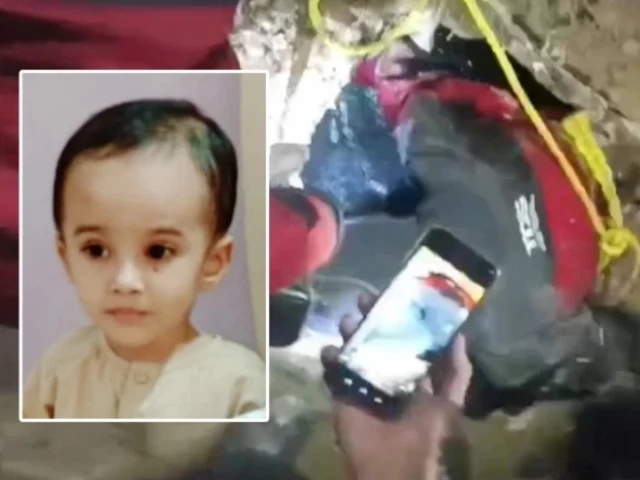
Karachi is an unfortunate city with no master plan or map of its underground infrastructure. The death of three-year-old Ibrahim, who fell into an open manhole near Nipa Chowrangi on Sunday night and was found 14 hours later near Sir Syed University, was yet another wake-up call. And this is not the first such tragedy. Over the years, multiple cases have been reported in which citizens, especially children, have slipped into uncovered sewers across the city.
Before the establishment of the city government in 2006, the 23 major drains of Karachi were under the Water Board. In 2007, these drains were transferred to KMC, and their number gradually increased — first to 30, then 38, and now 43.
Read: KMC holds BRT, Chase Up responsible for toddler’s death in open manhole
Today, a network of 43 major drains and 516 drain-water channels runs beneath Karachi. City government officials confirm that no department has a map of Karachi’s underground infrastructure. If someone falls into a drain, the search is conducted from that point to the last discharge point because no structural layout exists.
Why finding Ibrahim took 14 hours?
Ibrahim, the only child of Nabeel and his family, slipped into the open manhole around 11pm on Sunday while walking ahead of his father between parked motorcycles outside the store. His body traveled nearly half a kilometre through three internal sewage channels before being recovered. His mother reportedly fainted, and his grandfather, Mehmoodul Hasan, received the body.
Locals and volunteers joined the search but faced delays due to a lack of machinery and sewerage maps. Ibrahim’s father and grandfather even spent Rs15,000 on private excavation before KMC teams resumed operations. BRT machinery arrived nearly 16 hours after the fall to excavate the main drainage line.
The death of three-year-old Ibrahim after falling into an open manhole has exposed a deeper crisis—Karachi has no map of its underground infrastructure, making rescue operations slow, blind and dependent on guesswork.
When word spread that the child had fallen into a manhole, non-government rescue volunteers were the first to reach the spot. But once inside the system, rescuers hit the same obstacle that has plagued Karachi for decades — no one knew which direction the drain flowed or where it branched.
Read More: Gaping manhole swallows another life
With no blueprint of the sewerage and stormwater network, teams dug at one point and then another, searching for Ibrahim on assumptions alone. They must search blindly from the point where the person fell to the drain’s final outlet because no structural documentation exists.
Rescue teams involved in the operation say the government must immediately prepare a master layout of Karachi’s underground infrastructure and provide it to emergency agencies, warning that without it, future tragedies will face the same delays — and the same devastating consequences.















This material may not be published, broadcast, rewritten, redistributed or derived from. Unless otherwise stated, all content is copyrighted © 2026 The Express Tribune.







COMMENTS (1)
Comments are moderated and generally will be posted if they are on-topic and not abusive.
For more information, please see our Comments FAQ