Share this article
Print this page
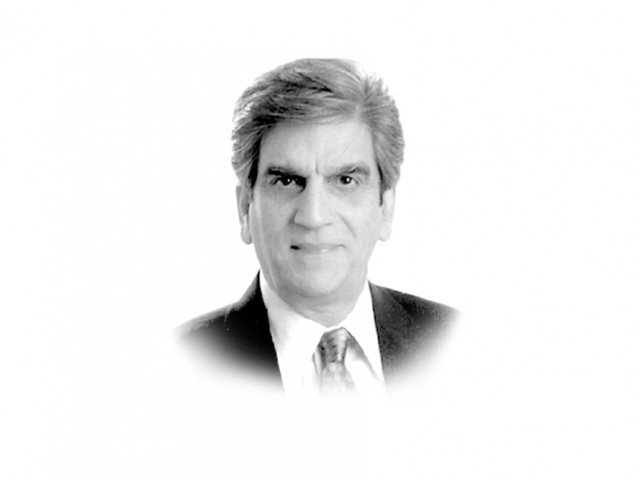
The writer has served in the Planning Commission and the IMF meekal.ahmed@tribune.com.pk
There is little news out of Pakistan that is good but the best one came out today. The Competition Commission of Pakistan (CCP) Ordinance is now law. It is not clear how much it has been watered down but with the law in hand the anti-trust regulator must move ahead with all deliberate speed and build on its fine work under the former leadership of Khalid Mirza and now that of a highly-regarded woman lawyer.
As I have noted earlier, Pakistan’s economy is “highly concentrated” in terms of its structure. This is most striking in manufacturing but also in other sectors of the economy such as banking. This concentration is reflected in a few firms (maybe only three or four) who hold a dominant market position (say 80-90 per cent or more of the total market). Under such a regime of “concentrated oligopolies” price competition is stifled. The result is that excess/monopoly profits, duopolies, cartels and market-sharing arrangements along with other anti-competitive abuses become common industry practice.
None of this is new of course. Pakistan’s economy has historically been concentrated, a revelation that first came out with the famous “22 families”, which was an important factor in Ayub Khan’s downfall, the break-away of East Pakistan and the rise of Zulfikar Ali Bhutto and his socialist agenda. Pakistan’s industrialists came to be called “robber barons” who had profited behind (the) high walls of import tariff protection, quantitative import restrictions and, in some cases outright bans on imports.
The CCP is a worthy successor to the old moribund Monopoly Control Authority (MCA) which was set up during Yahya Khan’s regime. In all of its years in existence, the MCA did little or nothing. The hapless Pakistani consumer was routinely fleeced through high prices, hoarding, shoddy, defective and often dangerously unsafe products, and misleading advertising. Meanwhile, producers earned high “economic rents” which accrued from the ruthless exploitation of their dominant market position.
The CCP has a wide remit. I would urge them to take a close look at the banking sector in Pakistan. The “spread” between what banks offer depositors on the one hand and what they lend at on the other is a staggering 7.5-7.8 per cent and has remained largely fixed. A fixed spread is the hallmark of a deep structural flaw. In more competitive economies the spread is no more than 2-3 per cent. A spread close to 8 per cent reflects high costs and inefficiencies, over-employment, poor management, corruption, excessive pay, perks and outrageous bonuses to senior executives, an infected loan portfolio made up of non-performing assets and, most importantly, a dominant market position. Such a large spread between deposit and lending rates also reflects the criminal exploitation of small savers and depositors who place their deposits in banks (rather than keep their money under the mattress) because the rate of remuneration paid to them has always been below the going rate of inflation. Thus depositors receive negative “real” rates of return on their deposits/savings, a key factor in Pakistan being a low-savings economy. Furthermore, the fact that small depositor’s money is lent at high interest rates to “robber barons” and prime clients, there is a transfer of wealth from the poor to the rich.
While the CCP needs to look into this long-standing and blatant case of anti-competitive behaviour, the State Bank of Pakistan also has an important role to play as a regulator of the banking system. This it must do with alacrity and resolve and there can be no better person at the helm than the new governor, Shahid Kardar, whom I have known as a fearless and bold person since I first met him when he was an undergraduate student at Oxford University a few decades ago. Mr Kardar has written on the subject himself. He knows the issues and what needs to be done to fix it.
Published in The Express Tribune, September 27th, 2010.

More in Opinion
Packaging modernism
Just to clarify here quickly that the term “Concentrated Oligopolies” was not coined by me but by a very learned Italian economist, the late Paulo Sylos-Labini of the University of Rome.
The good Editor, for reasons unclear, deleted the reference.Recommend
Very good article and just to expand the theoretical part of the debate: these are monopolies and oligopolies and monopsonies which create inefficiencies in the market-led distribution/allocation of resources. However, the same structures create markets in initial phases of accumulations in new sectors. The state must be very vigilant and skilfully designed to be ‘interventionist’ in ensuring corrective measures for re-distribution of resources specially in less developed countries where the very assumption of neoclassical economics i.e., presence of perfect competition and markets does not exist. However, in less developed countries specially the structurally adjusted, the state has been rolled back and incapacitated to act. In some countries such as Pakistan, is feels constrained to play very basic functions let alone the activist functions for the welfare of its citizens. Without having a viable state, may be competition commission will not be able to withstand the ‘regulatory captures’ by special interests. Let us, however, hope for the best.Recommend
Well, thank you, Mr Meekal Ahmed, for the clarification that the term “Concentrated Oligopolies” was coined by the very learned Italian economist- the late Paulo Sylos- Labini of the University of Rome. I appreciate this- good to know origins of terminology.
Indeed, Rome as a whole should KNOW- and at least one learned Roman economist should ” Show and Tell” as we teachers call it in Lower Grade Schools. Given Romes own particular ” triangular-titular” historic tribulations betwixt the trinity of Mafia, Church and Politics….names must be coined.
I agree that the Banking Sector- World-wide- needs close scrutiny.
A “Robin Hood” compulsory tax on every UK bank transaction has been suggested in the UK.
Perhaps we could do something vaguely similar and familiar… extending shade and shelter to the Poor and Needy, Illiterate and Hungry, Destitute and Despairing, Widow and Orphan by extending the UMBRELLA of ” Zakat” just a tad …over every banking transactions. Indeed scientifically and rationally THINK about how we may apply Zakat deductions in a way ( Islam’s own perfected BEST WAY- surely) that directly targets those “swollen with wealth” and with money to throw happily and merrily away in the direction of- influence/bribes/clout.
Concentrated Oligopolies;-
Personally, I have a label for those who flaunt obscene amounts of cash and control without proper honor, respect, concern for ” THE OTHER”- since they can be confusingly opaque, furtively discreet, elusively “cloak and dagger”. Indeed it is difficult to be certain about the “Bold, Beautiful and the Ugly” Oligopolies and what it is exactly that they are concentrated on. Who indeed has a direct line to the Income Tax Accounts Department just for starters
Do they come under the scrutiny of Civil Society… or- paid to look the other way and actively connive with them- A Buddy-Boy Bureaucracy?
We must have valid and legitimate reservations about any use of the [prostitute-derivative paterfamilias] historically valgarised “Sugar-daddy” titular name for them.
I much prefer this coined assessment titular:-
There go the” FUDDY-_DUDDY” Boys/Guys/ Band…
Perhaps this lable originates with me, I think so, I never actually heard it used before…
But perhaps it originates/already exists elsewhere? Perhaps it also originates from Rome?
If so my guess would be it arose from the Mafia- not the Church!
L. R. ButtRecommend
The government has watered down the CCP, since it is dominated by those who benefit from the cartels. Problem with people is that they lack character, morality and ethics. I just read today in a newspaper that Dr Hafeez Sh, paid Rs9,630 as agricultural tax, while his deputy Hina Rabbani paid only Rs7,500 as agriculture tax. both have paid zero income tax. What can you expect from such people. They may have been affiliated with World Bank or IMF in the past and paid their taxes in USA, or wherever they were posted, but never paid any substantial tax in Pakistan. This is why people of Pakistan state that those who have no stakes in Pakistan will never deliver, since they have split loyalties.Recommend
Simply splendid!Recommend
I endorse the comments of Ahad on the subject. The issue is that these cartels of sugar, cement etc are dominated by leading politicians and sons of former bureaucrats and generals. Even the government owned national airline PIA has formed a cartel with Saudia to fleece Haj and Umra passengers, because thay have a monopoly. Mr Mirza was doing a good job against the cartels and they tried to remove him, but Mr Shaukat Tarin intervened and did not let the cartel owners succeed in sacking the CCP’s former head, a man known for his integrity. Mr Mirza is no more there and the CCP laws have been diluted to suit the cartels. It is sad that Mr Haffez Sh himself a feudal lord with substantial land holdings is heading the Min of Finance. The Deputy Chairman Planning Comm was a beneficiary of Government Funded Scholarship to do his PHD, with a pledge to return back and serve in Pakistan, which he did not. Are these not issues of ethics and what can we expect from such men. I don’t think they have the capacity to take a stand on principles and not get carried away with lures of protocol or plots or other benefits. What does mr Meekal have to say on these issues.Recommend
Mir Sahib,
I don’t know what to say. I am often rendered speechless by what goes on in Pakistan.
I did see the article about non-payment of taxes by the high-and-mighty. I am in a state of stunned dis-belief and deeply disappointed with some of the people whom I know personally. I thought they were better men.
Isn’t it simply extraordinary that our FBR accepts these blatantly bogus tax returns as ‘full and final settlement’? In all civilized countries of the world, this sort of patently false disclosure would invite an immediate audit.
Does our FBR only audit the small person?
I think I may have answered my own question.
On the main article, I hope the CCP does its investigations and establishes a strong prima facie case of predatory pricing. Then they should hand their report over to the State Bank which deals with the banking system.
As much as I would like them to do so, I don’t think they can impose fines on the banks (like they have on cement or sugar) since banking falls under the exclusive perview of the SBP and the CCP would be over-extending its remit. Ultimately, the SBP needs to act. They are the regulatory authority.
@Mr. Ahad, World Bank/IMF salaries are tax-free. However if you have non-salary investments/income, you need to file a US IRS 1040.
If you have properties back home or income from them, you need to file your tax return in Pakistan. The only stricture is that you can’t be taxed twice. When I file my 2010 return in 2011 the sale of my plot of land will be treated as capital gains and any tax that I paid in Pakistan (which I did) will be returned to me.
Funny thing, my Pakistani pension is tax-free in Pakistan but is taxable here! As my tax preparer here said, ‘Mr. Ahmed, pension is income”. End of discussion.Recommend
@ Mir Tassadaq: the deputy chairman planning became Vice Chancellor of PIDE through whom he ditched the taxpayers in earlier part if his life.Recommend
Thanks for replying. The people of Pakistan have not yet had a good experience with former IMF and World Bank type retired expats. However you seem to be an exception, given your honest acceptance of what has been commented upon in these columns. People have had a very bad experience with the type of policies that were framed by Shoaib Mohd and MM Khan during Ayub’s era. Shaukat Aziz wa a conman. Mr Shaukat Tarin has proven his credibility. I hope you keep on taking interest in Pakistan and kindly stop backing all these phony expats, including those from IMF and World Bank.Recommend
@Abrar,
First of all thank you for your kind words. I don’t know if I deserve to be called an “exception” but it is very kind of you to say so.
Shoaib and M.M Ahmad were Pakistani’s. There were not ‘imports’. Perhaps you are confusing the fact that Shoaib served on the World Bank Executive Board while he was also FM. That was a highly unusual arrangement. MM Ahmad served a long time in the Bank’s Development Committee. But he was a home-grown Pakistani and served Pakistan.
I think Moeen Qureshi of the Bank who was interim PM was quite brilliant and did a lot of good revealing for the first time the names of bank-defaulters. But his tenure, as you may recall, was for only three months.
Shahid Javed Burki of the Bank was only there for three months in another interim set-up.
Ishrat Hussain was actualy a World Bank man but became Governor of a central bank. The IMF deals with central banking (not the World Bank) so he was basically in the wrong job. His performance some feel was lackluster.
Governor Yaqub was from the IMF and was Governor of the SBP. He was an extremely passionate advocate of macreconomic discipline and was very outspoken which did not earn him friends in Finance. They constantly under-cut and undermined him at every turn. He also threatened many times to “go public” about Finance cooking the fiscal books (even during an IMF program). That threat which he once made in a meeting with President Leghari earned him even fewer friends. I saw three of his letters of resignation myself — on matters of policy — and I personally intervened in one case to get the PM to tear the letter up because I felt strongly that he should stay.
Yaqub did some very fine work at the SBP — especially in some technical areas (such as reserve money management) and banking supervision. I would certainly give his tenure high marks.
I agree about Shaukat Aziz — a charlatan and a con-man. What would you expect from someone who was in-charge of “Private Banking” at Citibank?
I would not call Tareen an ‘import’. He came from the Pakistani private sector.
Ms. Shamshad Akhtar (World Bank and Asian Bank) was way in over her head. The job was too big for her.
I suppose Salim Raza (Citibank) you would also call an ‘import’. He was not around long-enough to make an impact but if he did resign on principle, I salute him.
Nadeem ul Haq in Planning is from the IMF — again in the wrong job. He knows nothing of development planning or issues in health, education, roads, power, agriculture and so on. But we should await judgement on his performance.
I personally think Hafeez Sheikh is a very decent man who has no airs about him and is a very competent economist. If news about his not declaring his assets and paying only Rs 7,000 as agriculture tax (and no income tax) are true then I am very saddened and disappointed.
These are just my personal opinions for what they are worth. I would not condemn all of them with a single stroke of my pen, nor tell you they were all economic revolutionaries either.
If you say they didn’t do much and we have nothing to show for it just reflect on our favorite past-time: ‘reform roll-back’. If some good is done — even if it is under Bank-IMF duress — we do it grudgingly and in bad faith but as soon as we are out of the woods (and the program is over), we roll everything back!
So after 63 years our macroeconomic and structural reform agenda remains incomplete and unfinished.Recommend