
Study: Pakistan cannot benefit from trade liberalisation
Para-tariffs and non-tariff barriers restrict market access to India.
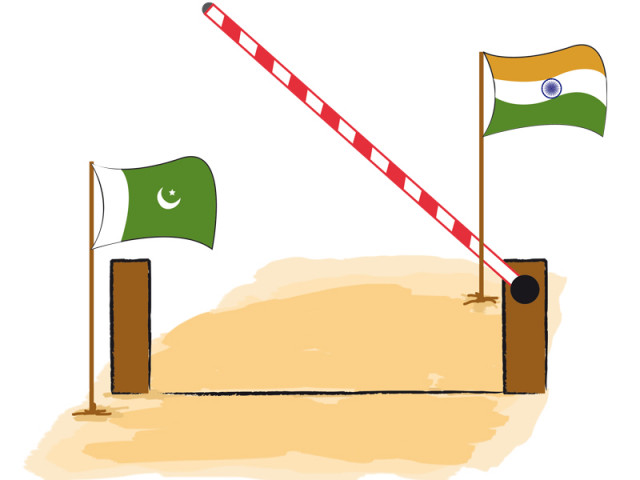
The study identifies areas of opportunities and urges the govt of Pakistan to negotiate reciprocal treatment with its Indian counterparts. ILLUSTRATION: TALHA AHMED KHAN
The study identifies areas of potential growth opportunities and urges the government of Pakistan to negotiate reciprocal treatment with its Indian counterparts to achieve level playing field in trade on both sides.
The study has estimated a potential bilateral trade of $18 billion using current trade statistics between Pakistan and India. Of this potential, $3.6 billion is Pakistan’s potential to export to India, whereas the balance represents India’s potential export to Pakistan.
Recent talks suggest that once Pakistan grants Most Favoured Nation (MFN) or Non-discriminatory Market Access (NDMA) status to India and opens the Wagah-Attari land route for all items (137 currently allowed); India will reduce its sensitive list down to 100 select items.
With the grant of MFN, South Asian Free Trade Area (Safta) regime will also kick in where Pakistan will give concessionary treatment to India along all products except items in Pakistan’s sensitive list.
The PBC study, however, argues that Pakistan cannot benefit from a simple pruning down of India’s sensitive list, as majority of Pakistan’s potential to export lies along products that are not protected by India under its sensitive list.
It is in fact, India’s Para-tariffs and strategically placed non-tariff barriers that are in some cases specific to sectors such as textile, agriculture and automobiles that largely restrict market access for Pakistani exporters.
At present, Pakistan protects its domestic interests through the sensitive list and the negative list but the latter will no longer be operative once MFN to India is granted. The concerns of the agricultural lobby and domestic producers, particularly automobiles and pharmaceuticals thus appear to be reasonable.
With only a limited number of products allowed on the sensitive list under the Safta regime, the cheaper Indian products could hurt domestic interests.
India on the other hand is expected to continue to protect its interests with its systematic network of Para-tariffs, Non-tariff barriers and subsidies, not offering reciprocal treatment to Pakistan.
Published in The Express Tribune, April 22nd, 2014.
Like Business on Facebook, follow @TribuneBiz on Twitter to stay informed and join in the conversation.
LATEST


MOST READ

PM Shehbaz approves Rs32.12 per litre cut in high-speed diesel price
Govt abolishes free electricity units facility for power sector employees
Pakistan sets the stage for next round of talks
PM seeks relaxation in honorarium policy

Govt overhauls civil service conduct rules









COMMENTS
Comments are moderated and generally will be posted if they are on-topic and not abusive.
For more information, please see our Comments FAQ