First step towards school autonomy in Sindh
Updated 9 hours ago

Davos turned from being a venue of private elite negotiation into a theater of power projections
Every January, the World Economic Forum gathers the world's economic and political elite in Davos in the supposed bid to improve the state of the world. This year's WEF summit exposed a fracture in global leadership as elite consensus sustaining the top-down world order gave way to open jockeying for nationalist power and transactional advantage.
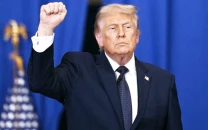
At the centre of the Davos spectacle was President Trump's appearance and his decision to use the platform to revive his controversial call for the United States to acquire Greenland. He argued that the United States needed to secure the territory for strategic reasons, something he claimed Denmark, as the former colonial power, could not do for this semi-autonomous territory.
European leaders have been unequivocal that any use of coercive tactics by the United States to achieve this objective would risk undermining not only the NATO alliance but Western cohesion as a whole. Yet the American president's framing of the Arctic territory as a must-have geopolitical asset reflects a broader drift away from multilateral cooperation.
Leaving aside contentious debates over whether Greenland is genuinely under threat from Russia or China, the current American administration's geopolitical posture is also accompanied by an economic nationalist drive for global economic dominance.
Moreover, despite growing populism and anti-migration sentiments within Europe, President Trump sharply criticised European migration policies, framing them as an existential threat. He also rebuked European leaders for what he called a timid emphasis on energy transition, even as climate change demands unprecedented cooperation.
Some Western leaders, including the French and Canadian premiers, tried to push back against America's coercive geopolitical posture. These theatrics turned Davos from a venue of private elite negotiation into a theatre of power projections.
Interestingly, nearly 400 millionaires and billionaires used the Davos platform to issue an open letter urging global leaders to tax the super-rich and reclaim democracy from oligarchic capture. The signatories included very rich and successful artists, business figures and public intellectuals from more than two dozen countries, who acknowledged the need for greater accountability and wealth redistribution, even as powerful political leaders continue to push policies in the opposite direction.
The World Economic Summit this year also unfolded against a backdrop of shrinking international aid. Data from the OECD's Development Assistance Committee shows that official development assistance from wealthy countries has declined significantly in 2024 and is projected to contract further.
The US has disbanded its bilateral aid agency, and European powers are slashing aid budgets to ramp up defence spending. These shifting priorities have devastating consequences for vulnerable populations worldwide, who are already bearing the brunt of climate impacts, conflict-induced displacement, and the denial of basic services such as health, education and sanitation.
Oxfam estimates that over the past decade, the richest one per cent have amassed about $42 trillion in new wealth, a sum roughly 34 times larger than the combined gains of the poorest 50 per cent of the global population. This stark reality is a damning indictment of the moral and functional legitimacy of the current global order.
Yet, the Davos summit this year exposed an even deeper crisis of leadership. Elite interests and the rise of populist backed transactional agendas have abandoned even the pretence of collectively tackling inequality, democratic erosion or shared global threats such as climate change. As global elites chase myopic self-interest, their actions may worsen the world's deepest crises or leave them to spiral unchecked.









This material may not be published, broadcast, rewritten, redistributed or derived from. Unless otherwise stated, all content is copyrighted © 2026 The Express Tribune.



COMMENTS
Comments are moderated and generally will be posted if they are on-topic and not abusive.
For more information, please see our Comments FAQ