
Election-related laws: Report highlights flaws, makes recommendations
Some legislation inconsistent with international commitments’.
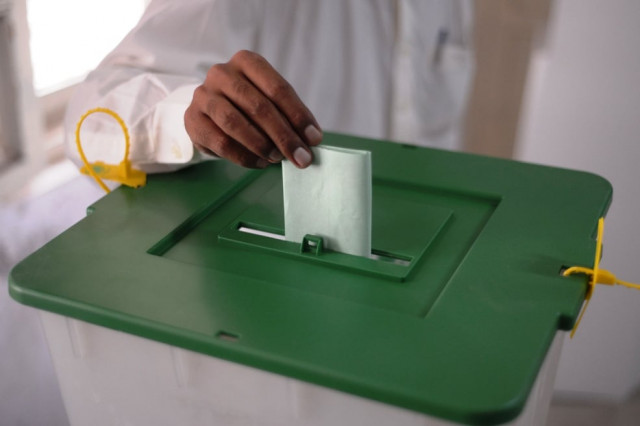
There are still basic flaws and inconsistencies in election-related laws in Pakistan, says a report. PHOTO: AFP/FILE
There are still basic flaws and inconsistencies in election-related laws in Pakistan, says a report.
The report, “Pakistan Election Laws and International Standards: A Reference Guide on Legislative Gaps and Vulnerabilities”, was launched by Democracy Reporting International (DRI) on Thursday.
The report has reviewed Pakistan’s legislation, identified shortcomings and offered recommendations for changes in laws accordingly.
According to the report, certain areas of election-related law were inconsistent with Pakistan’s international commitments. These include subjective candidacy criteria, lack of effective dispute resolution mechanisms and insufficient safeguards to ensure the participation of women and minorities.
DRI expert Madiha Farhan said the report has made 53 recommendations for reforms in Pakistan’s election-related legislation.
She said that human rights obligations related to elections are the stated aspiration of the Pakistani state, which makes it necessary to provide a level playing field to everyone for the fulfillment of these rights.
Pakistan has ratified the International Covenant on Civil and Political Rights (ICCPR) in 2010. The ICCPR, to which 165 states are signatory, is the main reference of the report.
However, other treaties ratified by Pakistan containing commitments relating to civil and political rights, have also been covered by the report.
Federal Secretary for Law Justice and Human Rights Barrister Zafarullah Khan said that as a responsible state Pakistan was committed to abiding by all promises it has made by signing international laws and treaties.
“International laws and conventions are not in violation of domestic traditions and they are based on international best practices and empirical evidence,” he said.
Published in The Express Tribune, December 20th, 2013.

















COMMENTS
Comments are moderated and generally will be posted if they are on-topic and not abusive.
For more information, please see our Comments FAQ