Worms emerging from taps raise health concerns in Karachi’s Karimabad
Updated 1 hour ago

Residents fear sewage is contaminating drinking water lines, demand urgent inspection of water supply, sewerage lines
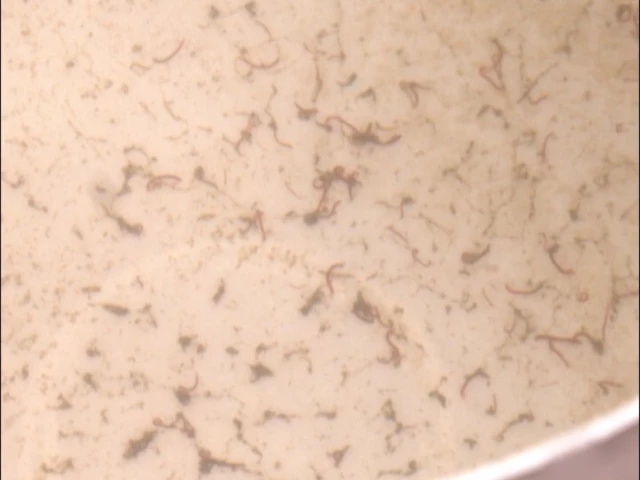
Residents of a densely populated neighbourhood near Meena Bazaar in Karachi's Karimabad No 3 raised serious health concerns on Tuesday after large numbers of live, crawling worms began emerging from household water taps, prompting thousands of people to stop using the supplied water even for domestic purposes.
Residents reported the disturbing situation in Saheba Apartments and surrounding buildings, saying worms fell into buckets with the water whenever they turned on kitchen and bathroom taps. The development has raised serious questions about the safety of the water supply, with residents fearing that sewage could be contaminating drinking water lines.
Affected residents said they had faced water supply problems for about one and a half months. Initially, the water turned cloudy and black and carried a strong smell resembling sewage. Although the foul smell subsequently subsided, the appearance of large numbers of live worms in the water over the past few days further intensified their concerns.
Akbar Khan, who had been living in the area for 20 years, said he was shocked when he opened a tap to collect water for household use and found numerous crawling worms falling into the bucket with the stream of water. The sight alarmed his entire family, he said, adding that similar incidents were subsequently reported in apartments throughout the building and in neighbouring residential properties.
He said the water had initially become discoloured and muddy, with a strong sewer-like smell, before the latest problem emerged. The water continued to be used for everyday household needs, including cleaning and other domestic activities, making the situation particularly alarming for residents.
Also Read: Karachi's sewage treatment plans remain stuck
Another elderly resident, Muhammad Farooq, said the issue had gone beyond changes in the water's colour or taste. The presence of live worms raised serious concerns about possible health consequences, Farooq said, warning that any contamination of the supply network with sewage could lead to a major public health crisis.
Nauman Ahmed, another resident, said Saheba Apartments alone housed more than 3,000 people across nearly 700 flats in different blocks, while a large number of people also lived in neighbouring apartment buildings and residential properties. If the water pipelines were contaminated, Ahmed said, the consequences would not be confined to a single building or a handful of households but could affect a much larger population.
Muhammad Shahbaz, who also lived in Saheba Apartments, confirmed that household taps had previously released material resembling human waste and other filth. Shahbaz added that the earlier supply of muddy and black water had damaged household water pumps, while mud and dirt had accumulated in overhead tanks on building rooftops, leaving them badly contaminated.
Residents said the successive changes in the water supply, the sewage-like smell, the reported presence of human waste and the recent emergence of large numbers of worms had strengthened their suspicion that sewage was entering the drinking water network. However, they said no technical investigation had been conducted despite repeated complaints, and no one from the relevant authorities had made a meaningful effort to examine the problem.
People in the affected neighbourhoods said they had been enduring the situation for around six weeks, but repeated complaints had failed to prompt effective action from the relevant departments.
The conditions deteriorated to the extent that residents stopped using tap water even for routine domestic needs. They were now purchasing bottled or mineral water, or arranging supplies from alternative sources, to meet everyday requirements, including washing clothes and performing ablution. The additional expense had placed a further financial burden on households.
Read More: Contaminated water deepens health crisis
Residents also expressed concern that the use of contaminated water was already affecting people's health and that the accumulated dirt and pollution were contributing to unpleasant odours in the surrounding environment. Children, elderly people and other vulnerable residents were a particular source of concern, as exposure to contaminated water could increase their risk of gastrointestinal and intestinal diseases, diarrhoea and other infections.
Questioning the performance of the Karachi Water and Sewerage Corporation (KWSC) and other relevant authorities, residents demanded an immediate investigation rather than treating the matter as an ordinary public complaint.
They called for an urgent inspection of water supply and sewerage lines, as well as overhead tanks, and demanded that samples be collected from affected locations for chemical analysis to establish the source of the worms and other contamination.
The residents also urged the authorities to identify and address the cause of any confirmed sewage intrusion, immediately repair and clean the affected supply lines, and arrange alternative sources of clean water for the affected population. They warned that failure to address the problem on an emergency basis could allow water contamination to develop into a major public health crisis.
According to medical experts, more than 50,000 children and adults die every year due to water-borne illnesses in Pakistan. The World Health Organisation has reported that 70 per cent of diseases in the country stem from the use of polluted water. In Karachi alone, approximately 20,000 children die every year from various illnesses linked to unsafe water.
According to a KWSC study, Karachi generates around 460 million gallons of sewage daily, but only about 35 million gallons per day is currently being treated, while the remaining 425 MGD is discharged untreated.







This material may not be published, broadcast, rewritten, redistributed or derived from. Unless otherwise stated, all content is copyrighted © 2026 The Express Tribune.












COMMENTS
Comments are moderated and generally will be posted if they are on-topic and not abusive.
For more information, please see our Comments FAQ