People can't trust system that enabled Form-47 govt: JI chief
Updated 33 minutes ago

Appears completely divided on issue amid push for more administrative units

With influential quarters apparently backing the push for new administrative units, the PML-N has adopted an ambiguous position on the issue. Several leaders, including cabinet members, support the idea of a referendum, while others oppose the move, describing such calls as personal opinions rather than an agreed party position.
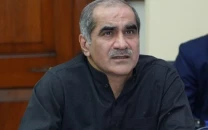
Senior PML-N leader Khawaja Saad Rafique called for fundamental governance reforms before any move to reduce the size of provinces. He articulated this position a day after Defence Minister Khawaja Asif said the proposed restructuring had the backing of party supremo Nawaz Sharif.
However, Adviser to the PM on Political Affairs Rana Sanaullah sought to dispel the impression that the positions expressed by the federal information minister, the defence minister and the planning minister represented an agreed party policy.
The contrasting statements have added to the ambiguity surrounding the party's position on the issue.
The party has so far refrained from articulating a clear stance, giving the impression that it is deliberately keeping its options open, seemingly to avoid upsetting influential quarters backing the proposed restructuring.
In a detailed post on X on Saturday, Rafique said the federal government had largely completed its preparatory work for fundamental reforms to the civil service structure, under the leadership of Planning Minister Ahsan Iqbal.
He also referred to the possibility of forming a parliamentary committee on electoral reforms, urging the government to complete both initiatives as soon as possible. He argued that reducing the size of provinces would only yield meaningful results if fundamental reforms were undertaken first.
Rafique called for opposition parties to be taken on board in the electoral reform process and advocated an empowered local government system with financial autonomy, directly elected mayors and control over all district departments, including those responsible for law and order.
The former minister also questioned why political parties that complained of establishment's interference did not put forward their own reform packages.
He argued that the country needed long-term changes in governance, the electoral system, civil service, judiciary and political leadership rather than ad hoc arrangements and political manoeuvring.
His remarks echoed reservations expressed by another senior PML-N leader, Javed Latif, who endorsed PPP Chairman Bilawal Bhutto Zardari's position on the constitutional process for creating new provinces earlier this week.
Latif maintained that the Constitution already prescribed a procedure for creating new provinces and that any such initiative should be pursued through constitutional means after taking all stakeholders into confidence. He also questioned the timing of the proposed restructuring, arguing that this was not the right time to pursue the initiative.
The positions taken by Rafique and Latif contrast with Asif's remarks a day earlier, when he said Nawaz Sharif favoured the proposal and that Prime Minister Shehbaz Sharif had embarked on efforts to build consensus among political stakeholders with his blessing.
Nawaz, however, has so far refrained from making a public statement on the issue. Repeated attempts were made to obtain the party's official position from its Information Secretary Marriyum Aurangzeb. However, she did not respond to queries on the matter.
The apparent confusion is not confined to the federal government.
In Punjab, Speaker Malik Muhammad Ahmad Khan has emerged as one of the most vocal advocates of holding a referendum on the creation of new provinces, while sources say the Maryam Nawaz-led provincial government is not in favour of carving out new provinces from Punjab at this stage.




This material may not be published, broadcast, rewritten, redistributed or derived from. Unless otherwise stated, all content is copyrighted © 2026 The Express Tribune.









COMMENTS
Comments are moderated and generally will be posted if they are on-topic and not abusive.
For more information, please see our Comments FAQ