How Pakistanis save
Updated 29 minutes ago

Carbon capture alone will not solve the crisis; energy intensity must fall
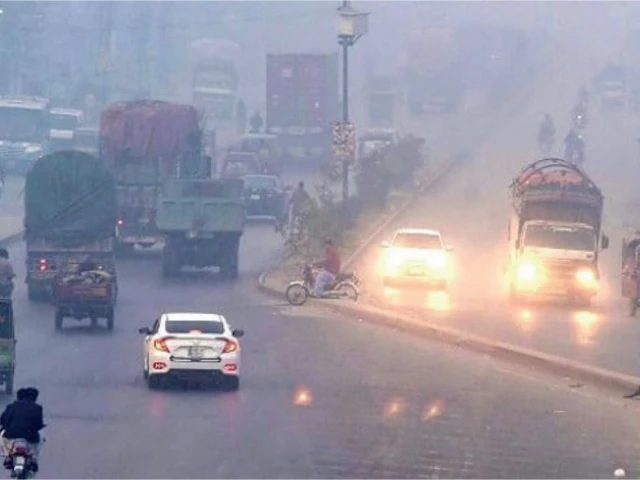
As per a recent study by a European institute, the annual impact of climate warming on global GDP would rise to $38 trillion by 2050 from its current value of $2 trillion. In Pakistan's case, this impact is projected to rise to 18 to 20% of its annual GDP during the same period, from its current level of 1%.
Basic details
In order to understand global warming, it is essential to have a conceptual understanding of greenhouse gases (GHG) and their impact on the atmosphere around us. Growing plants in controlled environments such as glass houses is an established practice. Such houses are known as greenhouses, where the plants and air are warmed by the sun's rays and most of the generated heat remains trapped inside the house, keeping it warm to the required degree for necessary growth of the plants. GHG, mainly comprising carbon dioxide, methane, nitrous oxide and water vapour, serve to create a large virtual greenhouse, just like the above glass house. The sun heats the atmosphere and the earth during the day. That heat is radiated back into the atmosphere as the earth cools at night. The said heat is absorbed by GHG in the earth's atmosphere during the above process, which keeps the earth's surface warm, thereby making it livable for us. Thus what comes out as the most vital variable in this configuration are the said GHG in the air. The gradual change in their concentrations due to human activities has consequently increased their capacity to retain heat and radiate it back towards the earth. The same, in turn, keeps on increasing the atmosphere's average temperature, which is popularly called global warming.
Carbon dioxide alone accounts for 79% of global human-caused emissions. Till 1900, its quantity in the atmosphere had remained at 280-285ppm. However, since then it has increased by more than 50% and is projected to be 550ppm by 2050. The factor which aggravated this increase is rapid deforestation during the period, which substantially deprived us of the natural carbon dioxide sink: trees. The resultant global warming is also affecting the capacity of the other such sink, the oceans. As per a recent UN report, ocean capacity is already impaired by around 6%.
Discussion and analysis
The above scenario compelled the industry to explore technologies for the reduction of carbon dioxide in the atmosphere. Since the last few decades, the term carbon capture has started occupying the media in this context. It refers to technologies that reduce carbon dioxide emissions into the atmosphere generated by burning fossil fuels. The capture generally takes place at sources of emissions from power plants and manufacturing plants such as cement plants. The captured gas is compressed and transported to underground storage such as depleted oil and gas fields.
However, at present, carbon capture hardly captures around 0.1% of global carbon dioxide emissions. Even till 2050 this may only be touching 1%. This is primarily because of the associated higher opex and capex of the processes involved. For example, a carbon capture unit in a coal power plant handling 15,000 tonnes of carbon dioxide per day may cost in billions of dollars with a similar impact on its operating cost too. This calls for a radical change in the approach towards the variables considered by project owners for determining the associated project economics. The current, majorly flawed, approach in this respect can be gauged from the very fact that the world spent about $2.9 trillion on defence in 2025, whereas the aggregate global spend on carbon capture so far remains around $50 billion only.
This also needs to be realised that adoption of carbon capture may not be used as a permit to continue with the use of fossil fuels with abandon. Its success is, rather, conditional upon a rapid corresponding decrease in the use of such fuels. Thus, to optimise consumption, their usage needs to be driven by strategies and technologies ensuring optimal utilisation of the available energy efficiency. For example, as per a recent World Bank report, Pakistan's energy intensity at 4.2 MJ/USD of GDP is more than double that of Bangladesh. This sufficiently highlights the immense room of improvement in this respect. It becomes all the more important when we observe Bangladesh's limitations with respect to its fuel mix. It is predominantly based on fossil fuels with negligible hydel power, no nuclear power and only a small portion of solar power. This is an excellent sign of what efficient management of a supply chain can achieve. No wonder that while Pakistan's annual carbon dioxide emissions currently stand at around 200 million tonnes, those of Bangladesh are 25% lesser.
What is to be done
Unfortunately, despite all the ambitious targets, globally, annual emissions have increased from 25.2 billion tonnes in 2000 to 38.2 billion tonnes at present. If this continues, then average global temperature may rise by 5°C by 2100 vis-à-vis its status in the year 1900. The same has already risen above 1.5°C; which, as per the Paris Agreement of 2015, is targeted to be capped well below 2°C. Hence, it is an existential requirement of mankind to achieve this objective as soon as possible.
In Pakistan's context in this regard, I recommend the following. First, we need to improve our performance with respect to energy intensity by studying the models of countries like Bangladesh. That would not only reduce our carbon footprint but our production costs as well, thereby making funds available for R&D, modernisation and augmenting exports through value addition. Second, current costs of carbon capture technologies are forbidding. Hence, undertaking such projects on our own may not generally be feasible. However, there are several conventional avenues which can help the cause. A case in point is the planned 460-kilometre white oil pipeline from Sheikhupura till Taru Jabba in Peshawar. It can reduce road traffic by around 700-800 oil trucks a day along with associated emissions. Despite being on the anvil for more than 25 years, quite inexplicably, it is yet to take off. I hope that the ongoing efforts to commence it would soon succeed. Third, local lignite coal now holds around a 15% share in our power generation pie. It emits around 29% more carbon dioxide per unit of power generated vis-à-vis imported coal. Therefore, coal refineries to beneficiate this coal should hold primacy in all our future plans.
I sincerely hope that awareness and commitment in this regard would be a major factor on the relevant yardstick of the Pakistani electorate while evaluating their current and potential representatives in the next elections.
THE WRITER IS A PETROLEUM ENGINEER AND AN OIL AND GAS MANAGEMENT PROFESSIONAL









This material may not be published, broadcast, rewritten, redistributed or derived from. Unless otherwise stated, all content is copyrighted © 2026 The Express Tribune.














COMMENTS
Comments are moderated and generally will be posted if they are on-topic and not abusive.
For more information, please see our Comments FAQ