COP31 ends without overarching deal
Updated 39 minutes ago

Failure comes as current policies put the world on track for 2.8°C of warming, far beyond the 1.5°C target
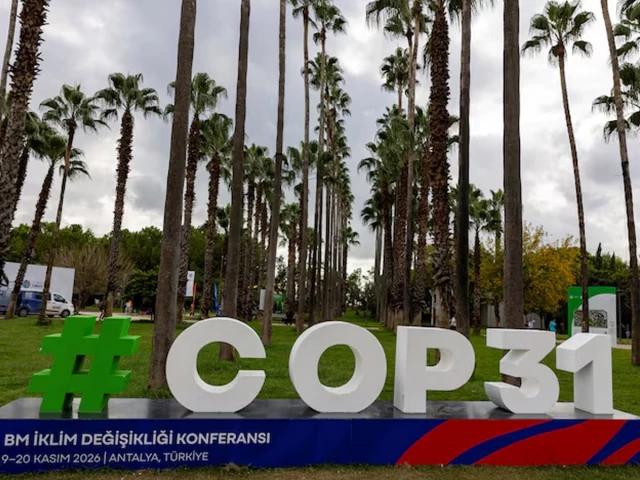
The UN climate conference ended without an overarching political agreement on Sunday after negotiations dragged into overtime, as countries failed to bridge deep divisions over transitioning away from fossil fuels and delivering firm climate-finance support for developing nations. The final draft dropped any mention of moving away from fossil fuels, a red line for the European Union and several climate-vulnerable countries but opposed by oil producers, including Saudi Arabia and Russia. The conference ended without adopting the proposed Antalya Pact, marking a major breakdown in UN climate negotiations.
The central dispute was over whether the final text would name fossil fuels directly. A coalition of countries pushing for greater climate ambition, led by the European Union, Panama, the Marshall Islands and Norway, refused to endorse a deal that did not explicitly commit to transitioning away from coal, oil and gas. They argued that any meaningful agreement must address the root cause of the climate crisis. Oil-producing nations, notably Saudi Arabia and Russia, pushed back against language singling out fossil fuels, favouring instead an indirect reference to previous agreements. The final draft omitted the phrase entirely, a significant retreat from an earlier version that had called for an “immediate transition away from fossil fuels”. It also fell short of the landmark COP28 pledge in Dubai in 2023, when countries agreed for the first time to call for a transition away from fossil fuels.
The second major fault line was climate finance, where developing and climate-vulnerable countries demanded greater support for adaptation. An earlier draft called for tripling adaptation finance by 2035, but critics said the proposal lacked baseline figures and specific funding commitments, leaving many developing nations deeply disappointed. Those least responsible for emissions and most exposed to climate impacts were once again left without credible assurances of financial support.
The breakdown came against a dire scientific backdrop. A recent UN report put the world on course for potentially catastrophic warming of 2.8°C under current policies, far beyond the Paris Agreement’s 1.5°C target. While the failure to produce a new political declaration was a significant blow, it did not erase the legal and technical obligations agreed at previous UN climate conferences.
The failure drew sharp reactions from negotiators and observers. Ireland’s climate minister, Darragh O’Brien, speaking for the EU presidency, said the talks had been “hijacked by some oil states”. Australia’s Climate Minister Chris Bowen, whose country co-presided over the summit with Türkiye, called the outcome “very disappointing” but pointed to side pledges, including a commitment by more than 90 countries to ramp up electrification. UN Secretary-General António Guterres said he was “deeply disappointed” and “frustrated”.
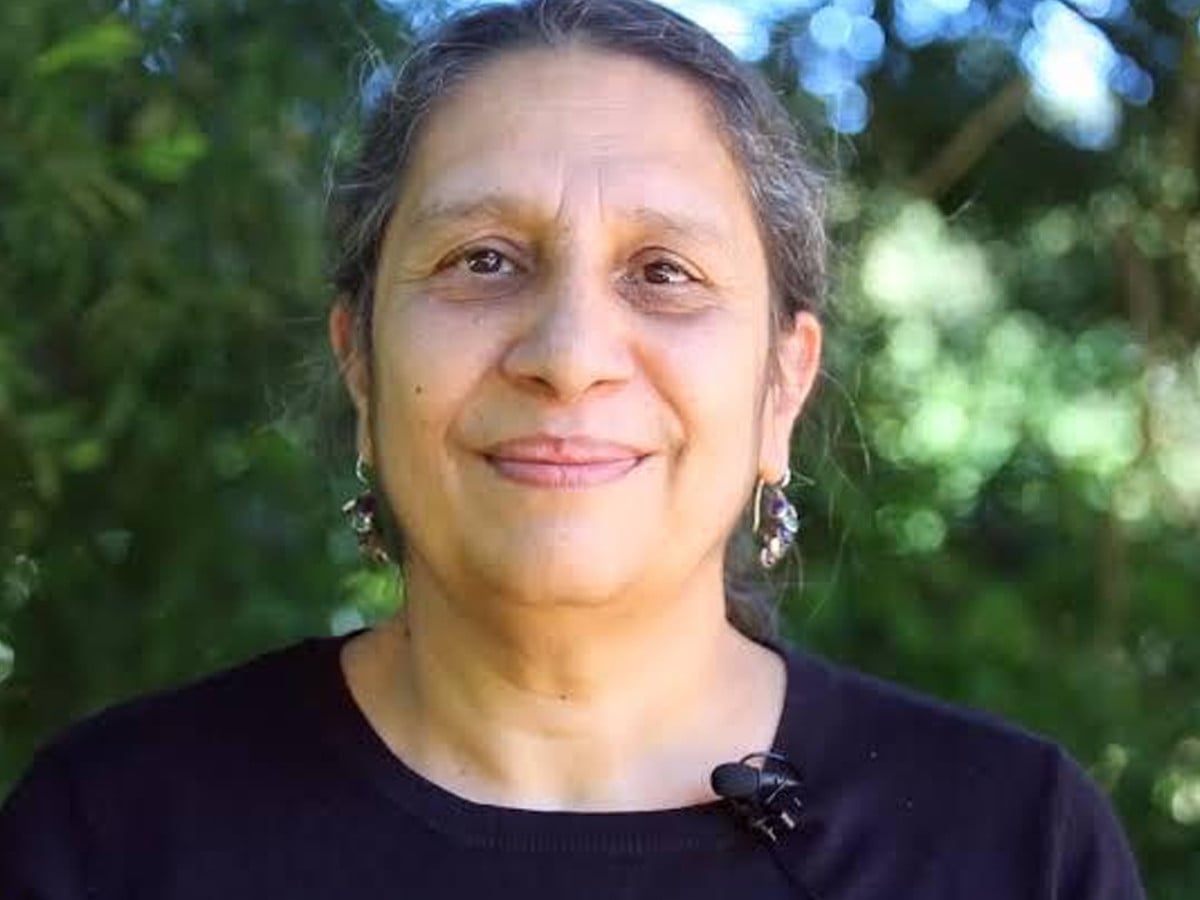
Executive Director of Climate Action Network International Tasneem Essop.
Campaign groups were blunter still, directing their criticism both at oil producers for blocking fossil-fuel language and at wealthy nations for retreating on finance. Tasneem Essop, Executive Director of Climate Action Network International, called it “the worst COP ever”, saying “rich nations gutted the very measures that could have made a difference”. Pointing to EU Climate Commissioner Wopke Hoekstra’s pre-summit declaration that discussions on new climate finance were “dead in the water”, she said the EU’s rejection of a text silent on fossil fuels was “the height of hypocrisy. Deeds not words is what matters.” The space to protect humanity from climate catastrophe, she said, “is being deliberately dismantled by political leaders who consider the lives of those in the global south as disposable”.
Teresa Anderson, Global Lead on Climate Justice at ActionAid International, warned that “temperatures are rising, impacts are rising, but support for climate-hit countries is shrinking”. The EU’s refusal to allow real progress on adaptation finance, she said, meant “harvests will fail when they might have thrived” and “people will drown because they didn’t get a flood alert”. While the EU’s stand against a weak fossil-fuel text had helped its reputation, she argued that “its self-appointed crown of climate leadership still sits crookedly”.
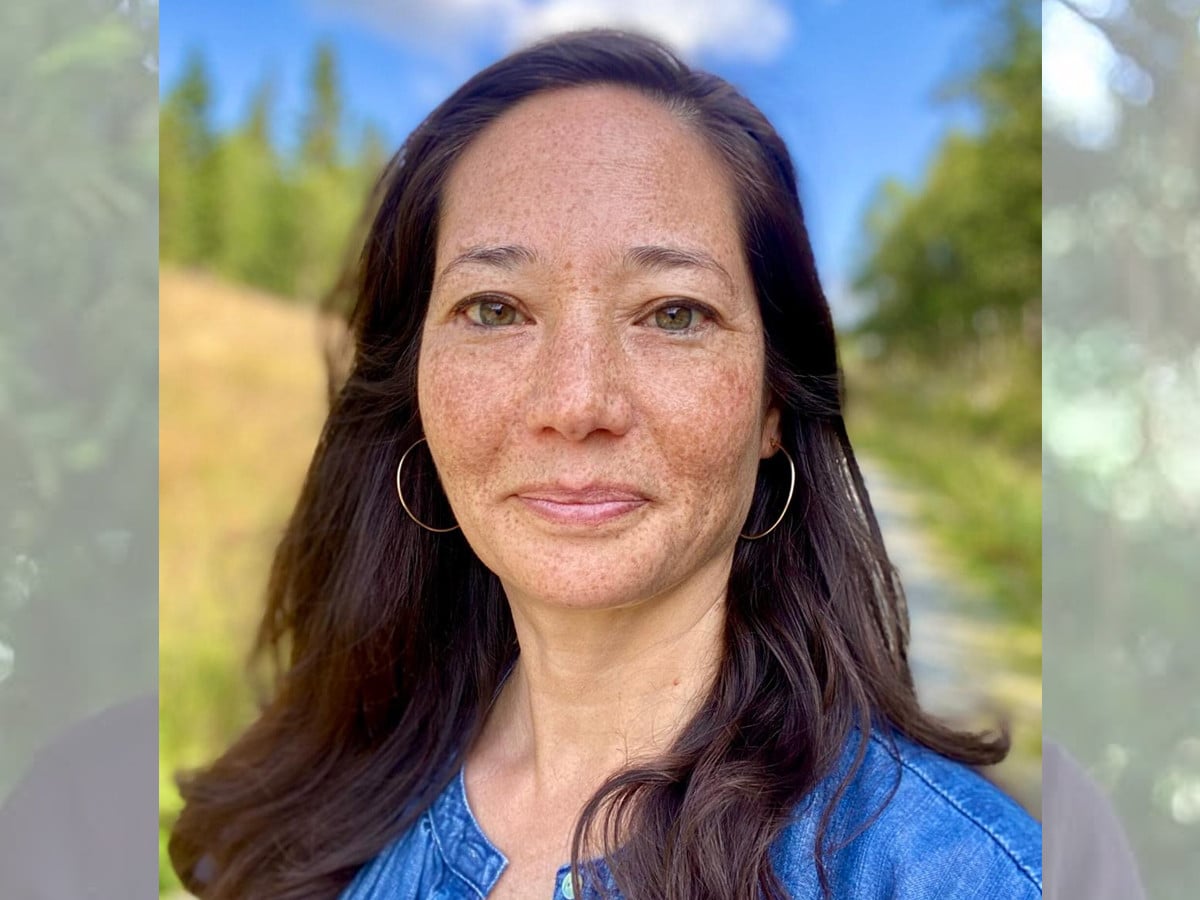
Global Lead on Climate Justice at ActionAid International Teresa Anderson.
Harjeet Singh, Strategic Advisor to the Fossil Fuel Treaty Initiative and Global Convenor of the Fill the Fund campaign, said the text failed on every major front. A reference to the COP28 outcome was not enough, he said, arguing that countries needed a concrete plan to move away from fossil fuels that was “fair, fast and funded”. He accused wealthy nations of removing financial accountability from the negotiations, saying they had “forced the deletion of every number that would show whether they have” paid and “even erased the word ‘debt’ from a finance decision”, despite countries across Asia and Africa spending more on debt repayments than on protecting their people.
Singh also criticised the lack of meaningful commitments on adaptation and loss and damage. The Adaptation Fund, he said, raised barely $50 million at the summit against a target of $300 million a year, while the Loss and Damage Fund received urgent requests from developing countries for $2.8 billion but could allocate only $342 million. “Applauding an empty fund doesn't fill it. A family that has lost its home cannot rebuild with hollow words,” he said.
Climate and human rights campaigner Kumi Naidoo argued that a bad text would have been worse than none. “Sometimes, no deal is better than a disastrously bad deal”, particularly one “with no meaningful climate finance, no mention of the elephant in the room, fossil fuels, and, worse still, a renewed embrace of technological distractions and false solutions like carbon capture and storage”, he said.
For activists from the Global South, the failure was felt as something more personal. Prayash Adhikari, a climate justice activist with the People’s Movement for Climate Justice Nepal, said the world had “once again prioritized the powerful and ignored the voiceless, dismissing the grievances and appeals of the Global South”. For his community, “this COP was not just another event; it was a source of hope” that the world would finally uphold accountability and justice. Instead, he said, “this is a complete betrayal and erasure of millions of lives in Nepal and across the Global South”.
Warning that the next round of talks would mean returning “with a heavier burden: more communities devastated, more lives lost, and more economies destroyed”, Adhikari described the outcome as “backsliding” from “a structure rooted in the same colonial, extractivist, and oppressive fossil-fuel-led system”.
The failure to agree on an overarching political declaration does not mean COP31 has collapsed in the same way as the negotiations in The Hague in 2000. The only previous COP to be suspended after countries failed to reach agreement was COP6, held in The Hague, when a dispute between the European Union and the United States over land-use credits under the Kyoto Protocol brought negotiations to a standstill. With ministers preparing to leave, the Dutch presidency suspended the conference. It resumed in Bonn several months later.
Unlike the negotiations in The Hague, however, the failure to agree on an overarching political declaration at COP31 does not mean the conference has come to a halt. Countries have already adopted several decisions and are expected to agree on more, even without a comprehensive political declaration, commonly known as a cover decision. Previous conferences, including COP15 in Copenhagen, also ended without a comprehensive political agreement while adopting other decisions. The absence of a cover decision does not necessarily prevent the UN climate process from making technical and procedural progress. What it does expose is the inability of governments to agree on the political direction needed to accelerate climate action.
The breakdown in Antalya also raises a larger question about the ability of the UN climate process to turn political commitments into action. The Paris Agreement established a framework for limiting global warming, and subsequent climate conferences have produced commitments on transitioning away from fossil fuels, increasing climate finance and helping vulnerable countries adapt to rising temperatures. But progress in turning those commitments into funded plans and measurable action has remained slow.
This story was produced as part of the COP31 Climate Change Media Partnership, a fellowship for journalists covering the UN climate talks.










This material may not be published, broadcast, rewritten, redistributed or derived from. Unless otherwise stated, all content is copyrighted © 2026 The Express Tribune.






COMMENTS
Comments are moderated and generally will be posted if they are on-topic and not abusive.
For more information, please see our Comments FAQ