Big Three converge for 'mini Yalta'
Updated 18 minutes ago

Xi, Trump, Putin set for unprecedented summit amid global turmoil, analysts see potential for crisis management
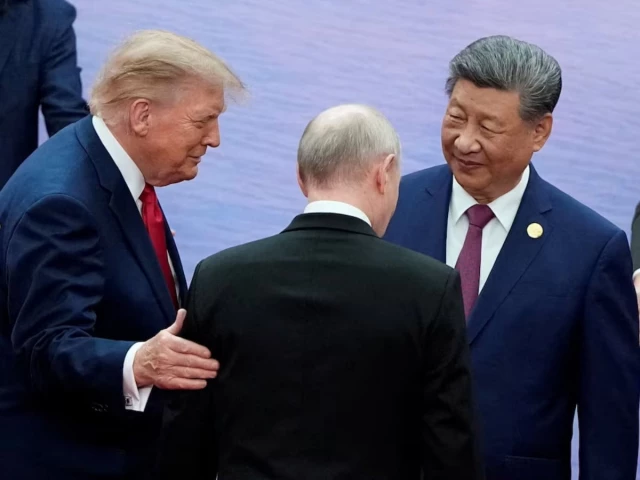
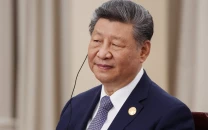
Chinese President Xi Jinping will host Russian President Vladimir Putin and US President Donald Trump for a trilateral summit tomorrow (November 19), on the fringes of the Asia-Pacific Economic Cooperation (APEC) summit in Shenzhen. It will bring the leaders of the world’s three major powers together in a way that has never happened before.
Chinese Foreign Ministry spokesperson Guo Jiakun said the three leaders would have an in-depth exchange of views on global peace, calling the meeting one of “groundbreaking significance”. His colleague Mao Ning added that it would be the first face-to-face meeting among the heads of state of China, Russia and the United States. High on the agenda will be ways to safeguard global peace and promote strategic stability in major-power relations.
The symbolism was clear even before the summit. In an unusual gesture, President Xi personally received his US counterpart at Shenzhen Bao'an International Airport, seemingly returning the courtesy Trump showed him in September, when he greeted Xi at the aircraft during his visit to the White House.
The welcome, which included a fighter-jet flyover trailing rainbow-coloured smoke, drew considerable attention. “The two most important leaders in the world met at the bottom of the stairs with a handshake and a hug,” Lebanese-Australian commentator Mario Nawfal wrote on micoblogging site X, formerly Twitter.
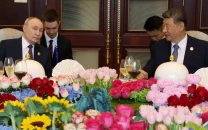
Later, ahead of the APEC gala reception, the three global heavyweights exchanged greetings and spoke briefly, a moment some observers described as “a handshake that shakes history”.
Beyond the optics, though, the summit raises a harder question. Can the three powers find common ground in an increasingly volatile world, or will their competing strategic interests reduce the meeting to diplomatic symbolism?
For Mushahid Hussain Syed, former chairman of the Senate Foreign Relations Committee, the summit matters in three ways. First, he sees it as Washington's first formal acceptance of a multipolar world, an acknowledgement that the US is no longer the sole superpower. Second, he contrasts it with the 1945 Yalta Conference, where Stalin met two Western leaders, arguing that China's role as host reflects a changed global order and the rise of Asia as a major centre of power.
Most importantly, he calls the meeting a "positive development" at a time of conflict and confrontation, because it signals that the major powers are willing to discuss some "rules of the game" for managing global tensions.
Former Pakistani ambassador Masood Khalid agrees, saying the summit sets a new precedent for three major global powers to sit down together and discuss pressing international issues. "If sustained in the future, this format could help ease tensions and manage crises," says ambassador Khalid, who served longer than any other Pakistani envoy in Beijing.
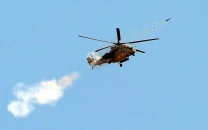
The meeting takes place against a backdrop of heightened geopolitical and geostrategic volatility. The wars in Ukraine and Iran, growing security uncertainty in the Persian Gulf and Israel’s genocidal campaign in Gaza have all added to global instability, and Trump's unconventional approach to diplomacy has complicated matters further.
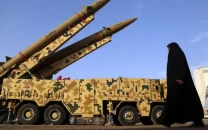
The three leaders have arrived in Shenzhen with very different priorities. Trump wants trilateral nuclear talks, while Beijing is keen to present itself as the host of an unprecedented gathering of the three powers. Russia seeks international recognition, Washington is interested in arms control, and Beijing wants greater global status without taking on additional strategic obligations.
As analysts point out, each leader may use the occasion mainly to restate established positions rather than negotiate real solutions. Experts do not expect major breakthroughs on trade, technology or other bilateral issues between Washington and Beijing. Preserving the existing trade truce and preventing relations from deteriorating further are seen as more realistic goals.
Trump's room for manoeuvre may also be limited by pressures at home and abroad. The Republicans' losses in the US midterm elections have weakened his political position, which could restrict his ability to take bold decisions. Internationally, strained relations with traditional allies, the erosion of the US-led international order, a diminishing emphasis on democratic values and freedoms, and the difficulties of the Iran war have together undermined Washington's leverage, resources and global influence.
Ambassador Khalid says the issues facing the three leaders are too contentious to be settled in a single meeting. "Their differences are stark, with Ukraine, Iran, nuclear proliferation and China's containment among the issues on which their positions are diametrically opposed," he says.
Drawing on earlier diplomatic encounters, he points to the Kim-Trump summits, which produced virtually nothing tangible. The Chinese and Russian leaders, he adds, are also sceptical of Trump’s ability to deliver on his promises. “Not much should be expected from the Shenzhen meeting beyond diplomatic optics; substance is likely to remain elusive,” he says.
Professor and editor Glenn Diesen, however, stresses the wider importance of the engagement. "It is important for world peace that the great powers find common ground during these dangerous times," he says.
Former Pakistani ambassador Sanaullah Abbasi is similarly cautious about expectations. He argues that the meeting's significance should not be confused with the circumstances that led to the 1945 Yalta Conference. “The meeting of the three leaders is significant for several reasons, though these may be quite different from the factors that led to the 1945 Yalta Conference. The outcomes, too, are likely to be different. Optically, it will be a major event — a bonanza for photographers — but it may not substantively resolve today’s political challenges,” he adds.
Abbasi believes Putin and Trump have their own disputes to resolve, while Xi will want to keep China out of any military adventure. In his view, Beijing's aim is to gain strategic mileage from the meeting by placing itself at the centre of international diplomacy.
Putin may gain diplomatic stature, Abbasi says, but he doubts the Russian leader can make himself an indispensable partner in any future security architecture beyond Europe. He also warns that any understanding the three powers reach may not be acceptable to Iran and other regional states, which these global powers have not defeated in war. "At best, a shared understanding among the three leaders could ease tensions and prevent an abrupt escalation of the Iran-US conflict," he says.
On the war in Ukraine, hopes of a breakthrough are slim. Washington is not expected to make the conflict a central item on the trilateral agenda, and Beijing is unlikely to press Moscow to end the war, given its strategic partnership with Russia.
On Iran, Trump may seek support for ending the conflict and raise nuclear proliferation. But the prospects for substantive US-China cooperation remain uncertain, since Beijing prefers negotiations to sanctions or military action and has limited leverage over both Tehran and Washington.
The US-China relationship is likely to get more immediate attention. Trump and Xi are expected to concentrate on preserving their fragile trade truce and managing disagreements over tariffs, rare earth supplies, technology restrictions and agricultural purchases, rather than pursuing a sweeping reset.
In a nutshell, the summit's greatest significance may lie in its symbolism rather than its immediate results. It brings together the leaders of the three most consequential global powers in an unprecedented trilateral setting, at a time when established international arrangements are under considerable strain.
For Xi, hosting the gathering strengthens China’s standing as a central player in global diplomacy and strengthens its image as a potential broker of international understanding. For Putin, a seat alongside Trump and Xi offers diplomatic recognition and a chance to counter Russia's diplomatic isolation. For Trump, the encounter is a platform to present himself as a global dealmaker who can engage Washington’s principal strategic rivals.
Even without concrete outcomes, the unprecedented summit could establish a new diplomatic format, encourage direct communication among major powers and create channels for managing future crises. Whether that symbolism can turn into sustained dialogue, workable understandings and practical outcomes remains the central test of the Shenzhen summit.






This material may not be published, broadcast, rewritten, redistributed or derived from. Unless otherwise stated, all content is copyrighted © 2026 The Express Tribune.





COMMENTS
Comments are moderated and generally will be posted if they are on-topic and not abusive.
For more information, please see our Comments FAQ