Tanker attacks lift oil prices 1%
Updated 40 minutes ago

SBP governor cites average inflation within medium-term range, FX reserves above target
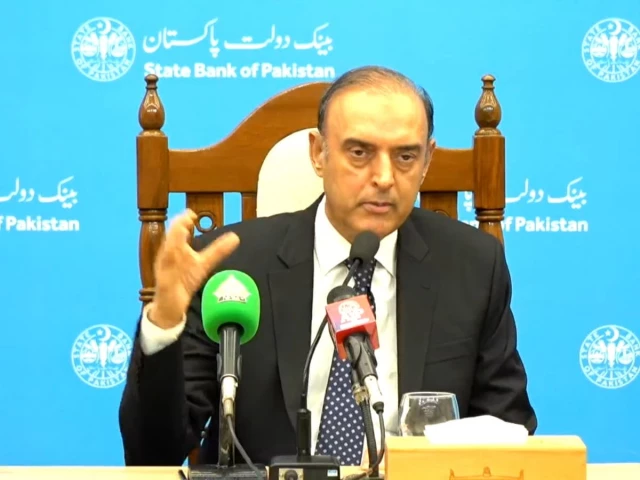
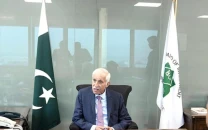
Despite shocks including monsoon floods, heightened uncertainty surrounding the US trade tariffs, the Middle East conflict and a sharp increase in global commodity prices, Pakistan's economic resilience has strengthened, supported by prudent and data-dependent monetary policy, and continued fiscal consolidation, said the State Bank of Pakistan (SBP) governor's Annual Report for fiscal year 2025-26.
"The financial system also remained resilient as financial depth improved amid an expansion in banks' credit to the private sector," cited the report released on Tuesday. It is published under Section 39 (1) of the SBP Act 1956. The provision mandates the governor to submit an annual report to parliament regarding the bank's objectives, the conduct of monetary policy, and the state of the economy and the financial system.
The report emphasised that Pakistan's macroeconomic indicators continued to show resilience during FY26 as average national Consumer Price Index (NCPI) remained close to the upper bound of the medium-term target range despite global energy price shocks, foreign exchange reserves exceeded the year-end target amid a marginal current account deficit and real GDP recorded higher growth.
It mentioned that the average NCPI inflation was 5.5% for the period July-February 2026. However, a significant rise in global oil prices following the onset of the ME conflict pushed the headline inflation into double digits from April 2026 onwards. The contribution of energy inflation to the NCPI increased markedly during March-June FY26 compared to July-February FY26.
Food inflation also increased, driven by a sharp rise in prices of wheat and related products, reflecting supply constraints. Core inflation continued to moderate during most of FY26; however, it remained elevated and rose slightly after the surge in energy prices started to reflect in the cost of production and transport services.
The report highlighted that while considering the evolving developments during 1HFY26, the Monetary Policy Committee kept the policy rate unchanged until December 2025, when it reduced the rate by 50 basis points. The rate cut was made keeping in view the subdued headline inflation, anchored inflation expectations, softening global commodity prices, and a stronger external account position that improved the inflation outlook and provided room to support economic activity.
However, the outbreak of the ME conflict led to a deterioration in inflation and external outlooks, prompting a 100bps increase in the policy rate in April 2026 to contain second-round effects and support macroeconomic stability. "A similar policy response was observed globally, where most central banks in advanced and emerging and developing economies paused their rate cuts, while some raised their policy rates," the report said.
It also pointed to the strengthening forex reserves of the SBP, which exceeded the $18 billion target for end-June 2026. During the year, the central bank made net FX purchases of $8.1 billion and reduced its forward/swap liabilities by $1.6 billion. The build-up in reserves was achieved despite a current account deficit, which remained moderate as higher remittances and ICT exports offset the widening merchandise trade deficit.
The overall balance of payments improved amid ample multilateral and bilateral flows and successful bond issuances. The stronger reserve position coupled with sustained fiscal consolidation, and the successful completion of IMF reviews helped improve the country's sovereign ratings, restore investor confidence, and support exchange-rate stability, the report added.












This material may not be published, broadcast, rewritten, redistributed or derived from. Unless otherwise stated, all content is copyrighted © 2026 The Express Tribune.







COMMENTS
Comments are moderated and generally will be posted if they are on-topic and not abusive.
For more information, please see our Comments FAQ