Tanker attacks lift oil prices 1%
Updated 44 minutes ago

Remittances jump to $3.892b; deficit narrows to $850m
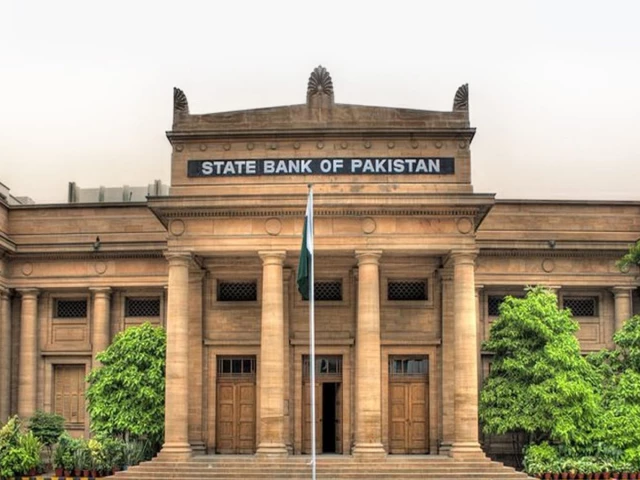
Pakistan's current account returned to a surplus of $39 million in October 2026, reversing a deficit of $371 million recorded in September, as higher workers' remittances and a narrower trade deficit supported the country's external account, according to data released by the State Bank of Pakistan (SBP) on Tuesday. The improvement in the external account came despite a continued deficit in merchandise trade and higher primary income outflows, with the current account balance without official transfers improving to record a deficit of $13 million from $404 million.
Workers' remittances rose to $3.892 billion in October from $3.588 billion in the preceding month of September, providing significant support to the country's external account and helping offset the impact of the merchandise trade deficit and payments under primary income. The trade deficit in goods narrowed to $2.967 billion from $3.148 billion in September, as goods exports stood at $2.902 billion, down from $3.013 billion, while imports declined to $5.869 billion from $6.161 billion.
The services trade deficit also narrowed to $245 million from $275 million in September, as services exports increased slightly to $968 million from $965 million while imports fell to $1.213 billion from $1.240 billion. However, the primary income deficit widened to $821 million in October from $792 million in September, as primary income credits stood at $87 million while debits amounted to $908 million. Meanwhile, the secondary income surplus increased to $4.072 billion from $3.844 billion in the preceding month.
Despite October's monthly surplus, the current account remained in deficit during the first four months of FY27, though the cumulative deficit narrowed to $850 million from $1.062 billion in the corresponding period of FY26, supported by higher remittances which increased to $14.767 billion from $12.956 billion a year earlier. However, the merchandise trade deficit widened as imports grew faster than exports, with goods exports increasing to $11.354 billion from $10.502 billion previously, while imports rose to $23.642 billion from $20.962 billion in the corresponding period.
"Higher exports, lower dividend repatriation and interest payments, along with robust worker's remittances turned the current account to surplus despite higher import bill on the back of higher oil prices," commented AKD Securities Director Research Mohammed Awais Ashraf to The Express Tribune. "Workers remittances continue to grow at a pace of 14% due to currency reforms, remittances incentive schemes and geopolitical uncertainty. Besides, exports grew primarily because of higher food sector growth on the back of rebound in rice exports. Also record technology exports partially diluted higher import bill of travel and transportation services," he added.
The services trade deficit widened slightly to $1.070 billion during the four-month period from $1.036 billion a year earlier, as services exports increased to $3.721 billion from $3.022 billion while imports rose to $4.791 billion from $4.058 billion. In contrast, the primary income deficit narrowed to $3.141 billion from $3.180 billion, while the secondary income surplus rose to $15.649 billion from $13.614 billion, with workers' remittances accounting for the bulk of the total inflows.
The improvement in the country's reserve position provided another positive signal on the external front, as the SBP's reserve assets increased by $3.109 billion during July-October FY27, reversing a decline of $51 million in the corresponding period last year. The central bank's gross reserves, including cash foreign currency holdings, reached $22.924 billion at the end of October, compared with $15.810 billion a year earlier, with SBP reserves at $21.718 billion, up from $14.636 billion previously.
Foreign direct investment (FDI), which represents long-term investment by foreign companies and investors in businesses and productive assets in Pakistan, increased to $936 million during July-October FY27, up from $764 million in the previous fiscal year, though inflows eased slightly to $216 million in October from $219 million in September. FDI is a crucial source of long-term capital, helping finance investment in productive sectors, support industrial expansion, create employment and bring in technology and expertise, while providing a stable source of foreign exchange inflows. However, the scale and sustainability of these benefits depend on whether inflows translate into new productive investment.
Meanwhile, the Real Effective Exchange Rate (REER) rose to 110.62 in October from 108.89 in September, marking a month-on-month increase of 1.59%, compared with 0.94% in September. The rise in REER indicates an appreciation of the rupee in real effective terms, taking into account movements in the currencies and prices of Pakistan's trading partners, which can affect export competitiveness.













This material may not be published, broadcast, rewritten, redistributed or derived from. Unless otherwise stated, all content is copyrighted © 2026 The Express Tribune.








COMMENTS
Comments are moderated and generally will be posted if they are on-topic and not abusive.
For more information, please see our Comments FAQ